

We are learning about pressure sores, or bedsores. They are big health issues. Seeing early signs might mean you need help at home.
This article is for people in San Antonio. It talks about why pressure sores happen, their stages, and how to care for them at home. We want to help caregivers and families. This way, they can act fast and help wounds heal.
Key Takeaways
- Understanding the nature and causes of pressure sores is essential.
- Identifying high-risk populations helps in early prevention.
- Timely recognition of pressure sore stages aids in management.
- Home care strategies can significantly improve healing outcomes.
- Knowing when to seek professional help is crucial for effective treatment.
- Various products and techniques enhance bed sore treatment at home.
Understanding Pressure Sores and Their Causes
Pressure sores are often overlooked, but they can cause a lot of pain. They happen when the skin and tissue get hurt from too much pressure. This usually happens in places like heels, hips, and elbows. Knowing why they happen helps us prevent them.
What Are Pressure Sores?
Pressure sores, also known as bed sores, happen when skin stays under pressure too long. This pressure cuts off blood flow, hurting the tissue. They can get worse fast, so it’s important to know about them.
How Do Pressure Sores Develop?
Sores develop when skin stays under pressure for too long. This pressure cuts off blood flow, hurting the tissue. When you move, friction or shear forces can make it worse. Knowing about pressure sores helps us take better care.
High-Risk Populations for Pressure Sores
Some people are more likely to get pressure sores. This is because of how much they can move and their health. Here are some groups at high risk:
- Older adults, like those in beds or wheelchairs
- People who can’t move much or have chronic illnesses, like diabetes
- Those who don’t eat well or don’t drink enough water
- People who can’t control their bladder or bowels, which can hurt their skin
Stages of Pressure Sores
It’s important to know about the stages of pressure sores. They start as bed sores and get worse. Spotting the signs early helps prevent more harm.
Overview of Pressure Sore Stages
Pressure sores have four stages. Each shows a different level of skin damage.
- Stage I: The skin looks reddish and might feel warm or firm. It’s the first sign of skin injury.
- Stage II: You might see blisters or shallow ulcers. These affect the outer skin layer.
- Stage III: The sore goes deeper, showing body fat under the skin.
- Stage IV: This is the worst stage. It has deep tissue damage, including muscle and bone loss.
Signs and Symptoms of Each Stage
Knowing the signs of pressure sores is key to managing them:
- In Stage I, redness stays even after pressure is off.
- Stage II shows blisters and open sores, often hurting.
- Stage III has deeper wounds, sometimes with yellow or white tissue.
- Stage IV has serious damage, showing muscle or bone, raising infection risks.

Pressure Sore Care at Home San Antonio
When we first notice a pressure sore, we must act fast. Our care at home in San Antonio can really help. Quick action is key to managing and healing the sore.
Initial Steps to Take When You Notice a Pressure Sore
First, we need to take pressure off the sore area. For those in bed, move every two hours. For wheelchair users, move every 15 minutes. This helps a lot.
Also, clean the sore gently. Use mild soap and water for Stage I sores. For Stage II, saline rinses are best. Keeping it clean helps it heal.
Recommended Home Care Strategies for Pressure Sores
To care for ulcers at home, keep the area moist and covered. Use special cushions and mattress pads. Ask your doctor for the best ones for you.
These steps help relieve pressure and prevent infections. With the right care, we can help the sore heal.
When to Seek Professional In-Home Wound Care
Knowing when to get help for pressure sores is key. We must watch for signs that mean we need a pro. This helps us treat pressure sores right.
Understanding the Severity of Your Pressure Sore
How bad a pressure sore is matters a lot. Sores that are really bad need special help. Look out for these signs:
- Persistent wounds that don’t get better at home.
- Signs of infection like more redness, swelling, or discharge.
- A big drop in skin or health condition.
These signs show why getting a pro to check your sore is important. They help make a care plan that works.
Benefits of Wound Care Nurses in Home Care
Wound care nurses bring big benefits. They have special skills to help. Here’s what they can do:
- They do full checks to see what each sore needs.
- They make plans to help sores heal faster.
- They teach home caregivers how to help more.
Wound care nurses do more than just treat sores. They make sure people get the best care at home. This helps them get better faster and feel better too.
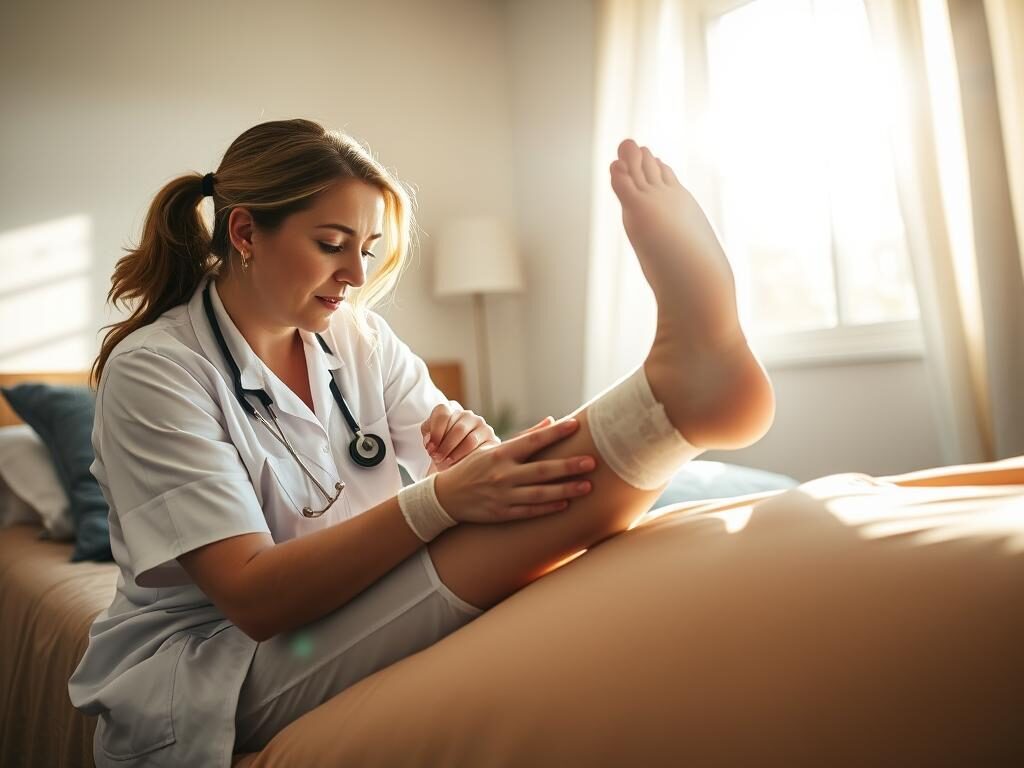
Effective Bed Sore Treatment Techniques
We know how important it is to treat bed sores well. It helps people heal and feel better. We use special ways to help, like moving them often and using special devices.
Relieving Pressure: Techniques to Use
To lessen pressure, we use a few methods:
- Frequent repositioning: We move them every few hours. This stops one spot from getting too much pressure.
- Using repositioning aids: We use pillows or cushions to ease pressure on sore spots.
- Pressure-relieving mattresses: Special mattresses help spread out body weight. This improves blood flow and lowers sore risk.
Products to Consider for Home Ulcer Care
For home care, we have many good products:
- Hydrocolloid dressings: These keep the sore area moist. This helps it heal and protects the tissue.
- Foam dressings: Foam dressings cushion and soak up moisture. They’re great for different sore stages.
- Underpads and absorbent materials: These keep skin dry and cut down on friction on sensitive spots.
Conclusion
Knowing how to handle pressure sores is key for people at risk. We talked about why quick care is important and how to stop problems from getting worse. Learning about pressure sore causes and stages helps us prevent and treat them better.
In-home wound care services are very helpful. If you have pressure sores, getting help from experts can make a big difference. We learned how to make things better and help healing start.
If you need help, don’t hesitate to ask for it. Dominion Mobile Wound Care is here to help with care that fits your needs. Let’s work together to heal and recover for ourselves and our loved ones.
FAQ
What are the primary causes of pressure sores?
Pressure sores happen when skin stays under pressure too long. This can be from sitting or lying in the same spot. It’s more common in older people and those who can’t move much because their blood flow is affected.
How can we recognize the different stages of pressure sores?
There are four stages of pressure sores. Stage I is when the skin looks different and feels firm. Stage II has blisters or shallow sores. Stage III shows fat under the skin, and Stage IV damages muscle and bone. Knowing these stages helps us treat them right.
What initial steps should we take when we notice a pressure sore?
First, take pressure off the sore by moving the person. Clean it gently with mild soap and water or saline. Using special cushions and mattress pads can also help.
When should we consider seeking professional in-home wound care?
Get professional help if the sore is advanced (III or IV), doesn’t heal at home, or shows signs of infection. Wound care nurses can make a big difference in healing.
What techniques are effective for treating bedsores at home?
Treat bedsores by moving the person often and using special mattresses and cushions. Use hydrocolloid dressings to keep the sore moist, depending on its stage.
How can we ensure effective home ulcer care?
Keep a list of what you need and how to care for ulcers at home. Talk to doctors often to make sure you’re doing the right thing for the ulcer.
Add a Comment