stages of pressure sores

Are Pressure Sores a Sign You Need In-Home Wound Care? – Part 4

We are learning about pressure sores, or bedsores. They are big health issues. Seeing early signs might mean you need help at home.

This article is for people in San Antonio. It talks about why pressure sores happen, their stages, and how to care for them at home. We want to help caregivers and families. This way, they can act fast and help wounds heal.

Key Takeaways

  • Understanding the nature and causes of pressure sores is essential.
  • Identifying high-risk populations helps in early prevention.
  • Timely recognition of pressure sore stages aids in management.
  • Home care strategies can significantly improve healing outcomes.
  • Knowing when to seek professional help is crucial for effective treatment.
  • Various products and techniques enhance bed sore treatment at home.

Understanding Pressure Sores and Their Causes

Pressure sores are often overlooked, but they can cause a lot of pain. They happen when the skin and tissue get hurt from too much pressure. This usually happens in places like heels, hips, and elbows. Knowing why they happen helps us prevent them.

What Are Pressure Sores?

Pressure sores, also known as bed sores, happen when skin stays under pressure too long. This pressure cuts off blood flow, hurting the tissue. They can get worse fast, so it’s important to know about them.

How Do Pressure Sores Develop?

Sores develop when skin stays under pressure for too long. This pressure cuts off blood flow, hurting the tissue. When you move, friction or shear forces can make it worse. Knowing about pressure sores helps us take better care.

High-Risk Populations for Pressure Sores

Some people are more likely to get pressure sores. This is because of how much they can move and their health. Here are some groups at high risk:

  • Older adults, like those in beds or wheelchairs
  • People who can’t move much or have chronic illnesses, like diabetes
  • Those who don’t eat well or don’t drink enough water
  • People who can’t control their bladder or bowels, which can hurt their skin

Stages of Pressure Sores

It’s important to know about the stages of pressure sores. They start as bed sores and get worse. Spotting the signs early helps prevent more harm.

Overview of Pressure Sore Stages

Pressure sores have four stages. Each shows a different level of skin damage.

  1. Stage I: The skin looks reddish and might feel warm or firm. It’s the first sign of skin injury.
  2. Stage II: You might see blisters or shallow ulcers. These affect the outer skin layer.
  3. Stage III: The sore goes deeper, showing body fat under the skin.
  4. Stage IV: This is the worst stage. It has deep tissue damage, including muscle and bone loss.

Signs and Symptoms of Each Stage

Knowing the signs of pressure sores is key to managing them:

  • In Stage I, redness stays even after pressure is off.
  • Stage II shows blisters and open sores, often hurting.
  • Stage III has deeper wounds, sometimes with yellow or white tissue.
  • Stage IV has serious damage, showing muscle or bone, raising infection risks.

stages of pressure sores

Pressure Sore Care at Home San Antonio

When we first notice a pressure sore, we must act fast. Our care at home in San Antonio can really help. Quick action is key to managing and healing the sore.

Initial Steps to Take When You Notice a Pressure Sore

First, we need to take pressure off the sore area. For those in bed, move every two hours. For wheelchair users, move every 15 minutes. This helps a lot.

Also, clean the sore gently. Use mild soap and water for Stage I sores. For Stage II, saline rinses are best. Keeping it clean helps it heal.

Recommended Home Care Strategies for Pressure Sores

To care for ulcers at home, keep the area moist and covered. Use special cushions and mattress pads. Ask your doctor for the best ones for you.

These steps help relieve pressure and prevent infections. With the right care, we can help the sore heal.

When to Seek Professional In-Home Wound Care

Knowing when to get help for pressure sores is key. We must watch for signs that mean we need a pro. This helps us treat pressure sores right.

Understanding the Severity of Your Pressure Sore

How bad a pressure sore is matters a lot. Sores that are really bad need special help. Look out for these signs:

  • Persistent wounds that don’t get better at home.
  • Signs of infection like more redness, swelling, or discharge.
  • A big drop in skin or health condition.

These signs show why getting a pro to check your sore is important. They help make a care plan that works.

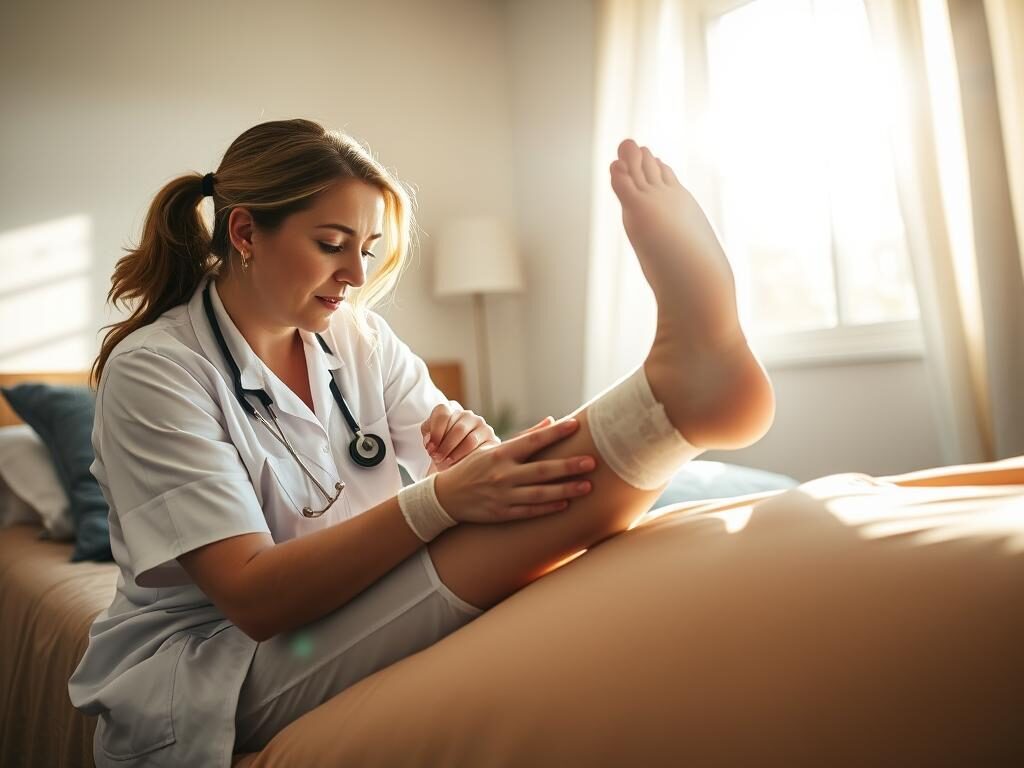
Benefits of Wound Care Nurses in Home Care

Wound care nurses bring big benefits. They have special skills to help. Here’s what they can do:

  1. They do full checks to see what each sore needs.
  2. They make plans to help sores heal faster.
  3. They teach home caregivers how to help more.

Wound care nurses do more than just treat sores. They make sure people get the best care at home. This helps them get better faster and feel better too.
in-home wound care

Effective Bed Sore Treatment Techniques

We know how important it is to treat bed sores well. It helps people heal and feel better. We use special ways to help, like moving them often and using special devices.

Relieving Pressure: Techniques to Use

To lessen pressure, we use a few methods:

  • Frequent repositioning: We move them every few hours. This stops one spot from getting too much pressure.
  • Using repositioning aids: We use pillows or cushions to ease pressure on sore spots.
  • Pressure-relieving mattresses: Special mattresses help spread out body weight. This improves blood flow and lowers sore risk.

Products to Consider for Home Ulcer Care

For home care, we have many good products:

  • Hydrocolloid dressings: These keep the sore area moist. This helps it heal and protects the tissue.
  • Foam dressings: Foam dressings cushion and soak up moisture. They’re great for different sore stages.
  • Underpads and absorbent materials: These keep skin dry and cut down on friction on sensitive spots.

Conclusion

Knowing how to handle pressure sores is key for people at risk. We talked about why quick care is important and how to stop problems from getting worse. Learning about pressure sore causes and stages helps us prevent and treat them better.

In-home wound care services are very helpful. If you have pressure sores, getting help from experts can make a big difference. We learned how to make things better and help healing start.

If you need help, don’t hesitate to ask for it. Dominion Mobile Wound Care is here to help with care that fits your needs. Let’s work together to heal and recover for ourselves and our loved ones.

FAQ

What are the primary causes of pressure sores?

Pressure sores happen when skin stays under pressure too long. This can be from sitting or lying in the same spot. It’s more common in older people and those who can’t move much because their blood flow is affected.

How can we recognize the different stages of pressure sores?

There are four stages of pressure sores. Stage I is when the skin looks different and feels firm. Stage II has blisters or shallow sores. Stage III shows fat under the skin, and Stage IV damages muscle and bone. Knowing these stages helps us treat them right.

What initial steps should we take when we notice a pressure sore?

First, take pressure off the sore by moving the person. Clean it gently with mild soap and water or saline. Using special cushions and mattress pads can also help.

When should we consider seeking professional in-home wound care?

Get professional help if the sore is advanced (III or IV), doesn’t heal at home, or shows signs of infection. Wound care nurses can make a big difference in healing.

What techniques are effective for treating bedsores at home?

Treat bedsores by moving the person often and using special mattresses and cushions. Use hydrocolloid dressings to keep the sore moist, depending on its stage.

How can we ensure effective home ulcer care?

Keep a list of what you need and how to care for ulcers at home. Talk to doctors often to make sure you’re doing the right thing for the ulcer.
pressure sore care at home San Antonio

Are Pressure Sores a Sign You Need In-Home Wound Care? – Part 3

We talk a lot about pressure sores because they’re very important. They’re also called bedsores or pressure ulcers. They happen when skin stays under pressure for too long, mostly in people who can’t move much.

It’s key to know that if we don’t take care of them, they can get worse. This might mean we need to get help with wound care. In places like San Antonio, getting care at home can help a lot. It can make healing better and life better too.

Let’s see how we can handle pressure sores. And why we need to act fast if we think someone might get them.

Key Takeaways

  • Understanding pressure sores is vital for effective management.
  • In-home wound care can improve healing and prevent complications.
  • Pressure sores require timely detection and treatment.
  • Individuals at risk should monitor for signs of bedsores.
  • Professional support from wound care nurses can enhance care.

Understanding Pressure Sores

Pressure sores, also called bed sores, happen when skin and tissue get hurt from too much pressure. As caregivers, knowing about these injuries helps us treat and prevent them. Understanding how they form lets us act early to manage them.

What Are Pressure Sores?

Pressure sores happen when skin and tissue get hurt from too much pressure. This is common in people who can’t move much. Signs include red skin and open wounds in bad cases.

How Pressure Sores Develop

Pressure sores form when skin doesn’t get enough blood because of pressure. This is worse for people who can’t move much. Things like diet, moisture, and rubbing also play a part. Knowing why they happen helps us fix them.

Factors Contributing to Pressure Sores

Many things can make pressure sores more likely. Some big ones are:

  • Age: Older people get them more because their skin is thinner and they move less.
  • Health Conditions: Diseases like diabetes and poor blood flow make skin more likely to break down.
  • Nutrition: Eating poorly can weaken skin and slow healing.
  • Incontinence: Being wet can hurt skin and make it more likely to get sores.

Knowing these risks helps us take steps to prevent sores in those we care for.

Identifying the Different Stages of Pressure Sores

Knowing the stages of pressure sores is key for good wound care. Each stage shows a different level of damage. Spotting symptoms early helps wounds heal better and avoids big problems.

Stage 1 Signs

At first, you might see red skin that doesn’t go away when you press it. It might feel warm or swollen too. Catching these signs early stops things from getting worse.

Stage 2 Characteristics

When it gets to stage 2, you’ll see an open sore on the skin’s top layer. It might look like a blister or scrape. Spotting these signs early helps wounds heal faster.

Stages 3 and 4 Overview

Stages 3 and 4 are more serious. The damage goes deeper into the skin and tissues. Stage 3 looks like a crater, and stage 4 means the tissue is gone, risking infection. Knowing these stages helps us get help fast, making recovery better and life quality higher.

pressure ulcer stages

Importance of Early Detection and Treatment

Finding pressure sores early is very important. It helps us start treatment quickly. This way, we can help the sore heal better.

Caregivers need to watch for signs of pressure sores. This helps us catch them early.

Symptoms to Watch For

There are important signs to look for. These signs mean a pressure sore might be starting.

  • Changes in skin temperature, such as warmth or coolness compared to surrounding areas.
  • Discoloration, specially in areas that endure constant pressure.
  • Increased hardness of the skin, which may feel different to the touch.

Watching for these signs helps us act fast. This stops the sore from getting worse.

Consequences of Delayed Treatment

Not treating pressure sores early can cause big problems. It can lead to serious infections and longer healing times.

By checking on people often, we can catch problems early. This makes their lives better and safer.

Pressure Sore Care at Home San Antonio

Managing pressure sores is key for recovery, in San Antonio. We can take steps at home to help. Caring for pressure sores needs effort and knowing what to do. We’ll look at home care tips and when to get help from experts.

Essential Tips for Home Care

Good home ulcer care starts with being proactive. Here are key tips for recovery:

  • Regular Position Changes: Move your body every couple of hours to avoid sore spots.
  • Specialized Cushions: Use cushions or mattresses to spread out your weight and avoid skin irritation.
  • Maintain Skin Hygiene: Keep your skin clean and dry to stop infections. Use mild soap for cleaning.
  • Nutritional Considerations: Eat well to help your body heal. Foods with protein, zinc, and vitamin C are good.

When to Seek Professional Help

While we can do a lot at home, some cases need expert care. Look for these signs to get help:

  • A sore that gets worse or doesn’t get better with home care.
  • Signs of infection like more redness, swelling, warmth, or discharge.
  • Fever or feeling really sick.

Getting help from wound care nurses can really help. They know more than we do and can make a big difference.

Role of Wound Care Nurses in Managing Pressure Sores

Wound care nurses are key in managing pressure sores. They have special knowledge and skills. This helps us get better care at home.

What Wound Care Nurses Do

Wound care nurses do many things for us. They:

  • Check how bad the pressure sores are.
  • Give special treatments that fit our needs.
  • Teach us and our caregivers how to care for wounds at home.

They help make our treatment plans better. This makes our care even better.

Benefits of Professional Support

Having wound care nurses helps us a lot. They:

  • Make wounds heal faster with the right treatments.
  • Watch for problems so they don’t happen.
  • Help our caregivers feel more confident and ready to help.

Getting help from professionals makes our care better. It helps us heal faster and feel better at home.

Home Ulcer Care Strategies for Effective Healing

Good home ulcer care is key for healing and comfort. The right strategies help manage pressure sores at home. Focus on nutrition and dressing materials. This helps us help the healing process.

Nutritional Considerations

Nutrition is key for healing. Eat foods rich in proteins and vitamins A and C. These help your skin and healing.

  • Lean proteins like chicken, fish, and beans help fix tissues.
  • Colorful fruits and vegetables boost healing with vitamins A and C.
  • Healthy fats in avocados and nuts reduce inflammation.

Use of Appropriate Dressing

Choosing the right dressing is crucial for healing. Dressings protect and help wounds heal. Think about these when picking:

  • Choose based on the stage of the ulcer; more advanced ones need better protection.
  • Use moisture-retentive dressings for a healing environment.
  • Change dressings often to avoid infection and check healing.

effective healing

Good nutrition and the right dressing materials help healing. We can make healing and comfort better for those we care for.

Conclusion

As we wrap up our look at pressure sores, it’s key to remember a few important points. Knowing about pressure sores helps us spot them early. This means we can act fast to stop them from getting worse.

It’s crucial to catch and treat pressure sores early. Waiting too long makes healing harder. With the right care and help from experts, we can heal quickly and well.

Let’s focus on careful care and stay up-to-date on treating pressure sores. Working with professionals like Dominion Mobile Wound Care can make a big difference. Together, we can overcome wound care challenges and look forward to a healthier future.

FAQ

What are the primary causes of pressure sores?

Pressure sores happen when skin stays under pressure for too long. This is common in people who can’t move much. Age, not eating well, and health issues like diabetes also play a part.

How can we prevent pressure sores at home?

To stop pressure sores, change positions often. Use special cushions and keep skin clean. Eating right also helps keep skin healthy.

How do I recognize the stages of pressure sores?

Sores are divided into stages. Stage 1 is red but goes back to normal when pressed. Stage 2 has an open sore. Stages 3 and 4 are worse, with deeper damage and infection risks.

What symptoms should we look for to detect pressure sores early?

Look for skin that’s warmer, darker, harder, or sore. Finding sores early helps treat them better and avoid bigger problems.

When should we seek professional help for pressure sore management?

Get help if the sore gets worse, like more redness, swelling, or pus. Or if it’s not getting better on its own. Wound care nurses can help.

What role do wound care nurses play in treating pressure sores?

Nurses check wounds, give special treatments, and teach caregivers. This helps sores heal faster and avoids more problems.

What nutritional considerations should we keep in mind for pressure sore healing?

Eating right is key for sore healing. Foods high in protein and vitamins A and C help skin get better.

What types of dressings are appropriate for different stages of pressure sores?

Choose dressings based on the sore’s stage. Stage 1 uses film dressings. Stage 2 might need hydrocolloid. For Stages 3 and 4, use foam or alginate to control fluid and prevent infection.