


As a caregiver, it’s vital to focus on wound care for healing and well-being. Effective wound care stops infections and speeds up recovery. In San Antonio, caregivers get expert advice on wound care to give the best care.
Dominion Mobile Wound Care offers comprehensive wound care education to caregivers. Knowing the basics of wound care can greatly improve patient results. Whether it’s chronic wounds or acute injuries, having the right knowledge is essential.
Key Takeaways
- Understand the importance of wound care in patient recovery
- Learn how to prevent wound infections
- Discover the role of nutrition in wound healing
- Identify the different types of wounds and their specific care requirements
- Find out how Dominion Mobile Wound Care can support your wound care needs
Understanding Wound Types
Knowing about different wound types is key to good wound care. As a caregiver, it’s important to know the differences. This helps you give the right care.
Acute vs. Chronic Wounds
Wounds are divided into two main types: acute and chronic. Acute wounds come from injuries or surgery and heal quickly. Examples are cuts, burns, or surgical cuts.
Chronic wounds don’t heal fast and might be due to health problems like diabetes or poor blood flow. They need more care.
Common Wound Causes
Wounds can happen from many things, like accidents, surgery, or health issues. Traumatic wounds come from injuries, and surgical wounds are from medical procedures.
Pressure ulcers, or bed sores, happen in people who can’t move much. Diabetes can also cause wounds because of nerve damage and poor blood flow.
Finding out why a wound happened is important. It helps decide the best treatment and stops more problems.
Stages of Wound Healing
The healing process has four stages: hemostasis, inflammation, proliferation, and remodeling. Hemostasis stops the bleeding. Then comes inflammation, where the body cleans the wound.
Proliferation is when new tissue grows. And remodeling is the last stage, where the wound gets stronger and fully heals.
Knowing these stages helps caregivers keep track of healing. It also helps spot any problems early.
Importance of Proper Wound Care
Proper wound care is key for caregivers in San Antonio to avoid complications and help wounds heal well. As a caregiver, you are important in managing wounds and helping patients recover. Knowing how to care for wounds can greatly improve patient results and lower the chance of problems.
Preventing Infection
Stopping infection is a main goal of wound care. Infections can cause serious issues, like longer healing times, higher healthcare costs, and even life-threatening conditions. To stop infection, it’s important to keep the wound clean and dry, use sterile tools, and apply the right topical treatments.
Key steps to prevent infection include:
- Cleaning the wound with saline solution
- Applying antibiotic ointments as prescribed
- Covering the wound with a sterile dressing
- Monitoring for signs of infection, such as redness, swelling, or increased pain
Promoting Faster Healing
Good wound care also helps wounds heal faster by making the best environment for repair. This means keeping the wound moist, managing fluid, and protecting it from more damage.
A well-structured wound care plan can significantly enhance the healing process.
| Wound Care Practice | Benefits |
|---|---|
| Maintaining a moist environment | Enhances tissue repair and promotes faster healing |
| Managing exudate | Prevents maceration and promotes a clean wound environment |
| Protecting the wound | Reduces the risk of further injury and infection |
Improving Patient Comfort
Good wound care also makes patients more comfortable by reducing pain, smells, and helping them move. Using the right dressings and managing pain well can greatly improve a patient’s life quality.
By focusing on proper wound care, caregivers in San Antonio can greatly improve patient results. For more info on wound care services, consider contacting local wound services providers.
Essential Supplies for Wound Care
As a caregiver, it’s key to have the right supplies for wound care. This helps wounds heal and prevents infections. Knowing the tools and equipment needed is the first step.
Basic Wound Care Kit
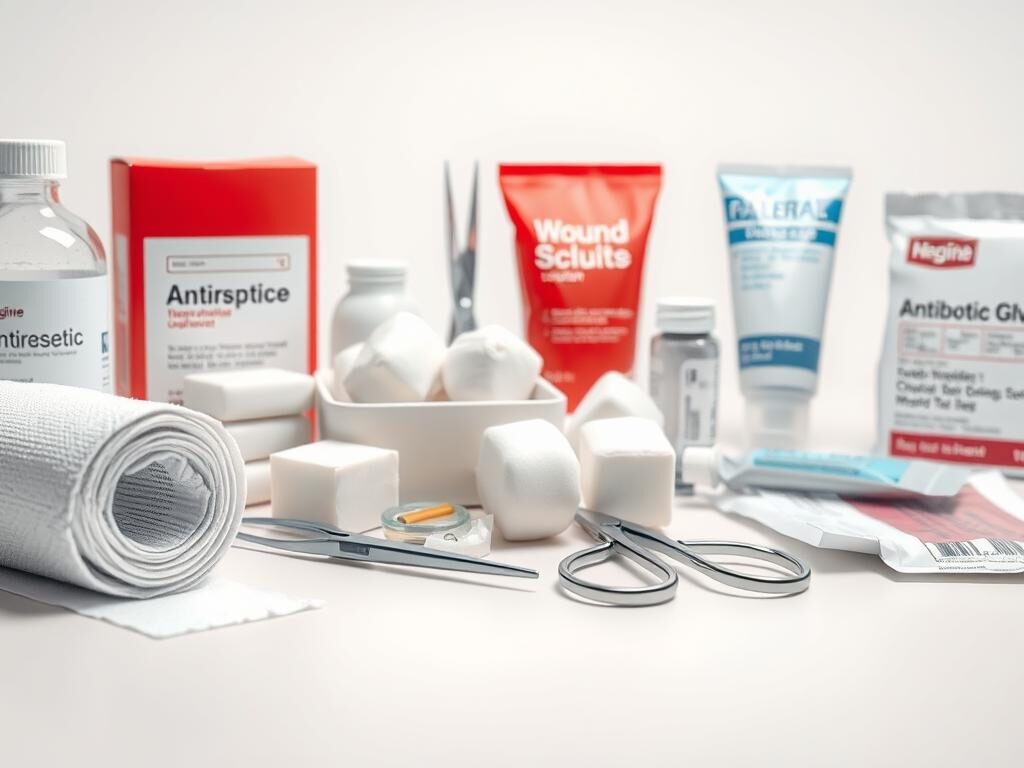
A basic kit should have sterile gloves, non-adherent dressings, medical tape, scissors, and antiseptic wipes. These items are essential for keeping the area clean and aiding in healing.
- Sterile Gloves: Keep the wound clean from bacteria.
- Non-adherent Dressings: Stop the dressing from sticking to the wound.
- Medical Tape: Holds the dressing in place.
- Scissors: For cutting dressings or tape.
- Antiseptic Wipes: Clean the wound and area around it.
Advanced Wound Treatment Options
For complex wounds, advanced treatments might be needed. These include negative pressure wound therapy (NPWT), hyperbaric oxygen therapy, or specialized dressings like foam or alginate. These options help wounds heal faster.
Caregivers should know about these treatments. They should talk to healthcare professionals to find the best treatment for their patients.
When to Seek Professional Help
Caregivers need to know when a wound needs a doctor. Look for increased redness or swelling, pus or discharge, foul odor, or failure to heal. If you see these signs, get help from a wound care specialist.
For more info on when to call a specialist, visit Dominion Mobile Wound Care. They offer expert advice and support.
Daily Wound Assessment Techniques
Daily wound assessment is key to wound care and healing. As a caregiver, you watch the wound’s progress and adjust the care plan as needed.
Identifying Signs of Infection
Spotting infection signs is a big part of daily assessment. Look for:
- Increased redness or swelling around the wound
- Purulent discharge or a foul odor
- Increased pain or tenderness
- Warmth or heat around the wound
- Fever or chills
Understanding Wound Exudate
Wound exudate is a natural part of healing. But, the amount, color, and consistency tell a lot about the wound. Watch:
- The amount of exudate: Is it increasing or decreasing?
- The color: Is it clear, yellow, green, or bloody?
- The consistency: Is it thin and watery or thick and gel-like?
Knowing these details can help spot issues like infection or slow healing.
Documenting Wound Changes
Keeping accurate records is vital for tracking the wound’s progress. It helps you communicate with healthcare providers. Record:
- The wound’s size, depth, and location
- The presence of any signs of infection or other complications
- The amount, color, and consistency of wound exudate
- Any changes to the wound care plan or dressing
Regular documentation ensures the wound care team is well-informed and can make informed decisions.
Best Practices for Dressing Changes
To help wounds heal, caregivers must follow key steps for dressing changes. These steps are vital for wound care and can greatly affect healing.
Frequency of Dressing Changes
The timing of dressing changes varies based on the wound type, exudate amount, and dressing type. Dressings should be changed when they get dirty or wet.
- Wounds with a lot of exudate might need daily or more frequent dressing changes.
- Wounds with little exudate might only need dressing changes every 2-3 days.
- Always follow the advice of a healthcare professional on how often to change dressings.
Techniques for Sterile Dressing Application
Keeping things sterile during dressing changes is key to avoid infections. Here are some important steps:
- Wash your hands well before starting the dressing change.
- Use sterile gloves and tools to handle the dressing and wound.
- Clean the wound with a solution like saline before applying a new dressing.
Choosing the Right Dressing
Picking the right dressing for a wound is essential for healing and managing moisture. Different wounds need different dressings.
| Wound Type | Recommended Dressing Type | Benefits |
|---|---|---|
| Dry or Minimal Exudate | Hydrocolloid or Foam Dressing | Maintains moisture, promotes healing |
| Heavy Exudate | Alginate or Absorbent Dressing | Manages exudate, reduces risk of maceration |
| Infected Wounds | Antimicrobial Dressing | Reduces bacterial load, promotes a clean environment |
By following these best practices, caregivers can greatly help in managing wounds and supporting healing. For complex or ongoing wounds, getting help from local wound services experts is a good idea.
Nutrition’s Role in Wound Healing
Good nutrition is key to effective wound care. It helps the body heal naturally. As a caregiver, knowing what your patients need to eat can really help them get better.
Importance of Hydration
Drinking enough water is vital for wound healing. It keeps the skin flexible and helps nutrients reach the wound. Make sure your patients drink plenty of water to heal well.
They should drink at least eight glasses of water a day. You can also help them stay hydrated with other fluids and foods that help keep water in the body.
Essential Nutrients for Recovery
A diet full of important nutrients helps wounds heal. Protein, vitamins C and A, zinc, and iron are all important. They help fix and grow new tissue.
| Nutrient | Role in Wound Healing | Food Sources |
|---|---|---|
| Protein | Tissue repair and regeneration | Lean meats, fish, eggs, dairy |
| Vitamin C | Collagen synthesis and immune function | Citrus fruits, berries, leafy greens |
| Zinc | Immune function and tissue repair | Oysters, beef, chicken, fortified cereals |
Role of Supplements
While food is best, supplements can help too. They’re good for people who don’t get enough nutrients or are at risk of not getting enough.
Always talk to a doctor before giving supplements. They can decide if they’re needed and how much to take.

Pain Management in Wound Care
Pain management is key in wound care, making patients more comfortable and helping them heal faster. As a caregiver, knowing how to manage pain is vital for the best care.
Recognizing Pain Levels
First, you need to know how much pain a patient is in. Use pain scales like the Numeric Rating Scale (NRS) or Faces Pain Scale (FPS) to measure it. This way, you can adjust pain relief to fit the patient’s needs.
Also, watch for non-verbal signs of pain. Some patients can’t say how much they hurt. Look for signs like restlessness or avoiding certain positions.
Techniques for Pain Relief
There are many ways to ease pain during wound care. Pre-medication before dressing changes can help, as long as it’s okay with a healthcare provider. Relaxation techniques like deep breathing or visualization can also reduce anxiety and pain.
Choosing the right wound dressings is important too. Some dressings are made to be less painful to use, making healing more comfortable.
Communicating with Healthcare Providers
Talking well with healthcare providers is essential for managing pain. Tell them about any changes in pain or how pain relief works. This helps them adjust treatment plans.
Keeping a pain diary is also useful. Write down when pain happens, how bad it is, and what helps or makes it worse. This info is very helpful for making pain management plans better.
By understanding pain, using good pain relief methods, and talking well with healthcare providers, you can make wound care better for your patients.
Educating Patients and Families
As a caregiver, teaching your patients and their families about wound care is key. This knowledge helps them heal better, feel more comfortable, and lowers the chance of problems.
Wound Care Instructions
It’s important to give clear wound care instructions. Explain how to change dressings, spot infection signs, and keep things clean. Using simple words and showing how to do things helps them understand and follow your advice.
Key elements to cover in wound care instructions include:
- How to clean and dress the wound
- Recognizing signs of infection or complications
- Understanding when to seek medical help
Encouraging Questions
Make sure patients and families feel free to ask questions. Talking openly helps clear up any doubts and makes sure everyone knows the care plan. Encourage them to ask about anything, from dressing changes to managing pain.
Setting Realistic Recovery Goals
Setting realistic recovery goals is important. These goals should be clear, reachable, and match the patient’s health and wound status. Check and change these goals as needed to keep the healing on track.
By teaching patients and families, you help them play a big part in their healing. This not only leads to better results but also makes the care experience better. For those in San Antonio looking for top wound care, Dominion Mobile Wound Care is a great resource.
Resources for San Antonio Caregivers
San Antonio caregivers have many local and online resources for wound care education and support. You play a key role in helping wounds heal. Having the right resources can greatly improve your care.
Local Support Groups
Local support groups are great for caregivers to share and get support. In San Antonio, there are groups focused on caregiver support and wound care education.
- Caregiver Support Group of San Antonio
- Wound Care Support Network
- Caregiver Resource Center
Educational Workshops
Educational workshops are a good way to learn about wound care. San Antonio has many workshops and training sessions for caregivers.
| Workshop Name | Focus Area | Frequency |
|---|---|---|
| Wound Care Basics | Fundamentals of wound care | Monthly |
| Advanced Wound Management | Complex wound care techniques | Quarterly |
Online Resources and Websites
For online learning or extra resources, there are many websites and platforms. They offer wound care education and support.
- Wound Care Education Institute: Offers online courses and resources on wound care.
- Caregiver Support Online: Provides forums and resources for caregivers.
Professional Help from Dominion Mobile Wound Care
Wound care is complex and sometimes needs professional help for healing. As a caregiver, you are key to your patient’s recovery. But, there are times when a wound care specialist’s expertise is essential.
Dominion Mobile Wound Care offers professional services right to patients in San Antonio. They provide care that meets each person’s unique needs.
When to Hire a Wound Care Specialist
It’s important to know when to seek professional help for wound care. You should consider hiring a specialist if you see:
- Signs of infection, like more redness, swelling, or pus
- A wound that’s not healing as it should
- More pain or discomfort
- Challenges in managing wound care yourself
Dominion Mobile Wound Care specialists can handle complex wounds. They create care plans that fit each patient’s needs.
Benefits of Mobile Wound Care Services
Mobile wound care services have many advantages, including:
- Convenience: Care is given at home, saving travel time.
- Personalized Care: Specialists make care plans that match each patient’s needs.
- Improved Outcomes: Professional care can lead to quicker healing and better results.
By using Dominion Mobile Wound Care, caregivers can ensure their patients get top-notch care. This improves healing and quality of life.
For caregivers in San Antonio, Dominion Mobile Wound Care is a valuable resource. It offers peace of mind and support during caregiving.
Conclusion: Partnering with Dominion Mobile Wound Care
Effective wound care needs a full approach, with expert help and support. Knowing how to manage wounds well can greatly help patients.
Expert Care for Better Outcomes
Dominion Mobile Wound Care offers local wound services right at patients’ homes. This makes them more comfortable and helps them heal faster. Their team gives each patient the care they need.
Next Steps for Caregivers
Caregivers should get help when they need it. Working with Dominion Mobile Wound Care gives them access to lots of knowledge and resources. This leads to better care for patients.
Seeking Support
If you’re caring for someone with a wound, contact Dominion Mobile Wound Care. They offer expert advice and support. Their help can greatly improve the healing process, giving both caregivers and patients peace of mind.
FAQ
What are the most common types of wounds you may encounter as a caregiver in San Antonio?
As a caregiver, you might see acute and chronic wounds. Acute wounds come from injuries or surgery. Chronic wounds are linked to health issues like diabetes or poor blood flow.
How often should I change dressings for a wound?
Changing dressings depends on the wound’s type, size, and how much it drains. You should change them daily or when they get dirty or wet. For specific advice, talk to a healthcare expert like those at Dominion Mobile Wound Care.
What are the signs of infection in a wound?
Infection signs include more redness, swelling, warmth, or pain around the wound. Also, look for pus or a bad smell. If you see these, get medical help right away.
How can I promote wound healing through nutrition?
Good nutrition is key for healing wounds. Make sure your patient drinks plenty of water and eats a balanced diet. Include foods high in protein, vitamin C, and zinc. But, talk to a doctor before adding supplements.
What are the benefits of seeking professional wound care services from Dominion Mobile Wound Care?
Dominion Mobile Wound Care provides top-notch care, including checks, treatments, and education. They come to you, saving travel and making healing easier.
How can I manage pain associated with wound care?
Managing pain is vital in wound care. Use creams, adjust how often you change dressings, and handle the wound gently. Talking to doctors helps create a good pain plan.
What resources are available for caregivers in San Antonio who need wound care support?
Caregivers in San Antonio can find support groups, workshops, and online help. Dominion Mobile Wound Care also offers professional care and advice.
When should I seek professional help for wound care?
Get professional help if you see infection signs, if the wound isn’t healing, or if you’re unsure about care. Dominion Mobile Wound Care can help with expert advice and treatment.
Add a Comment