


If you’re dealing with a wound that just won’t heal, you’re not alone. Localized skin and soft tissue damage is a big worry, mainly for those who can’t move much.
Pressure injuries happen when pressure stays on certain body parts for too long. These are usually on bony spots. Knowing how serious these injuries are is key to treating them right.
At Dominion Mobile Wound Care, our team is all about giving the best care for wounds. We help you understand the stages of pressure injuries and what treatments are out there. This is your first step to healing.
Key Takeaways
- Pressure injuries are a big worry for people who can’t move much.
- Knowing how serious these injuries are is vital for good treatment.
- Dominion Mobile Wound Care offers top-notch wound care services.
- Understanding the stages of pressure injuries is key for the right treatment.
- Good wound care can really help improve healing.
What Are Pressure Injuries?
It’s important to know about pressure injuries to care for those who need it most. These injuries, also called bedsores, decubitus ulcers, or pressure ulcers, harm the skin and tissue. They happen when skin is under pressure for too long.
Definition and Common Terminology
Pressure injuries are caused by skin pressure that leads to damage. Terms like bedsores and decubitus ulcers are often used the same way. Knowing these terms helps healthcare teams talk clearly.
Impact on Patient Health and Quality of Life
Pressure injuries can really hurt a patient’s health. They might lead to infections and longer hospital stays. These injuries also make patients feel pain and discomfort, affecting their quality of life.
The Prevalence of Pressure Injuries in the United States
In the U.S., many patients in healthcare settings get pressure injuries. They often happen at the sacrum, ischial tuberosity, and greater trochanter.
Here’s a breakdown of the prevalence and common locations of pressure injuries:
| Location | Prevalence |
|---|---|
| Sacrum | 70% |
| Ischial Tuberosity | 15% |
| Greater Trochanter | 10% |
Understanding pressure injuries helps healthcare providers prevent and treat them. This can greatly improve patient outcomes.
Causes and Risk Factors for Pressure Injuries
Pressure injuries happen due to several factors. These include pressure, friction, and moisture. These can cause skin breakdown and lead to pressure ulcers.
Primary Causes of Skin Breakdown
Long-term pressure on the skin is a main reason for pressure injuries. Friction and shear forces can make it worse, mainly in those who can’t move much. Moisture also plays a part by weakening the skin.
Populations at Highest Risk
Some groups face a higher risk of getting pressure injuries. These include older adults, people with spinal cord injuries, and those with chronic illnesses. These conditions limit their mobility and skin health.
Medical Conditions That Increase Vulnerability
Medical issues like diabetes, vascular disease, and neurological disorders raise the risk. These can harm blood flow, feeling, and movement. This makes it hard for the skin to handle pressure and other factors.
If you or a loved one is at risk, taking steps to prevent pressure injuries is key. Look into hiring a professional wound care service like Dominion Mobile Wound Care. They can provide the right care and treatment.
Pressure Injury Stages: Classification and Identification
Understanding the stages of pressure injuries is key for healthcare workers. It helps them give the right care. Knowing the stages lets them see how serious the injury is and plan the best treatment.
The National Pressure Injury Advisory Panel (NPIAP) Classification System
The NPIAP system is common in the U.S. for classifying pressure injuries. It breaks down injuries into stages based on tissue damage. These stages go from Stage 1, where the skin looks normal but has red spots, to Stage 4, where the tissue is lost completely.

Skin Breakdown Diagnosis Techniques
Diagnosing skin breakdown needs a careful look at the affected area. Doctors use visual checks and touch to see how damaged the tissue is.
The Importance of Early Detection
Finding pressure injuries early is key to stopping more damage and helping them heal. Spotting them early lets you take steps to lessen pressure and aid in healing.
| Stage | Description |
|---|---|
| Stage 1 | Intact skin with non-blanchable erythema |
| Stage 2 | Partial-thickness skin loss |
| Stage 3 | Full-thickness skin loss |
| Stage 4 | Full-thickness tissue loss |
Knowing the stages of pressure injuries and using the NPIAP system helps in giving good care. At [Company Name], we aim to offer top-notch wound care solutions.
Stage 1 Pressure Injuries: Early Warning Signs
It’s important to know the early signs of stage 1 pressure injuries for good wound care. These injuries show as non-blanchable erythema, which means the skin is starting to break down.
Clinical Presentation and Characteristics
Stage 1 pressure injuries have skin that looks red, blue, or purple, based on your skin color. The area might hurt, feel firm, or soft when touched.
Distinguishing Stage 1 from Normal Skin Changes
Telling stage 1 pressure injuries apart from normal skin changes is hard. Healthcare workers need to check the skin closely. They look for non-blanchable erythema that doesn’t go away when pressure is removed.
Immediate Interventions for Stage 1 Wounds
For stage 1 pressure injuries, it’s key to act fast. Move the patient often, use special surfaces to spread out pressure, and keep the skin clean. These steps can stop the injury from getting worse.
| Intervention | Description | Benefits |
|---|---|---|
| Repositioning | Regularly turning the patient to relieve pressure | Reduces pressure on vulnerable areas |
| Support Surfaces | Using specialized mattresses and cushions | Distributes pressure more evenly |
| Skin Hygiene | Maintaining cleanliness and moisture balance | Prevents skin breakdown and infection |
If you’re worried about stage 1 pressure injuries or need help with wound care, contact Dominion Mobile Wound Care for expert help.
Stage 2 Pressure Injuries: Partial-Thickness Skin Loss
When pressure injuries reach stage 2, they cause partial-thickness skin loss. This is a big challenge for both patients and caregivers. The skin starts to break down, possibly forming blisters, abrasions, or shallow craters.
Identifying Stage 2 Pressure Wounds
Stage 2 pressure injuries show partial-thickness skin loss. This affects the top layer of skin or the layer beneath, or both. The wound might look like a blister or an open sore. It can be painful, firm, or soft.
Common Locations and Appearance
These injuries often happen on bony parts like the heels, ankles, and tailbone. The wound bed might be pink or red. There could be some drainage or bleeding.
Evidence-Based Treatment Approaches
Managing stage 2 pressure injuries well means relieving pressure and keeping the area clean. You should move the patient often, keep things clean, and use dressings that help the wound heal. This includes using dressings that keep the area moist.
Knowing how to handle stage 2 pressure injuries is key. At our company, we’re dedicated to the best care for these wounds.
Stage 3 and 4 Pressure Injuries: Severe Tissue Damage
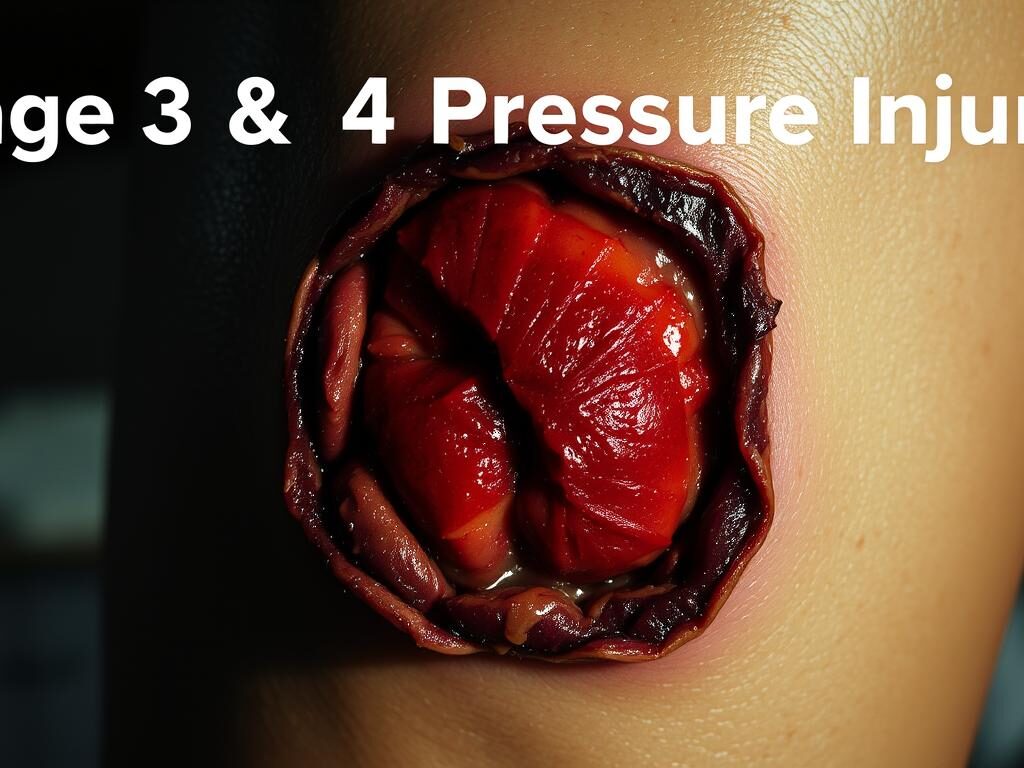
It’s important to know how serious stage 3 and 4 pressure injuries are. These stages mean the skin is lost, and deeper tissues might be damaged too.
Understanding Bed Sore Severity in Advanced Stages
Stage 3 injuries have skin loss but no bone or muscle is seen. Stage 4 is worse, with bone, tendon, or muscle exposed. These injuries need quick and thorough care.
Complications Associated with Deep Tissue Damage
Damage to deep tissues in stage 3 and 4 injuries can cause big problems. These include:
- Infection
- Osteomyelitis (bone infection)
- Sepsis
- Prolonged healing times
These issues can really hurt a patient’s health and life quality. Quick action is key.
Comprehensive Management Strategies
Managing stage 3 and 4 injuries needs a detailed plan:
| Strategy | Description |
|---|---|
| Debridement | Removing dead tissue to help healing |
| Wound Dressings | Using dressings to keep the wound moist |
| Pressure Redistribution | Using support surfaces and moving to avoid pressure |
Recovery Expectations and Timelines
Healing from stage 3 and 4 injuries takes a lot of time. With the right care, patients can see big improvements. But, how fast they heal depends on their health and the treatment plan.
If you or a loved one has stage 3 or 4 injuries, get professional wound care. Think about hiring Dominion Mobile Wound Care for expert help and support during recovery.
Unstageable and Deep Tissue Pressure Injuries
Unstageable and deep tissue pressure injuries are tough to diagnose and treat. Their true extent is hard to see because of slough or eschar. This makes it hard to accurately stage them.
Characteristics and Assessment Challenges
Unstageable pressure injuries have a wound bed covered with slough or eschar. This makes it hard to see how deep the tissue damage is. Accurate assessment is challenging because of this.
Deep tissue pressure injuries, on the other hand, have intense pressure damage to the tissue below. But, they often don’t show visible surface damage at first.
Diagnostic Approaches for Obscured Wounds
Diagnosing these injuries needs a detailed clinical assessment. Healthcare professionals use patient history, clinical presentation, and sometimes imaging to guess the extent of tissue damage. Keeping a close eye on the injury and documenting its progress is key.
Specialized Treatment Protocols
Treating these injuries requires specialized wound care protocols. Debridement might be needed to see the true extent of the injury. For deep tissue pressure injuries, acting fast is important to stop more damage.
At places like those run by Healogics, a team of experts works together. They use a multidisciplinary approach to manage these complex injuries. This ensures the best care for patients.
Prevention Strategies for Pressure Injuries
You can lower the risk of pressure injuries by using good prevention strategies. It’s important to know the risk factors and use the right actions to prevent them.
Repositioning and Mobility Techniques
It’s key to move people regularly to prevent pressure injuries. Move them every two hours if they can’t move themselves. A schedule helps keep things consistent. Also, lifting patients correctly can lessen the forces that cause injuries.
Support Surfaces and Pressure Redistribution
Choosing the right support surfaces is also vital. Special mattresses and cushions help spread out the pressure. This can lower injury risk. Some surfaces change pressure to help even more.
Skin Care and Moisture Management
Good skin care is essential to prevent pressure injuries. Keep the skin clean and dry, and manage moisture well. Check the skin often to catch early signs of injury.
Nutritional Interventions for Prevention
Good nutrition is key to preventing pressure injuries. Make sure to eat enough protein, vitamins, and minerals. They help keep the skin strong and aid in healing. For more on wound care, visit Dominion Mobile Wound Care.
Using these strategies can greatly lower the risk of pressure injuries. For tailored care, talk to wound care experts. Dominion Mobile Wound Care offers expert help to manage and prevent pressure injuries.
Advanced Treatment Options for All Pressure Injury Stages
Advanced wound care techniques are key to treating pressure injuries well. You have many options to manage these injuries, based on their stage and severity.
Modern Wound Dressings and Their Applications
Modern wound dressings are vital in managing pressure injuries. Different types of dressings are chosen based on the wound’s needs. For example, foam dressings manage exudate, while hydrocolloid dressings help keep the wound moist.
Debridement Methods and Indications
Debridement is a key step in wound care, removing dead tissue to aid healing. You can use surgical debridement, enzymatic debridement, or autolytic debridement, depending on the wound and patient’s needs.
Negative Pressure Wound Therapy
Negative Pressure Wound Therapy (NPWT) is a modern treatment that helps wounds heal. It uses a vacuum dressing to enhance blood flow and reduce bacteria, creating a better healing environment.
Biological and Cellular Therapies
Biological and cellular therapies are at the forefront of wound care. These therapies use biological agents and cellular products to boost wound healing and tissue growth.
Pain Management Approaches
Managing pain is essential in treating pressure injuries. You can use pharmacological interventions and non-pharmacological methods to control pain and enhance patient comfort.
By using these advanced treatments, you can greatly improve outcomes for patients with pressure injuries.
Conclusion: The Importance of Professional Wound Care
Managing pressure injuries well means knowing about pressure injury stages and the best care methods. Professional wound care is key for healing, avoiding complications, and better patient results.
Bed sore severity can change a lot. It’s important to treat these wounds quickly and right. Knowing the stages of pressure injuries helps get the right care to stop things from getting worse.
Dominion Mobile Wound Care offers special wound care services. They provide expert help for those with pressure injuries. Their team is committed to giving top-notch care to help you or your loved ones get better. If you’re facing pressure sores, think about contacting Dominion Mobile Wound Care for professional help.
FAQ
What are the main causes of pressure injuries?
Pressure injuries happen when skin is under pressure for too long. This can cause skin breakdown. Other factors like friction, shear, and health issues like diabetes also play a role.
How are pressure injuries classified?
The National Pressure Injury Advisory Panel (NPIAP) system classifies pressure injuries. They range from stage 1 (least severe) to stage 4 (most severe). There are also unstageable and deep tissue injuries.
What are the characteristics of stage 1 pressure injuries?
Stage 1 injuries show non-blanchable erythema, meaning the skin stays red even when pressed. They might feel warm or cool and can be painful.
How can I prevent pressure injuries?
To prevent them, move and reposition regularly. Use support surfaces and devices to reduce pressure. Keep the skin clean and moisturized. Also, eat well to support healing.
What are the treatment options for pressure injuries?
Treatment depends on the injury’s stage and severity. It may include special dressings, debridement, and negative pressure therapy. Advanced treatments are also available.
How can I distinguish between normal skin changes and stage 1 pressure injuries?
Look for non-blanchable erythema and warmth or coolness in stage 1 injuries. If unsure, get a healthcare professional’s opinion.
What are the complications associated with deep tissue pressure injuries?
Deep tissue injuries can lead to serious issues like infection and sepsis. They can even be fatal. Quick and proper treatment is key to avoid these risks.
Can pressure injuries be treated at home?
Some injuries can be managed at home. But, always check with a healthcare professional first. Severe injuries need professional care.
How can Dominion Mobile Wound Care help with pressure injury treatment?
Dominion Mobile Wound Care offers expert care for pressure injuries. They assess, treat, and manage them. Their team creates a personalized plan to aid healing and prevent complications.
Add a Comment