


If you have trouble moving or are stuck in bed, you might get bedsores, also called pressure ulcers. These happen when pressure on the skin cuts off blood flow. This damage affects the skin and tissues underneath.
Knowing how these wounds progress is key to treating them right. The stages help doctors figure out how bad the wound is. This helps them decide the best treatment.
Spotting these wounds early and taking good care of them can make a big difference. If you or someone you care about is at risk, get professional help. The experts at Dominion Mobile Wound Care can offer the care and treatment you need.
Key Takeaways
- Pressure ulcers, or bedsores, are a serious condition that can result from prolonged pressure on the skin.
- Understanding the stages of pressure ulcers is vital for effective treatment.
- Early detection and proper care can improve outcomes and reduce complications.
- Individuals with limited mobility are at a higher risk of developing pressure ulcers.
- Professional wound care services, like those offered by Dominion Mobile Wound Care, can provide thorough treatment.
What are Pressure Ulcers?
Pressure ulcers are a big problem in wound care. They need quick and effective treatment. If you can’t move much or are stuck in bed, you might be at risk. Knowing what pressure ulcers are is the first step to prevent and manage them.
Definition and Overview
Pressure ulcers, also known as bed sores or pressure sores, damage the skin and tissue. They happen when there’s too much pressure or when pressure and shear stress combine. These ulcers can cause great pain, infection, and slow healing.
It’s key to know what causes them. Factors include not being able to move, friction, and shear stress.
Importance of Early Detection
Finding pressure ulcers early is vital for managing them well. The Cleveland Clinic says early detection leads to better outcomes. Knowing the signs and symptoms can help lower the risk of complications.
Early detection is very important. It lets healthcare providers start the right care, like moving you, cleaning the wound, and using special devices. Regular checks are essential to catch ulcers early.
| Stage | Description | Key Characteristics |
|---|---|---|
| 1 | Non-Blanchable Erythema | Skin intact with non-blanchable redness |
| 2 | Partial Thickness Loss | Loss of skin layer, may present as a blister or abrasion |
| 3 | Full Thickness Skin Loss | Extends through all skin layers, may expose fat |
Understanding pressure ulcers and the need for early detection helps prevent them. It also ensures timely treatment if they happen. Professional care is key, and regular checks are vital for good wound care.
The Anatomy of Pressure Ulcers
Pressure ulcers form because of how our bodies are built, mainly at bony points. These areas are more at risk because bone is near the skin.
Affected Body Parts
Pressure ulcers often pop up on bony spots. The most common spots include:
- The sacrum
- The ischial tuberosity
- The greater trochanter
These spots get a lot of pressure, mainly when sitting or lying down. Regular repositioning is key to avoid too much pressure.
Causes of Pressure Ulcers
Several things can lead to pressure ulcers, like:
- Prolonged pressure on the skin, cutting off blood flow.
- Friction and shear forces that harm the skin and tissues.
- Poor nutrition and hydration, making skin unhealthy.
- Medical issues that mess with blood flow and feeling, like diabetes and spinal cord injuries.
Knowing these causes helps prevent them. Use support surfaces and eat well to keep your skin healthy.
Stage 1: Non-Blanchable Erythema
The first stage of pressure ulcers is called non-blanchable erythema. It’s a sign of skin breakdown. The skin looks fine but might show a spot that doesn’t turn white when pressed.
This spot can also feel warmer or cooler, and it might hurt or feel stiff. It’s important to watch for these signs because they mean serious damage could happen if not treated.

Characteristics and Symptoms
Stage 1 pressure ulcers show non-blanchable erythema, which means tissue damage is starting. The area might feel different in temperature and could hurt, feel firm, or soft. It’s key to keep an eye on these signs because they can get worse if not treated.
The skin looks okay at this stage, but the non-blanchable erythema is a warning. It means pressure ulcers could form if we don’t act fast. It’s vital to check often and use the right prevention methods.
Treatment Options
To treat Stage 1 pressure ulcers, we need to ease the pressure, improve blood flow, and keep the skin clean. Using special mattresses or cushions can help take off some pressure.
- Repositioning regularly to reduce sustained pressure
- Using pressure-redistributing support surfaces
- Maintaining good skin hygiene and moisturizing the skin
- Monitoring the affected area for signs of progression
By doing these things, we can stop Stage 1 pressure ulcers from getting worse. Early action is important for wound prevention and avoiding more problems.
Stage 2: Partial Thickness Loss
Stage 2 pressure ulcers show partial thickness skin loss. This is a big challenge in wound care. The ulcer might look like a blister or open sore. This means the damage has gone deeper than just the skin’s surface.
Identifying Stage 2 Ulcers
To spot Stage 2 pressure ulcers, look for these signs:
- Partial thickness loss of skin
- Presence of a blister or open sore
- Redness and inflammation around the affected area
The ulcer might be more noticeable than in Stage 1. You might see drainage or exudate. It’s key to identify it correctly for the right treatment.
Recommended Care Approaches
Caring for Stage 2 pressure ulcers needs wound cleaning, dressing, and pressure relief. Here are some care tips:
| Care Approach | Description |
|---|---|
| Wound Cleaning | Gently clean the ulcer with saline solution to prevent infection. |
| Dressing | Apply a dressing that keeps the area moist, helping it heal. |
| Pressure Relief | Regularly move the patient to take pressure off the sore area. |
Keep an eye on how the ulcer heals and change the care plan if needed. Talking to healthcare experts can help tailor care to the patient’s needs.
Stage 3: Full Thickness Skin Loss
Understanding Stage 3 pressure ulcers is key for managing wounds and preventing them from getting worse. When full-thickness skin loss happens, it means the skin and the layer under it are damaged.
Distinguishing Features
Stage 3 pressure ulcers show a lot of skin damage. The damage goes through the skin and into the layer under it, which might show fat. Key characteristics include a deep crater-like look and possible tunneling of the tissue around it.
Management Strategies
Managing Stage 3 pressure ulcers needs a detailed plan. Focus on wound prevention like moving the person often and using special mattresses. Also, keep the area dry. Debridement might be needed to clean out dead tissue.
- Regularly check the wound and change the care plan if needed.
- Use a complete wound care plan, including dressing changes and fighting infections.
- Make sure the person gets enough food and water to help heal.
By knowing the signs and using the right care, you can help people with Stage 3 pressure ulcers get better.
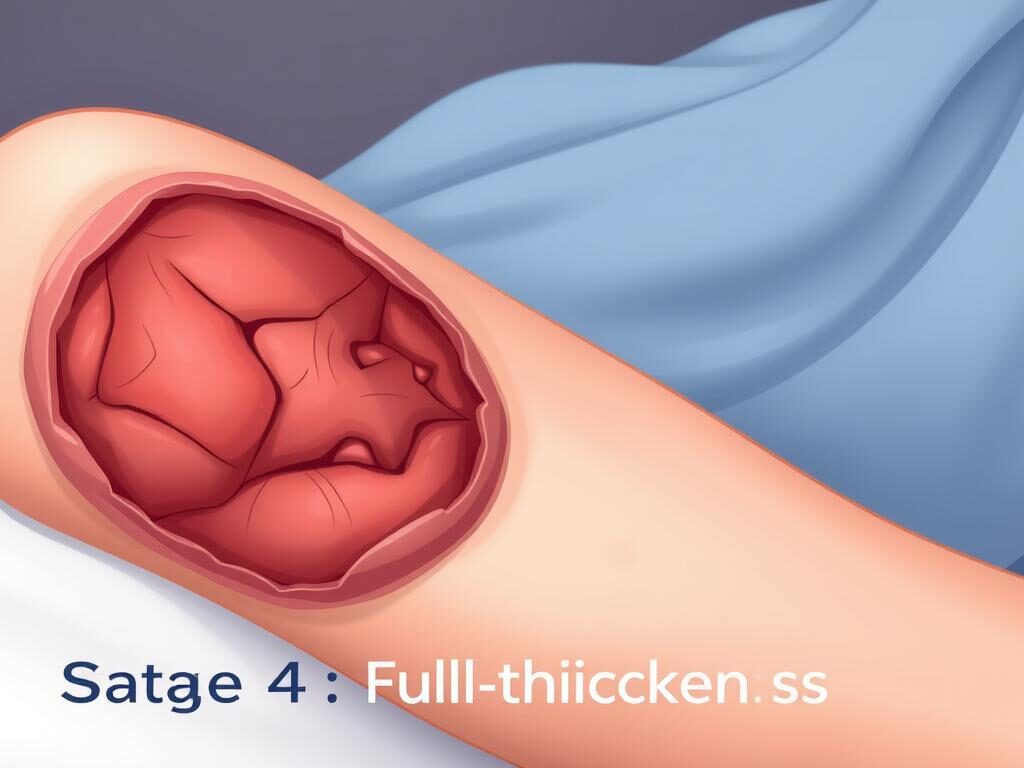
Stage 4: Full Thickness Tissue Loss
Stage 4 pressure ulcers have full-thickness tissue loss. This means they expose bone or muscle. It’s the most severe type, needing careful management to avoid serious issues.
Severe Symptoms and Risks
The symptoms of Stage 4 pressure ulcers are serious. They can include:
- Extensive tissue loss, potentially exposing bone, tendon, or muscle
- Significant risk of infection due to the open wound
- Possible presence of slough or eschar on the wound bed
- Undermining or tunneling of the wound edges
These ulcers pose significant risks. They can lead to life-threatening infections and take a long time to heal. The damage to bone or tendon makes healing even harder.
Advanced Treatment Solutions
Treating Stage 4 pressure ulcers needs advanced care. This includes:
- Debridement to remove dead tissue and promote a clean wound environment
- Application of advanced wound dressings to manage exudate and promote healing
- Use of negative pressure wound therapy (NPWT) to enhance wound closure
- Surgical intervention in some cases to repair damaged tissue or close the wound
Managing Stage 4 pressure ulcers well requires a detailed plan. It needs the help of skilled wound care professionals to handle these severe wounds.
Risk Factors for Developing Pressure Ulcers
Knowing the risk factors for pressure ulcers is key to preventing them. By understanding these factors, you can lower your chance of getting these painful sores.
Common Risk Factors
Several things can make you more likely to get pressure ulcers. These include:
- Immobility: Not moving much can put too much pressure on certain spots.
- Malnutrition: Not eating well can slow down healing and make skin more prone to damage.
- Moisture: Too much moisture can weaken the skin, making it easier to hurt.
Other risk factors include being older, having chronic conditions like diabetes, and poor blood flow. Knowing these can help you prevent them.
Preventive Measures
Preventing pressure ulcers requires several steps. You can lower your risk by:
| Preventive Measure | Description | Benefits |
|---|---|---|
| Regular Repositioning | Changing positions often to avoid too much pressure. | Helps blood flow and reduces pressure on sensitive areas. |
| Nutritional Support | Eating well to keep your skin healthy. | Helps with healing and keeps your immune system strong. |
| Skin Care | Keeping your skin clean and dry to prevent damage. | Lessens the chance of skin irritation and damage. |
For more on wound care and preventing pressure ulcers, check out resources on in-home wound care.
Importance of Wound Care Management
Wound care management is key in treating bedsores. It’s vital for healing pressure ulcers and avoiding more problems. As a patient or caregiver, you have a big role in this.
Role of Professional Care
Professional wound care is critical for checking the stage and severity of pressure ulcers. Healthcare experts can create custom treatment plans, like dressing changes and debridement. Regular professional care can greatly improve healing outcomes.
Professional care does more than just treat the wound. It also looks at the underlying causes and risk factors. This all-around approach ensures you get the best care for your condition.
Benefits of Regular Assessments
Regular checks by healthcare professionals are essential for tracking wound healing. These checks help spot complications early, allowing for quick action. Early detection of issues can prevent severe complications.
A regular check includes looking at the wound’s size, depth, and tissue type, and checking for infection signs. This info is key for adjusting treatment plans.
| Benefits | Description |
|---|---|
| Improved Healing Outcomes | Professional care leads to better healing rates and reduced risk of complications. |
| Early Detection of Complications | Regular assessments help in early detection of possible issues, allowing for timely intervention. |
| Personalized Care Plans | Healthcare professionals can tailor treatment plans to individual needs, making care more effective. |
How Dominion Mobile Wound Care Can Help
With Dominion Mobile Wound Care, you get top-notch treatment right at home. Their team is all about expert care for preventing wounds and managing skin issues.
Expert Mobile Services
Dominion Mobile Wound Care brings all the care you need right to your door. Their mobile services are made to fit your needs. This way, you get the care you need without having to leave your house.
- Personalized Assessments: Initial and ongoing assessments tailored to your condition.
- Advanced Treatment Options: Utilization of the latest wound care technologies and techniques.
- Ongoing Support: Continuous monitoring and adjustments to your care plan as needed.
Tailored Care Plans
Dominion Mobile Wound Care knows everyone’s needs are different. They create personalized care plans just for you. These plans are made to meet your specific wound care needs, helping you heal and prevent future wounds.
By focusing on your unique needs, Dominion Mobile Wound Care gives you the best treatment for preventing wounds and skin issues. Their dedication to quality care makes them a reliable partner in your healing journey.
Taking the First Step Toward Healing
Understanding the stages of pressure ulcers is key to stopping skin breakdown and preventing more problems. If you or a loved one has bedsores or pressure ulcers, getting professional help is essential for healing.
Dominion Mobile Wound Care provides top-notch wound care services. They offer wound prevention and treatment plans made just for you. Their team is committed to giving you personalized care to help you heal and feel better.
Reaching Out for Professional Care
To start healing, reach out to Dominion Mobile Wound Care. They can tell you more about their services and set up a meeting. By tackling pressure ulcer stages and using effective prevention, you can greatly improve healing and lower the risk of skin breakdown.
Don’t delay in taking care of your wound needs. Contact Dominion Mobile Wound Care today to start your path to recovery.
FAQ
What are pressure ulcers, and how do they develop?
Pressure ulcers, also known as bedsores, are damage to the skin and tissue. They happen when skin is under pressure for too long. Knowing the stages helps in early detection and treatment.
What are the common risk factors for developing pressure ulcers?
Risk factors include limited mobility and poor nutrition. Diabetes and certain medical conditions also increase the risk. Preventive steps like regular movement and good nutrition can help.
How are pressure ulcers staged, and what are the characteristics of each stage?
Pressure ulcers are staged from Stage 1 to Stage 4 based on damage severity. Each stage has its own signs and needs specific treatment.
What are the treatment options for Stage 1 pressure ulcers?
For Stage 1 ulcers, treatment focuses on relieving pressure and improving blood flow. Professional advice is key for effective management.
How can wound care management help in the healing process?
Wound care is vital for healing, preventing infection, and avoiding complications. Regular checks and tailored care plans can greatly improve healing.
What services does Dominion Mobile Wound Care offer for pressure ulcer management?
Dominion Mobile Wound Care offers mobile services like assessments and care plans. They help manage ulcers to aid in healing.
How can I get in touch with Dominion Mobile Wound Care for professional wound care services?
Contact Dominion Mobile Wound Care for a consultation. Their team is ready to help with expert care and support during recovery.
Add a Comment