

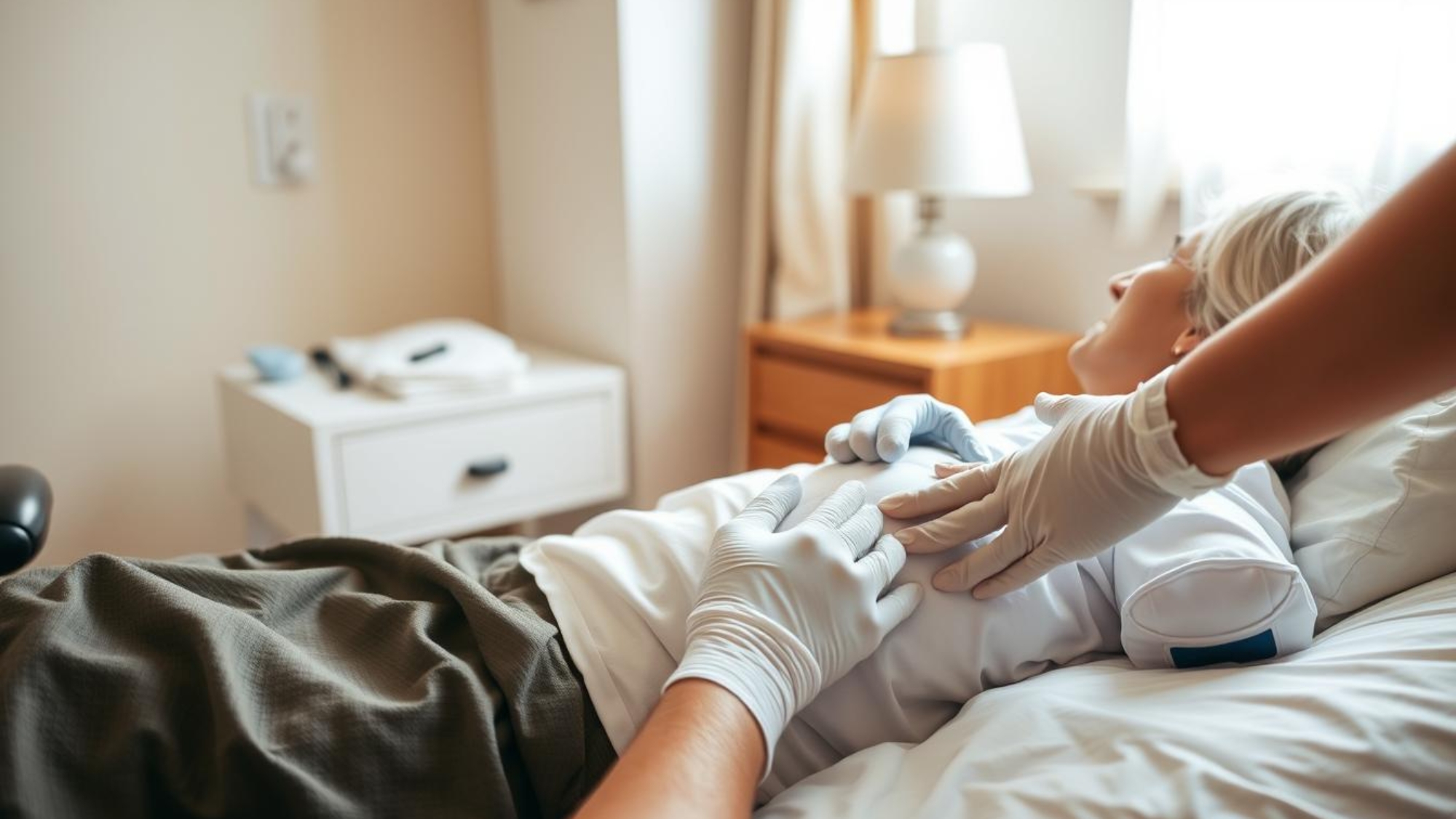
Pressure sores, also known as pressure ulcers, show deeper problems with skin and tissue. They happen when there’s too much pressure, often in people who can’t move much. It’s key to know when to get help from in-home wound care services.
Good care for bedsores is vital for our health. Learning about pressure sores helps us act fast.
Key Takeaways
- Pressure sores indicate tissue damage from prolonged pressure.
- In-home wound care is crucial for individuals with limited mobility.
- Timely intervention can prevent further complications.
- Regular monitoring can lead to effective bedsore treatment.
- Professional support enhances healing and recovery.
Understanding Pressure Sores
First, let’s learn about pressure sores. These sores happen when skin gets hurt from too much pressure. This usually happens on bony spots like heels or hips. They’re also called bedsores or decubitus ulcers.
Knowing these names helps us talk about how to stop them.
What are Pressure Sores?
Pressure sores are damage to the skin and what’s under it. They mostly happen to people who can’t move much. This leads to bad blood flow and tissue damage.
Spotting them early is key to managing and preventing them.
How Pressure Sores Develop
Sores form when too much pressure cuts off blood flow. Being stuck in one place for too long is a big risk. This includes being in a wheelchair or bed for a long time.
Knowing what causes them helps us care for people better.
Common Risk Factors for Pressure Sores
Some things make us more likely to get pressure sores. Being older is a big risk. So are medical problems like diabetes and Alzheimer’s.
Also, skin that’s not strong and not eating enough can increase risk. Knowing these risks helps us prevent sores better.
Stages of Pressure Sores
Knowing the different stages of pressure sores is key in wound care nursing. It helps us act fast to stop more harm and help wounds heal. Let’s look at what each stage means to get better at this important job.
Identifying Stage I and II Pressure Sores
Stage I pressure sores look like a red spot that doesn’t turn white when pressed. This first sign means we need to watch it closely. Stage II shows open sores or blisters, meaning the skin has broken down. Spotting these early helps avoid bigger problems.
Recognizing Stage III and IV Pressure Sores
Stage III pressure sores show deeper tissue loss, with fat visible. This means the wound is getting worse and needs quick help. Stage IV has even worse damage, going through all layers of tissue, possibly showing muscle or bone. Knowing these signs is key to getting the right care.
Unstageable and Deep Tissue Injuries
Unstageable pressure sores have dead tissue covering them, hiding how bad they are. We can’t see how deep they are until we remove this layer. Deep tissue injuries have dark skin, showing damage under the surface. Quick action can greatly improve healing chances.
Symptoms and Warning Signs of Pressure Sores
It’s important to know the signs of bedsores to prevent them. We need to watch for changes that might mean a sore is coming. Spotting these signs early helps us stop problems before they get worse.
Initial Signs of Pressure Injury
The first signs of a sore might be a red or different-colored spot on the skin. For people with darker skin, it could look purple or blue. We should always look for any skin changes that could mean a sore is starting.
By catching these signs early, we can stop sores from getting worse.
Symptoms Indicative of Infection
Don’t ignore signs of infection. Look for pus, a bad smell, warmth, or fever. If you see these, get medical help right away.
Spotting these signs fast is key to getting better and staying healthy.
Importance of Timely Intervention
Acting quickly is key when it comes to pressure sores. Ignoring them can lead to big health problems. By acting fast, we can stop these issues before they get worse.
Consequences of Ignoring Pressure Sores
Not treating pressure sores can cause serious health issues. Sores can get infected, leading to bigger problems. This might mean we need to go to the hospital for a long time.
But, if we act early, we can avoid these big problems. This helps us stay healthy and feel better.
Role of Wound Care Nurses in Treatment
Wound care nurses are very important in treating pressure sores. They use special methods to help us heal. Their skills help us get better faster.
These nurses are our guides on the road to healing. They help us with their knowledge and care.

Effective Pressure Sore Care Strategies
We know how important it is to prevent and treat pressure sores. Using home ulcer care and pressure-relieving devices helps. This makes healing faster and makes people more comfortable.
Home Ulcer Care Techniques
Home ulcer care is key for managing pressure sores. Here are some top tips:
- Regular repositioning: Moving every two hours helps avoid new sores.
- Maintaining skin hygiene: Clean the sore area with mild soap and water to stop infections.
- Using appropriate moisture barriers: Moisture barriers keep the skin moist and protect it, helping it heal.
- Monitoring progression: Watch for any changes in sores to catch problems early.
Utilizing Pressure-Relieving Devices
Pressure-relieving devices are important for home care. They help spread out weight, reducing pressure points. Here are some good choices:
- Specialized cushions: Cushions that spread out pressure can lower the risk of new sores.
- Pressure-relieving mattresses: These mattresses offer better support and comfort, great for sore prevention.
- Supports and positioning devices: Supports help keep the body in the right position, which is good for the skin.
Pressure Sore Care at Home San Antonio
Finding the right help for in-home wound care in San Antonio is key. The area has many local support services. These help people heal at home.
Local Resources for In-Home Wound Care
In San Antonio, there are many ways to get wound care at home. Agencies offer therapy and nursing for pressure sore care. They provide:
- Skilled nursing visits for regular wound checks
- Physical and occupational therapy to help move better
- Special wound care products
These local resources help us get the care we need to heal well.
Professional Support for Optimal Healing
Working with local healthcare providers is very helpful. It ensures we get the best wound care. This teamwork offers:
- Regular checks to avoid problems
- Treatment plans made just for us
- Help on how to live better for healing
Getting help from professionals is crucial for healing and getting better.

Nutrition and Health in Wound Healing
Nutrition is key for skin health when we heal. Eating right helps our bodies fix and grow back tissues. A balanced diet helps us get better from wounds or injuries.
The Role of Nutrition in Skin Health
Good nutrition is important for healing. Foods high in proteins, vitamins A and C, and zinc help a lot. They help fix and grow back skin cells.
By eating these foods, we make our skin stronger. This helps our overall health too.
Hydration and Its Importance
Drinking enough water is very important for healing. It helps blood flow and nutrients get to where they need to go. Water helps cells get the vitamins and minerals they need.
Conclusion
Effective pressure sore care is key for those at risk, like those at home. Knowing the signs and how to prevent them helps a lot. It’s important for caregivers and loved ones to focus on prevention.
In-home wound care is very helpful for those with pressure sore issues. With the right knowledge and help, we can keep our loved ones comfortable. Early action is crucial for healing and improving their life.
Looking into services like Dominion Mobile Wound Care is a good idea. This can really help in healing and avoiding more problems. Together, we can make a big difference in their lives.
FAQ
What are the key signs that someone may have a pressure sore?
Look for red or discolored patches on the skin. These spots might not go away when pressed. Also, watch for open sores or blisters and changes in skin texture. It’s important to check often, mainly for people who can’t move much.
How can we prevent pressure sores in individuals who are bedridden?
Move them often to avoid pressure. Keep their skin clean. Use special cushions and mattresses. Make sure they eat well and drink enough water.
When should we seek professional help for pressure sores?
Get help if the redness doesn’t go away or gets worse. Look out for swelling, pus, or a bad smell. Quick action can stop things from getting worse.
What role do wound care nurses play in treating pressure sores?
Wound care nurses focus on pressure sores. They create care plans and check on healing. They also teach others how to care for sores at home.
What techniques do we use for effective home ulcer care?
Check the skin often for changes. Keep sores clean and dry. Use barriers to protect the skin. Make sure they eat well and drink enough water.
Can nutrition really impact the healing of pressure sores?
Yes, good food is key for healing. Foods with proteins, vitamins A and C, and zinc help fix the skin and tissue. This helps wounds heal faster.
Where can we find local resources for in-home wound care in San Antonio?
San Antonio has many services for wound care at home. Look for nursing and therapy options. Find trusted local providers for the best care.
How does staying hydrated contribute to pressure sore management?
Drinking enough water helps blood flow and healing. It keeps the skin flexible and strong. This lowers the chance of getting pressure sores.
Add a Comment