

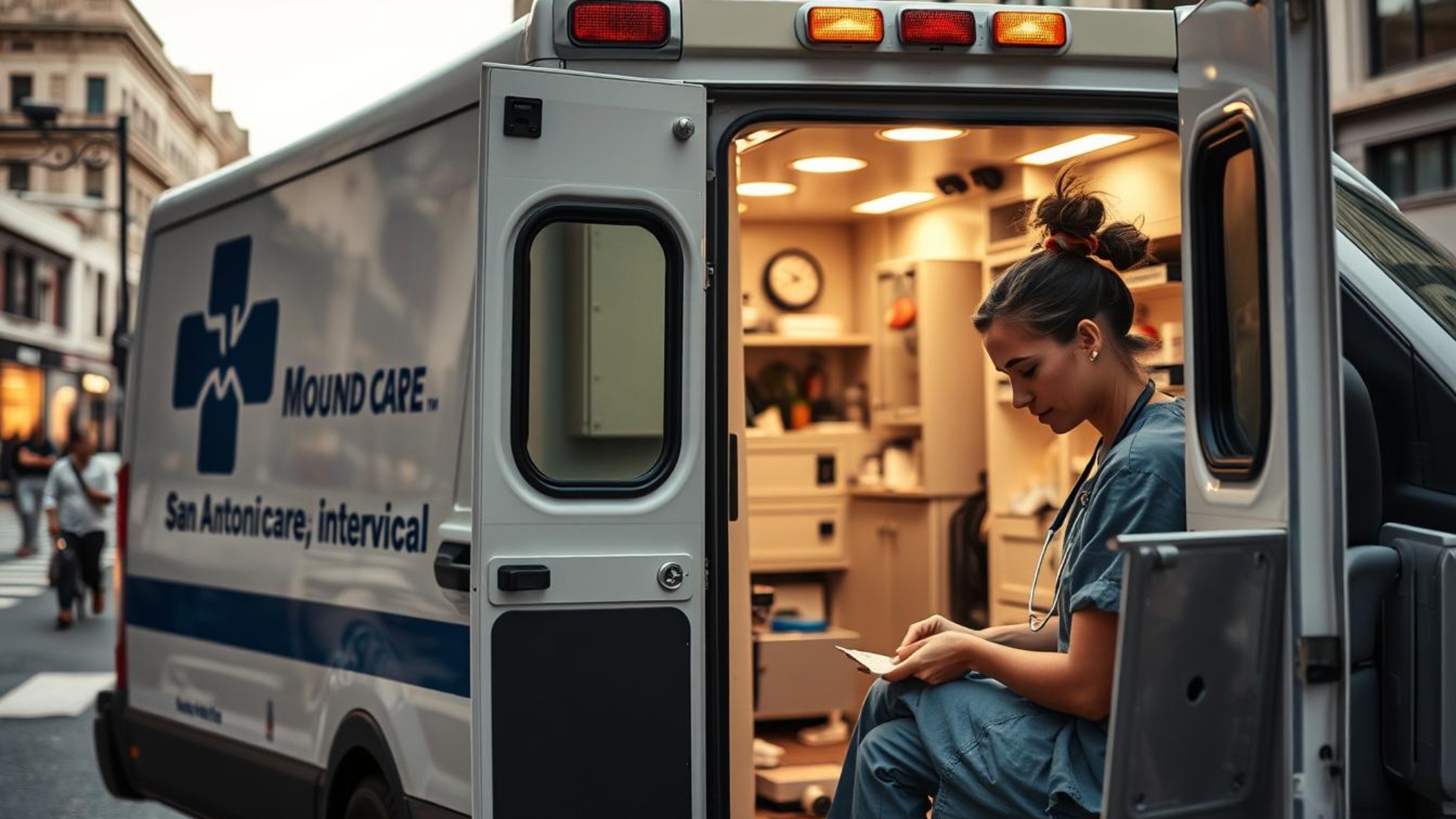
If you or a loved one need reliable wound care at home, an in‑home visit brings skilled clinicians to your door. You’ll meet a licensed team that reviews your history, meds, and current wound status so the plan fits your goals and provider guidance.
The clinician will explain the exam, what treatments may be used, and how those choices support safe healing. Expect modern approaches like debridement, advanced dressings, and biologic grafts when appropriate.
Documentation, infection control, and coordination with your doctors and insurers are standard. That helps improve access and reduces risks from missed appointments. You’ll also get clear instructions on signs to watch for, simple steps to aid healing, and how to reach the team between visits.
To keep things smooth in San Antonio, consider hiring Dominion Mobile Wound Care to handle your ongoing service needs and help heal your wounds.
Key Takeaways
- Licensed clinicians come to your home to simplify access to wound care.
- The first visit reviews health history, meds, and wound status to shape your plan.
- Treatments can include debridement, modern dressings, and biologic options.
- Records and coordination with providers improve outcomes and reduce risk.
- You’ll receive clear guidance on signs to watch for and when to escalate care.
- Dominion Mobile Wound Care offers scheduled, patient‑centered in‑home services.
Mobile Wound Care in San Antonio: What You Can Expect at Home
A clear intake and scheduling step sets expectations and gets the right supplies to your door.
Before your visit: referrals, scheduling, and preparation
Referrals may come from your physician, home health agency, or facility partner. You or your provider share recent labs, meds, and wound history so the team tailors the visit to your needs.
Scheduling is streamlined. You get a confirmed arrival window, prep steps, and reminders so the process is predictable.
During your visit: thorough assessment, imaging, and secure clinical documentation
Clinicians perform a structured assessment: size, depth, tissue, exudate, and infection risk. When needed, they capture clinical images and use basic imaging to track progress.
Debridement and dressing selection happen when appropriate. Each choice supports moisture balance, bioburden control, and protection.
All notes are recorded on secure platforms and shared with your providers to keep everyone aligned on the plan.
After your visit: coordinated communication with your providers and follow-up plan
You leave with a clear follow-up plan, including next dressing changes, comfort tips, and who to contact if symptoms change.
The clinician can initiate prescriptions, orders, or labs and confirm that the plan fits your home environment and support needs.
- Service that listens: education is hands-on with respectful communication.
- Aligned providers: key updates go to your primary and specialty teams.
- Flexible schedule: visit cadence adjusts as healing progresses.
If you want dependable in‑home attention that coordinates with your clinicians, hire Dominion Mobile Wound Care to help heal your wounds.
Advanced Wound Care Treatments Brought to You
You can receive clinic-grade therapies in your home, following standardized care protocols.

Evidence-based pathways guide each visit. Your clinician performs a structured assessment, then uses conservative sharp or enzymatic debridement when indicated.
These steps remove nonviable tissue and lower bioburden. That supports faster healing when matched with the right dressing selection.
Biologic grafts and amniotic membrane application
For chronic and complex wounds, biologic solutions such as amniotic membrane application or other graft products may be used.
Grafts are chosen based on wound cause, blood flow, and infection control. Your specialists integrate graft application with debridement and offloading to maximize benefit.
- Coordinated ordering: clinicians handle supplies and documentation so treatment is timely.
- Tailored products: dressings balance moisture, protect skin, and manage drainage.
- Measured outcomes: every step is tracked to show improvements in size, tissue, and symptoms.
Education explains how to protect advanced dressings or grafts between visits and when to contact the team about changes.
If you want clinic-level advanced wound care delivered at home, hire Dominion Mobile Wound Care to help heal your wounds.
Who You Serve and Conditions We Treat
Care teams visit private homes, assisted living, and skilled nursing sites to treat common and complex conditions where you already are.

Your clinician manages a range of conditions, including diabetic foot ulcers, pressure injuries, venous and arterial ulcers, surgical wounds, and burns.
Programs coordinate closely with facility staff and physicians so treatment fits routines and nursing workflows. This keeps daily care consistent and safe.
- Where you live: services delivered at homes, assisted living, or skilled nursing so access is timely.
- Common conditions: diabetes-related foot problems, pressure injuries, venous/arterial ulcers, surgical sites, and burns.
- When healing stalls: clinicians reassess perfusion, pressure, and infection risk and may order diagnostics or advanced therapies.
- Advanced options: biologic grafts can be used for select chronic wounds with clear dressing and activity guidance.
Your plan adapts to mobility, cognition, and support, and includes instructions for caregivers and staff. Communication flows to your primary and specialty providers so everyone sees progress and updates.
Hire Dominion Mobile Wound Care to bring coordinated, patient-focused wound care to your home or facility and help heal your wounds.
Access, Coverage, and Care Coordination in Greater San Antonio
Confirming benefits and streamlining referrals helps you start the right treatment without delays. Programs routinely partner with physicians, home health agencies, assisted living and skilled nursing, and health plans to simplify access and verify coverage.
Technology-enabled workflows and secure documentation keep your providers in the loop. That communication shares assessments, orders, and updates so your primary and specialty teams see the same plan.
Care specialists coordinate suppliers, labs, and products so dressing and supplies arrive when needed. If you face transportation or mobility limits, services delivered at home cut missed appointments and speed healing.
- Benefit verification: the team explains authorizations and any out‑of‑pocket costs so you know what to expect.
- Coordinated process: providers and care specialists align orders and visit schedules to avoid delays.
- Adaptive plan: for complex wounds, visits can be more frequent early, then taper as healing progresses.
You also get practical education on dressing changes, offloading, and nutrition so instructions match your home setup. Timely responses between visits help you troubleshoot small issues before they become setbacks.
By aligning access, coverage, and coordination, your treatment proceeds with fewer interruptions and stronger clinical momentum.
Hire Dominion Mobile Wound Care to help heal your wounds.
Conclusion
A well‑structured visit wraps assessment, tailored treatment, and follow‑up into a single, patient‑focused experience.
You get evidence‑based treatments, access to advanced wound care options, and clear education so healing stays steady. Your team coordinates with physicians and nursing staff across homes, assisted living, or skilled nursing settings.
As a patient, you benefit from modern products, timely orders, and options such as biologic grafts when indicated. These steps support wound healing and reduce travel or missed appointments.
If you want coordinated, clinic‑level treatment brought to your doorstep, hire Dominion Mobile Wound Care to help heal your wounds.
FAQ
What should you expect during a home visit for advanced wound treatment in San Antonio?
You should expect a comprehensive evaluation by a specialist who performs a focused physical exam, documents wound measurements, and reviews your medical history. The clinician may use point-of-care imaging and secure electronic documentation to capture baseline status. You’ll receive a personalized treatment plan that includes dressing selection, offloading or compression strategies, and a follow-up schedule. The team coordinates with your primary provider, home health nurse, or facility staff to ensure continuity of care and comfort during the visit.
How do referrals and scheduling work before a provider arrives at your home or facility?
Referrals can come from your primary care physician, a hospital discharge planner, or a facility nurse. Once the referral is received, scheduling staff contact you or your caregiver to arrange an appointment window. You’ll be asked to prepare a list of current medications, recent lab results, and any prior wound records. Clear communication about access points and mobility limitations helps the team arrive ready to treat.
What happens during the assessment and documentation process?
The clinician performs a thorough assessment that includes wound size, depth, tissue type, and signs of infection. Photographic and measurement tools may be used for accurate tracking. Findings are entered into secure clinical documentation systems and shared with your care team. That documentation supports evidence-based decisions and helps monitor progress over time.
How will your providers coordinate care after the visit?
After treatment, the clinician sends a concise report to your referring physician, home health agency, or facility nursing staff. The plan outlines dressing changes, medication adjustments, and follow-up appointments. If advanced therapies or specialist referrals are needed, the team assists with scheduling and insurance authorization to streamline next steps.
What advanced therapies might be offered at home or in a facility?
Depending on your wound type and healing progress, the team may provide sharp or enzymatic debridement, biologic grafts, amniotic membrane applications, negative-pressure therapy, and advanced dressing systems. All interventions follow evidence-based pathways to address chronic or complex tissue loss while minimizing disruption to your daily routine.
Are biologic grafts and amniotic products safe to use outside a hospital?
Yes. Biologic grafts and amniotic-derived products are used safely in outpatient and facility settings when clinicians follow sterile technique and manufacturer guidance. You’ll receive explanations about risks, benefits, and expected outcomes. The team monitors your response closely and documents progress to ensure efficacy and safety.
Which conditions are commonly treated during these visits?
Specialists treat diabetic foot ulcers, pressure injuries, venous and arterial leg ulcers, postoperative surgical wounds, and burns. Care is provided across home settings, assisted living, and skilled nursing facilities, with interventions tailored to your overall health status and healing goals.
How does the team support patients with diabetes or vascular disease?
Care includes glycemic control coordination, vascular assessments, offloading strategies for pressure relief, and compression therapy when appropriate. The team works with endocrinologists, vascular surgeons, and primary care providers to address underlying conditions that impede healing.
What should you know about insurance coverage and authorizations?
Coverage varies by plan and therapy. The care coordinator helps verify benefits, obtain prior authorizations for advanced products or procedures, and explain potential out-of-pocket costs. They also assist with documentation required by Medicare, Medicaid, or commercial insurers to reduce delays in treatment.
How do teams ensure communication with skilled nursing or assisted living staff?
The clinician provides clear instructions for dressing changes, wound surveillance, and when to escalate concerns. Written care plans, in-person teaching, and secure messaging with facility nursing staff promote consistent implementation and timely interventions.
What should you prepare before a visit to make treatment easier?
Have a list of medications, recent lab or vascular study results, and any prior wound reports available. Clear the area around the wound site, ensure adequate lighting, and arrange for a caregiver to be present if mobility limits you. These steps speed assessment and improve comfort during the procedure.
How is pain managed during assessment and treatment?
Pain control is individualized. Providers use topical analgesics, local anesthetic for debridement, and coordinate oral pain medications with your prescribing provider. The team monitors pain levels and adjusts techniques to minimize discomfort while delivering effective treatment.
What outcomes can you expect and how long will healing take?
Healing timelines vary by wound type, size, and your overall health. Many chronic wounds show measurable improvement within weeks when managed with evidence-based therapy and coordinated medical support. The team tracks outcomes with serial measurements and modifies the plan when progress stalls.
How is infection identified and treated during these visits?
Clinicians look for signs like increased drainage, redness, warmth, or systemic symptoms. They may obtain wound cultures and initiate topical or systemic antibiotics in coordination with your provider. Early recognition and prompt treatment reduce complications and support recovery.
Who are the clinicians you’ll see, and what training do they have?
You’ll typically see nurse practitioners, physician assistants, or wound care nurses trained in advanced tissue management and evidence-based protocols. Many have additional certifications in wound, ostomy, and continence nursing or similar specialties to ensure high-quality treatment.
How is data and privacy handled for your clinical records and images?
All documentation and wound photographs are stored in secure, HIPAA-compliant systems. Access is restricted to your care team, and records are shared with other providers only with your consent. This preserves privacy while supporting coordinated, data-driven care.
Add a Comment