

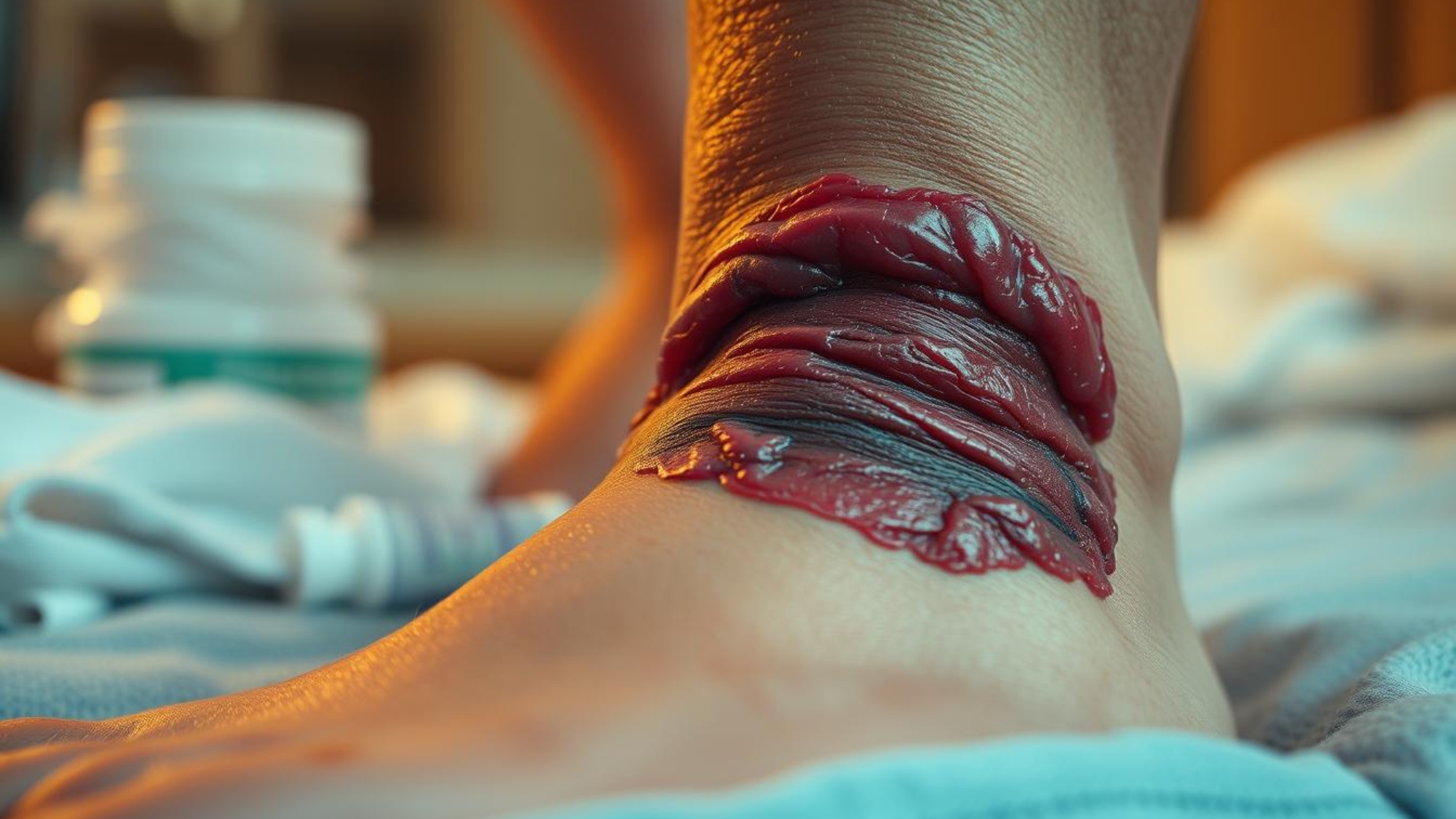
You face more than a simple cut when a persistent sore fails to close. A chronic wound often does not restore normal function after three months, and early, structured care can change that path.
These nonhealing wounds affect 1% to 2% of people and drive huge costs nationwide. Prompt, coordinated in-home wound care reduces the risk of infection, hospitalization, and even amputation.
Bringing clinical-level evaluation into your home removes barriers like travel and missed visits. Home clinicians monitor dressings, adjust plans, and keep progress steady so you spend less time worrying and more time healing.
With focused assessment, clear goals, and regular measurement, you get better continuity and faster wound healing. Hire Dominion Mobile Wound Care to help heal your wounds.
Key Takeaways
- Persistent sores need early, structured in-home care to improve outcomes.
- Professional visits cut barriers and support consistent wound healing.
- Home programs reduce risks like infection and hospitalization.
- Continuity of care helps tailor plans to your daily routine.
- Dominion Mobile Wound Care brings clinical expertise to your door.
Your Best Practices Guide to Chronic Wound Treatment at Home
Simple, repeatable steps at home can speed healing and lower risks. Start with a consistent protocol: cleanse the area, apply appropriate dressings, and protect surrounding skin. Keep your environment clean and set a dedicated dressing station for supplies and timing.
Your care plan should include measurable goals, such as weekly reductions in size, and clear triggers to escalate care if progress stalls. Clinicians will coach you on nutrition, hydration, and glycemic control to support tissue repair. They will also show positioning and offloading techniques to relieve pressure on fragile skin.
Hand hygiene, clean technique, and safe disposal lower infection risk during every change. When appropriate, adjunct therapy like hyperbaric oxygen therapy can be added to standard measures to optimize outcomes. You will learn to spot warning signs—new pain, odor, or increased drainage—and notify your team promptly.
- Organize supplies and schedule changes to improve adherence.
- Document progress with photos and measurements for data-driven decisions.
- Coordinate home-based wound management and follow-up with clinicians.
Stay proactive, follow your plan, and let professionals guide adjustments. Hire Dominion Mobile Wound Care to help heal your wounds.
Understanding Chronic Wounds: What They Are and Why They Persist
When an open sore stops improving, it signals a broken healing path that needs careful review. You can consider a wound chronic when it shows no measurable improvement after four weeks or fails to heal by eight to twelve weeks.
Definition and timeline: when a wound becomes “chronic”
A chronic wound fails to progress through orderly repair by three months or stalls early in the inflammatory phase. You may notice persistent redness, swelling, or pain that does not ease as expected.
How comorbidities like diabetes mellitus slow the healing process
Conditions such as diabetes mellitus, vascular disease, and neuropathy reduce blood flow and nerve sensation. This slows tissue repair and raises the risk of infection and re-injury.
Biofilm and senescent cells in the wound bed blunt normal healing signals. That makes standard measures less effective without targeted strategies.
Quality-of-life impacts: pain, depression, isolation, and family stress
Ongoing care affects more than skin. Painful dressing changes and limited mobility can disrupt sleep, work, and relationships.
- Emotional toll: depression and isolation are common.
- Practical strain: caregivers and family routines suffer.
- Cycle of setbacks: repeated breakdowns need professional plans to break.
Early identification of barriers — poor perfusion, hidden infection, or moisture imbalance — can restore progress. Hire Dominion Mobile Wound Care to help heal your wounds.
The Urgency: Risks, Costs, and Outcomes You Shouldn’t Ignore
Diabetic foot ulcers can start small but quickly lead to life-changing complications if ignored. Prompt review and quick offloading can stop progress toward limb loss.
Diabetic foot ulcers and amputation risk in the lower extremity
Take ulcers seriously. About 85% of amputations in the lower extremity follow diabetic ulcers. Rapid identification of poor perfusion, infection, or uncontrolled pressure is crucial to prevent progression.
Five-year mortality after diabetic ulcers and why early action matters
The five-year mortality after developing a diabetic ulcer is roughly 40%. Early, coordinated care reduces the chance of amputation, hospital stays, and death.
- You should act because most amputations in the lower extremity begin with diabetic foot ulcers.
- Early intervention lowers risk of severe complications and costly hospital care.
- Rapid review for infection and perfusion problems prevents progression to limb loss.
- National costs are high, and missed work plus caregiver strain add personal expense.
- A proactive in-home approach ensures timely dressing adjustments, offloading, and specialist referrals.
- Preventive measures—foot checks, protective footwear, and glycemic control—support durable healing.
- Consistent monitoring lets your team escalate care before emergencies arise.
The earlier you act, the better your chances for lasting healing and preserved mobility. Hire Dominion Mobile Wound Care to help heal your wounds.
The Healing Process Explained: From Inflammation to Remodeling
Understanding the sequence of repair helps you and your care team spot delays. Wound healing is a stepwise healing process that begins right after injury and guides every clinical choice.
The four stages and where healing can stall
Healing progresses through hemostasis, inflammation, proliferation, and remodeling. Each phase has a rough timeline:
- Hemostasis/coagulation (days 0–3): clotting stops bleeding and sets the scaffold.
- Inflammation (days 1–25): immune cells clear debris; many chronic wounds stall here with persistent inflammation.
- Proliferation (days 1–25): granulation tissue forms, angiogenesis begins, and epithelial cells cover the wound bed.
- Remodeling (days 20–365): collagen matures from type III to type I, restoring up to about 80% of original tissue strength.
Extracellular matrix, cytokines, and growth factors in repair
The extracellular matrix and signaling molecules guide cell movement and new tissue formation. Balanced cytokines and growth factors push the process forward.
When the extracellular matrix breaks down or proteases are too active, the wound bed cannot move into proliferation. Recognizing a stalled inflammatory phase lets your team target debridement, moisture balance, and other measures to restart progress.
With in-home care aligned to these biology-based steps, daily changes become less worrying and more actionable. Hire Dominion Mobile Wound Care to help heal your wounds.
Assessment First: Classifying Chronic Wounds for the Right Care
Proper classification of an ulcer determines which therapies will help — and which could harm. Start with location, appearance, and surrounding signs to guide safe, targeted care.

Arterial, venous, diabetic, and pressure ulcers—key differences
Venous ulcers are often shallow on the medial gaiter area with edema and hemosiderin staining. Compression can help, but only after arterial flow is confirmed adequate.
Arterial ulcers tend to be distal, deep, and may show eschar or exposed tissue. These require urgent vascular review before aggressive debridement.
Diabetic foot ulcers usually appear on the plantar surface with callus and neuropathy. In patients diabetic, check for possible osteomyelitis and need for offloading.
Pressure ulcers form over bony prominences. Stage per NPUAP, assess nutrition, and consider imaging when bone involvement is suspected.
Measuring perfusion: toe-brachial index for patients diabetic
When vessels calcify, ankle tests can mislead. Use the toe-brachial index in patients diabetic; it gives a more reliable perfusion estimate when ankles are noncompressible.
When to pursue imaging and specialist referrals
- Order vascular studies or duplex for suspected ischemia in the lower extremity.
- Obtain MRI or bone scan if osteomyelitis is a concern.
- Coordinate referrals to vascular surgery, podiatry, or dermatology from the home setting when tests or clinical behavior warrant it.
Thorough classification at the outset prevents delays and mismatched care. Review findings promptly and act to protect tissue and skin from further harm. Hire Dominion Mobile Wound Care to help heal your wounds.
Chronic Wound Treatment: Evidence-Based Principles You Can Trust
Use evidence-first strategies so each step of care targets healing efficiently and avoids guesswork. Start with a clear framework that guides decisions from tissue prep to final closure.
The TIME framework: tissue, infection, moisture, and edges
Tissue preparation begins with appropriate debridement to remove necrotic and sloughy material, except when severe ischemia limits removal.
Infection control relies on clinical signs. Reserve systemic antibiotics for clearly infected legs and feet, not for mere colonization.
Moisture balance uses modern dressings to keep the bed ready for cell migration. Avoid “airing out” and low-value therapies such as whirlpools.
Edges are managed by removing rolled or nonviable tissue so epithelial cells can advance and healing can progress.
What the Cochrane database and randomized controlled trials tell us
Cochrane reviews support compression as the standard for venous ulcers and show total contact casting improves outcomes for diabetic plantar ulcers.
Randomized controlled evidence and consensus guides back repositioning and offloading strategies to prevent pressure-related breakdown.
- Plans follow TIME from tissue prep through dressing selection and targeted antibiotics when needed.
- Evidence steers high-value options like compression and total contact casting.
- Your in-home team documents progress and adjusts the plan to current best evidence.
With proven principles guiding care, you get focused, efficient wound management and better chances for healing. Hire Dominion Mobile Wound Care to help heal your wounds.
Best Practices by Wound Type in the Home Setting
Not all ulcers respond the same—your in-home plan should reflect the specific risks and biology at play.
Venous care: compression, elevation, and movement
After you confirm arterial flow, calibrated compression (30–40 mmHg) is the cornerstone of venous ulcers therapy.
Elevate the leg above heart level when resting and walk to activate the calf pump. Discuss statin use and early endovenous ablation with your clinician when appropriate.
Arterial care: protect, maintain moisture, and coordinate revascularization
For arterial ulcers, protect tissue and keep a moist dressing while vascular teams evaluate for angioplasty, stent, or bypass.
Limit aggressive debridement until perfusion improves to avoid further tissue loss.
Diabetic foot care: callus debridement and strict offloading
Diabetic foot ulcers do best with regular callus debridement and pressure relief. Nonremovable total contact casts offer the strongest evidence for offloading.
Optimize glucose and consider hyperbaric oxygen when indicated.
Pressure prevention: frequent repositioning and microclimate control
Prevent pressure ulcers by repositioning every 1–2 hours, managing heat and moisture, and avoiding donut cushions.
Combine nutrition, hydration, and support surfaces that redistribute pressure without impairing circulation.
- Your in-home clinicians fit and monitor compression, offloading devices, and support surfaces.
- When needed, they arrange vascular or specialty referrals without interrupting home care.
- Evidence-based protocols for each ulcer type help you make steady progress and reduce setbacks.
For practical, type-specific plans delivered at home, Hire Dominion Mobile Wound Care to help heal your wounds.
Recognizing and Managing Infection Without Overusing Antibiotics
You need clear signs to tell colonization from real infection so care stays effective and safe.
Reading bedside clues: NERDS vs. STONEES
Use NERDS to flag critical colonization: Nonhealing, Exudative, Red/bleeds easily, Debris, Smell.
Use STONEES to detect deeper risk: Size increasing, Temperature increase, os (bone), New breakdown, Exudate, Erythema/edema, Smell.
When to culture and when to choose topical or systemic therapy
When three or more criteria appear, your clinician will often collect a culture using the Levine technique to guide targeted care.
Do not use systemic antibiotics for clinically uninfected lower extremity wounds; this avoids resistance and harm.
- You will learn to differentiate colonization from true infection using NERDS and STONEES.
- Topical agents such as silver, polyhexamethylene biguanide, or cadexomer iodine reduce bioburden without systemic side effects.
- Systemic antibiotics are reserved for clear clinical infection—cellulitis or systemic signs—so they stay effective.
- Control of bioburden pairs with debridement and moisture balance to restore healthy tissue and speed healing.
- Your team documents changes, monitors warmth or spreading redness, and acts quickly to prevent deterioration.
Thoughtful antibiotic stewardship protects you and preserves options for real infection. For expert in-home review and care, Hire Dominion Mobile Wound Care to help heal your wounds.
Debridement and Biofilm Control: Clearing the Way for Healing
Regular removal of nonviable tissue resets the bed so you can see real progress. Debridement shortens the repair timeline by removing barriers to cell growth and blood vessel formation.
Why regular debridement accelerates healing time
You benefit from weekly or more frequent debridement because it removes necrotic material and promotes granulation. Evidence shows consistent debridement doubles the chance of closure and raises overall healing rates near 70.8%.
Biofilm and strategies to disrupt it
Biofilm hides bacteria from immune cells and antibiotics in roughly 80% of infections. Physical disruption with debridement plus targeted topical agents is essential to break this shield and reduce bioburden.
Surgical, autolytic, enzymatic, and biologic options at home
Your clinicians choose methods based on the lesion, pain tolerance, and home safety. Options include sharp surgical, gentle autolytic, enzymatic agents like collagen-digesting ointments, or biologic maggot therapy when appropriate.
- Pair debridement with suitable dressing and topical strategies to limit rapid biofilm return.
- Pain control and patient education make the process safer and more tolerable at home.
- Consistent scheduling and reassessment keep the process aligned with your healing goals.
For expert, frequent debridement and biofilm control delivered in your home, Hire Dominion Mobile Wound Care to help heal your wounds.
Mastering Moisture Balance and Dressings for Optimal Wound Bed Health
Keeping the wound bed properly moist is one of the simplest ways to speed healing and cut infection risk.
Moisture balance myths: why wounds should not “air out”
Leaving an open area to dry is a myth that slows repair. Moist environments let epithelial cells migrate and lower infection risk compared with air exposure.
Maintain moisture on the wound bed while protecting the surrounding skin. Barriers and skin protectants stop maceration and keep tissue healthy.
Selecting dressings for draining, infected, necrotic, and dry cases
Your clinician will match dressings to how much drainage and the health of nearby skin. For heavy exudate, choose foams, alginates, or composite systems that absorb and lock fluid away.
When infection risk appears, antimicrobial options with silver, PHMB, or cadexomer iodine help control bioburden without routine systemic therapy.
Using collagen, silver, iodine, foams, alginates, hydrogels, and films
Enzymatic agents like collagenase remove necrotic material selectively. Collagen dressings can supply a scaffold to support matrix formation in appropriate cases.
- Keep drainage off the periwound with barrier films to prevent maceration.
- Use hydrogels or collagen gel to rehydrate dry beds and transparent films to seal.
- Composite dressings combine absorption, protection, and securement to simplify care.
Your team will reassess exudate levels and switch the dressing system as the site changes. Correct choices reduce change frequency, cut discomfort, and support steady healing.
Hire Dominion Mobile Wound Care to help heal your wounds.
Advanced Therapies Brought Home: Offloading, HBOT, and More
Bringing clinic-level offloading and hyperbaric care to the home helps address stubborn plantar pressure and low oxygenation.
Offloading is key for diabetic foot and plantar pressure relief. Nonremovable total contact casting offers the best adherence and pressure redistribution for diabetic foot ulcers.
When casts are not suitable, removable CAM walkers, half-wedge shoes, or heel-relief devices serve as alternatives. Your team will check fit and watch for new pressure points to keep you safe and mobile at home.
How hyperbaric oxygen supports repair
Hyperbaric oxygen therapy increases oxygen dissolved in plasma under pressure. That boosts neovascularization, reduces swelling, and helps control infection when used with other measures.
HBOT is not a stand-alone fix. It works best alongside debridement, moisture control, and glycemic optimization. Your clinicians will tailor selection based on depth, perfusion, and response to earlier steps.
- Nonremovable total contact casting maximizes plantar pressure offloading.
- Removable walkers and specialty shoes are alternatives when casts aren’t possible.
- HBOT aids angiogenesis and infection control as part of a broader plan.
- Your team coordinates logistics, safety, and expected timelines for therapy at home.
Advanced options are used selectively to improve healing while minimizing burden. Hire Dominion Mobile Wound Care to help heal your wounds.
From Clinic to Living Room: How Professional In-Home Wound Care Works
When care happens at home, assessments, supplies, and specialist referrals are easier to coordinate and track.
Comprehensive assessment, care planning, and documentation
Your in-home visit begins with a focused assessment of location, size, depth, drainage, and tissue type. Clinicians take measurements and photos so your baseline is clear and comparable over time.
Your personalized plan sets weekly targets for dimensions, exudate, and tissue quality. Documentation guides decision-making and keeps all providers aligned.
Coordinating vascular, podiatry, and dermatology care in the home
In-home clinicians arrange studies and referrals to vascular surgery, podiatry, or dermatology when findings indicate. This coordination happens without disrupting your routine.
Those referrals speed access to specialist care while the team continues daily management and offloading in your home.
Safety, infection control, and supply logistics at home
Strict hand hygiene, clean technique, and disposal protocols protect your household and lower infection risk. Clinicians obtain cultures when indicated and avoid systemic antibiotics for uninfected sites.
Your supply plan includes evidence-based compression, dressings, and offloading devices. Staff teach setup, storage, pain control, and how to reorder supplies.
- Standardized documentation keeps everyone informed and speeds therapy decisions.
- Pain assessment is integrated so procedures remain tolerable and safe.
- You get coaching for daily activities to protect skin and support healing.
The model reduces travel burdens and improves adherence, raising the odds of steady healing. Hire Dominion Mobile Wound Care to help heal your wounds.
Building Your Personalized Home Care Plan
A clear, personalized home plan ties nutrition, mobility, and skin care into one manageable routine. This plan defines who does what, when, and how progress will be tracked.
Nutrition, glycemic control, mobility, and skin protection
Nutrition matters. Aim for about 1.5 g/kg protein daily, steady hydration, and targeted vitamins A, C, and zinc when needed to support tissue repair and immune function.
Glycemic optimization is central if you have diabetes. Integrate glucose targets into your routine to protect the foot and speed closure.
Mobility plans keep you active while limiting shear and pressure. Offloading, safe footwear, and clear activity limits reduce setbacks.
Skin protection uses gentle cleansers, barrier creams, and microclimate control to avoid maceration and new breakdown.
Setting goals and timelines for healing chronic wounds
Work with your clinicians to set SMART goals that mark weekly and monthly milestones. Make goals measurable, realistic, and time-bound so you know when to adjust therapy.
- You’ll track photos, measurements, and symptom logs to show progress.
- The plan adapts as the site changes, with clear criteria for stepping up or down therapies.
- Family or caregiver training ensures daily steps are done safely when clinicians are absent.
Knowing the process and milestones reduces anxiety and keeps everyone aligned on recovery. Hire Dominion Mobile Wound Care to help heal your wounds.
Monitoring Progress and Knowing When to Escalate Care
Consistent tracking makes it clear when home care is working or needs escalation. Your in-home team documents location, size, depth, drainage, and tissue type at every visit so you can compare measurements over time.
What we record and why it matters
You will see objective tracking—length, width, depth, drainage amount and type, and the proportion of healthy granulation versus necrosis. Trends determine whether the plan is producing steady healing or if adjustments are due.
Red flags that prompt escalation
- Rapidly increasing size, new warmth, foul odor, or probe-to-bone findings.
- Signs of systemic infection—fever, chills, or rigors—often require urgent assessment and systemic antibiotics.
- New ischemic pain, cool toes, or diminished pulses in the lower extremity point to vascular testing and referral.
- Persistent pressure-related injury signals the need for intensified repositioning, offloading, or support surfaces.
- Sudden severe pain or discoloration may indicate complications that warrant hospitalization.
Your in-home team maintains clear communication pathways to escalate safely while preserving continuity of care. Hire Dominion Mobile Wound Care to help heal your wounds.
Conclusion
Bringing expert assessment and targeted interventions into your home can change a stalled healing course.
You now see how timely, evidence-based in-home strategies restart wound healing and lower risks like amputation and hospitalization.
A structured plan that pairs assessment, moisture balance, debridement, and offloading gives chronic wounds the best chance to close.
Coordinated referrals and options such as HBOT or casting are added thoughtfully when you need them. Consistent monitoring and quick response to red flags keep your recovery on track.
With education, caregiver support, and reliable supply management, daily progress becomes realistic at home. Choosing an experienced in-home team ensures the right intervention at the right moment for durable results.
Hire Dominion Mobile Wound Care to help heal your wounds.
FAQ
What signs mean you need professional in-home care for a non-healing sore?
Seek professional in-home care if a sore shows increased pain, persistent drainage, foul odor, spreading redness, or fails to reduce in size after two to four weeks. Also call for care if you have diabetes, poor blood flow, or immune suppression, or if the area shows black tissue, new numbness, or fever. Early assessment prevents complications.
How should you prepare your home for safe wound management visits?
Clear a clean, well-lit surface near an electrical outlet and running water. Remove pets and dust, ensure a chair or bed is accessible, and keep dressings and supplies in a cool, dry place. Have your medication list and recent blood glucose readings ready to share with the clinician.
What daily practices support faster healing at home?
Keep blood sugar controlled, follow the prescribed offloading or pressure-relief plan, eat protein-rich meals with vitamins C and A, hydrate, avoid smoking, and change dressings exactly as instructed. Gentle activity and limb elevation help circulation for some ulcer types.
When does a sore get classified as long-lasting and need specialized care?
A wound is considered long-lasting when it does not show measurable healing after four weeks or fails to close by 12 weeks despite basic care. At that point, a full assessment for infection, blood flow, and tissue type is needed to tailor therapy.
How does diabetes slow your healing process?
Diabetes impairs blood flow, damages nerves, and alters immune responses. High glucose levels reduce white blood cell function and collagen formation, delaying the inflammatory and proliferative phases of healing and increasing your risk of infection and tissue breakdown.
How do foot ulcers increase amputation risk and what can prevent it?
Foot ulcers expose underlying tissue to infection and often occur alongside poor perfusion and neuropathy. Prevent amputation by early offloading, timely debridement, vascular evaluation, tight glucose control, and coordinated care with podiatry and vascular specialists.
What are the key stages of healing and where do problems usually occur?
Healing progresses through hemostasis, inflammation, proliferation, and remodeling. Problems commonly occur in the inflammatory phase when infection, poor perfusion, or biofilm stalls progress, preventing new tissue formation and closure.
How do proteins like the extracellular matrix affect your wound bed?
The extracellular matrix provides a scaffold for cell migration and growth. When it breaks down, cells can’t rebuild tissue effectively. Restoring matrix components and reducing destructive enzymes helps re-establish a healthy wound bed.
How do providers tell the difference between arterial, venous, diabetic, and pressure ulcers?
Each ulcer has distinct features: arterial ulcers are painful with pale edges and poor pulses; venous ulcers sit near the calf with heavy drainage and edema; diabetic ulcers occur on pressure points with neuropathy; pressure ulcers form over bony prominences from sustained pressure. Perfusion tests and clinical context guide diagnosis.
Which tests measure blood flow when you have diabetes?
Clinicians use the ankle-brachial index (ABI) but may prefer toe-brachial index (TBI) in diabetes because calcified arteries can distort ABI. Duplex ultrasound and referral for vascular imaging help plan revascularization when needed.
What is the TIME framework and how does it guide home care?
TIME stands for Tissue management, Infection control, Moisture balance, and Edge advancement. You and your caregiver focus on appropriate debridement, addressing infection, choosing dressings that maintain moisture balance, and promoting healthy wound edges.
Are there proven therapies you can expect in the home setting?
Evidence supports regular debridement, offloading for foot ulcers, compression for venous leg ulcers, and appropriate dressings tailored to exudate. Randomized trials and systematic reviews, including Cochrane analyses, favor these core strategies when applied correctly.
How should you manage an infected sore without overusing antibiotics?
Watch for spreading redness, fever, increased pain, or purulent drainage. Superficial colonization doesn’t always need systemic antibiotics. Clinicians use local topical agents, wound cultures, and clear clinical criteria to target antibiotics when true infection exists.
Why is regular debridement important and how often should it happen?
Debridement removes dead tissue and biofilm, stimulating healthy granulation. Frequency depends on wound type and amount of necrosis but often occurs weekly or biweekly in the home setting under professional supervision.
What dressing types should you expect for different wound conditions?
For heavy drainage, alginates and foams absorb fluid. For dry wounds, hydrogels rehydrate tissue. Silver or iodine dressings help bioburden; collagen products support matrix repair. Your clinician will pick dressings based on drainage, infection status, and tissue type.
How does offloading help diabetic plantar ulcers and what devices are used?
Offloading redistributes pressure away from the ulcer to permit healing. Clinicians may use total contact casts, removable cast walkers, specialized footwear, or custom orthoses depending on your mobility and wound location.
When should hyperbaric oxygen therapy (HBOT) be considered at home?
HBOT is not typically a home therapy, but it may be prescribed for refractory ischemic or infected wounds after vascular optimization. Discuss candidacy with your care team; evidence shows HBOT can support angiogenesis and infection control in selected patients.
How does in-home wound care coordinate with specialists?
Home clinicians document assessments and communicate electronically or by phone with podiatry, vascular surgery, and dermatology. They arrange imaging, referrals, and medication management to ensure you receive timely, multidisciplinary care.
What lifestyle changes should you adopt to boost healing at home?
Focus on a balanced diet rich in protein and vitamins, strict blood sugar control, smoking cessation, safe mobility, and skin protection. Small daily steps—hydration, gentle exercise, and foot inspections—support recovery.
How do you track progress and know when to escalate care?
Track wound size, depth, drainage, and tissue appearance weekly. Lack of measurable improvement after four weeks, worsening pain, spreading redness, or systemic symptoms are red flags that require urgent vascular evaluation or hospitalization.
Which additional keywords relate to this FAQ that you should know?
Relevant terms include diabetic foot ulcers, venous ulcers, pressure ulcers, offloading, debridement, biofilm, infection control, moisture balance, extracellular matrix, ABI, toe-brachial index, compression therapy, collagen dressings, silver dressings, hyperbaric oxygen, randomized controlled trials, Cochrane reviews, and podiatry.
Add a Comment