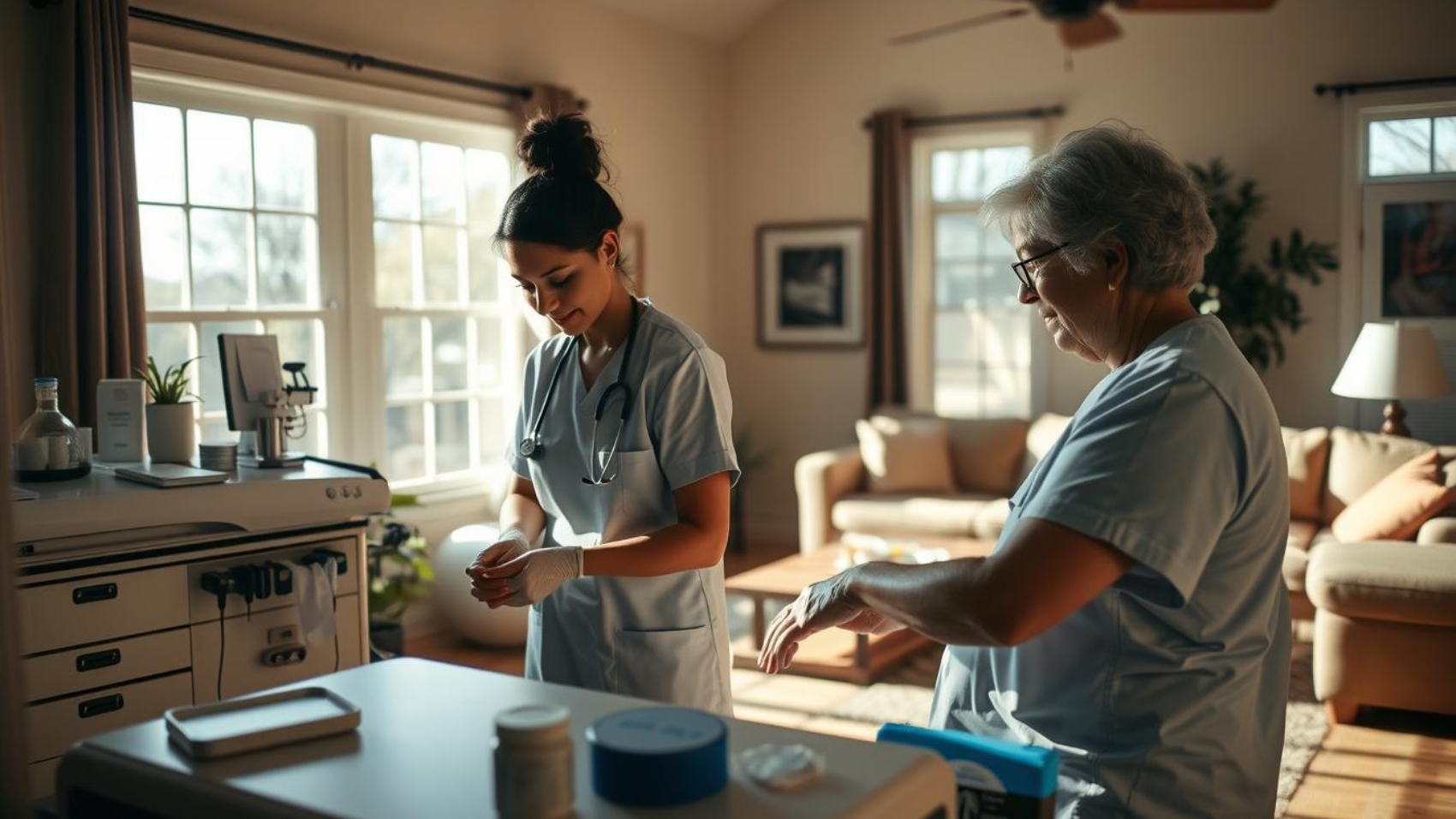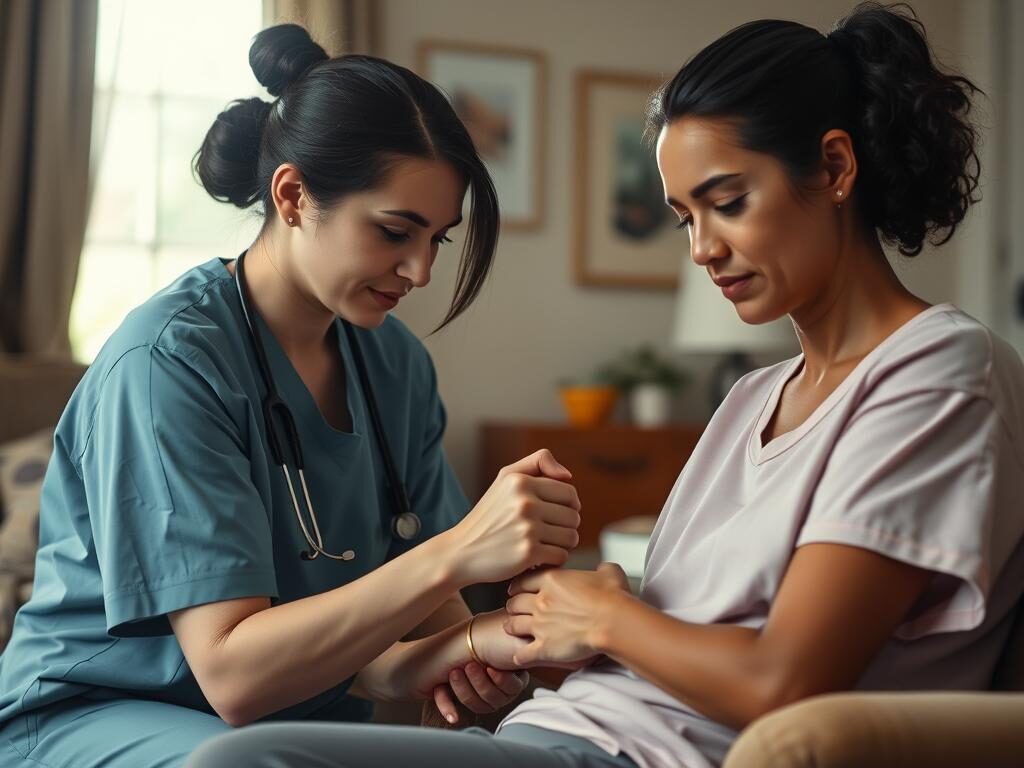
You want clear, practical information about wound care in your home. Dominion Mobile Wound Care brings licensed, insured clinicians to your door to assess wounds, manage pain, and change dressings.
Admission visits can take up to two hours. During that time the clinician reviews discharge paperwork and doctor’s orders, sets goals with you, checks medications, and screens for fall risk.
Home health care helps many people recover faster and with less disruption than a long hospital stay. Skilled providers coordinate with your physician, teach wound care techniques, and offer 24/7 support for questions or scheduling.
You’ll see how services blend medical skill with comfort so you can heal where you feel safest. If goals change, discussion of hospice or other options happens respectfully, guided by your needs and values.
Ready for personalized wound care at the right home for your recovery? Hire Dominion Mobile Wound Care to help heal your wounds.
Key Takeaways
- Visits include assessment, meds review, and fall risk checks.
- Care at home often speeds recovery and reduces disruptions.
- Licensed, insured clinicians provide 24/7 scheduling support.
- Services coordinate with your doctor and the wider care team.
- Programs often accept Medicare and Medicaid and follow standards.
Personalized Wound Care in the Comfort of Your Home in San Antonio
Wound care delivered to your door combines medical skill with the ease of staying in familiar surroundings.
Dominion Mobile Wound Care brings evidence-based care to your home so you can heal safely and with dignity. Licensed, insured clinicians coordinate with your physician and use proven protocols to speed recovery.
You get personalized home care that fits your daily living routine. That means lower stress, fewer exposure risks, and better adherence to your plan. Your caregiver also receives clear support and practical education.
- Quality care delivered by experienced professionals who follow best practices.
- Care services designed around your life, goals, and safety checks.
- 24/7 phone support to answer questions and adjust the plan as needed.
- Coordination with physicians to meet needs and reduce preventable hospital trips.
- Respectful discussion of hospice or other options only if they match your goals.
You’ll find compassionate, evidence-based healthcare that helps you return to daily life. This way of caring focuses on comfort, practical support, and measurable results.
When At-Home Nurse Visits Make Sense for You
Knowing when to ask for skilled care at home can protect healing and prevent setbacks.
If you recently left the hospital or had surgery, consider home health care to keep recovery on track. A visiting nurse from Dominion Mobile Wound Care can come to your door, review doctor orders, and start a plan that fits your life.
Signs you may need home health and wound care support
You may need extra help when a wound is new or getting worse, or if managing dressings and meds causes difficulty.
- You or the person you care for has increased pain, swelling, or drainage that needs monitoring.
- Recent hospitalization, surgery, or a new diagnosis that requires education and follow-up.
- Dependence on a caregiver, higher fall risk, or changes in daily activity that affect healing.
After hospitalization or surgery: recovering at home
Early clinical visits often speed healing and reduce ER trips. A visiting nurse bridges hospital orders and home care, teaches caregivers practical tasks, and checks mobility, nutrition, and safety.
Dominion Mobile Wound Care helps you decide if a visit is the right next step now. Timely care in your community often keeps people safer, lowers costs versus long hospital stays, and gives clear timelines for recovery or when hospice or specialty referrals might be needed.
What to Expect Before the Nurse Arrives
Before the clinician arrives, a few simple steps help ensure your first visit goes smoothly.

Scheduling and the estimated time window
You’ll get a call to set your admission visit and an estimated arrival window. Often the call comes the evening before or the morning of the scheduled day.
Paperwork and your plan of care
Plan for up to two hours for the first visit. The clinician reviews discharge paperwork and physician orders and outlines your Plan of Care.
- You and the clinician set goals and learn which services you will receive and how often in a typical week.
- Medication lists, possible side effects, and drug-wound interactions are reviewed so you can make sure healing is on track.
- Fall risk and home safety are checked before dressing changes begin.
- You’ll learn how team members coordinate around your schedule and how to contact the office any time you have questions or notice changes between visits.
- The clinician explains what supplies arrive at your door and what caregivers may keep on hand during the days ahead.
Dominion Mobile Wound Care coordinates with you so the plan fits your home, routines, and needs as you recover.
What Happens During Your Wound Care Nurse Visit
A typical session blends clinical checks with hands-on care and practical teaching for you and your caregiver.
Home safety check and vital signs
The clinician begins with a quick home safety check and takes vital signs to confirm you are stable for treatment. This step helps the team spot fall risks or barriers to healing.
Wound assessment: measurements, photos, and documentation
The wound is measured, described, and photographed when appropriate. Accurate notes help your physician and nursing staff track progress and adjust the plan.
Cleaning, debridement, and dressing application
Care includes gentle cleaning and conservative debridement if ordered. The clinician selects evidence-based dressings that match moisture and skin needs.
Pain control, medication management, and infection prevention
You review pain options and medication alignment so discomfort is minimized. The clinician also teaches infection prevention steps and signs that require a prompt call.
Education for you and your caregivers before the nurse leaves
Dominion Mobile Wound Care provides step-by-step teaching and written reminders so a person can follow the plan between visits. If you report difficulty with mobility or self-care, the team adjusts the approach and documents changes for your doctor.
Clinical Wound Care Services We Provide At Home
Dominion Mobile Wound Care brings hospital-grade protocols straight to your door for expert clinical wound services.
You receive incision checks that verify integrity, manage drainage, and track early healing milestones. Typical schedules run two to three times weekly and adjust as healing progresses.
Medication and dressing management
Clinicians handle medication review and apply advanced dressings like foams, alginates, and negative-pressure systems when ordered. This nursing care reduces complications and saves you travel time.
Care for complex wounds
Focused treatment covers pressure injuries, diabetic foot ulcers, venous stasis, and arterial wounds. Your care team documents measurements and photos to guide physician decisions.
Rehabilitation support and mobility guidance
Therapy coordination and offloading strategies protect fragile tissue while you move around home. You learn practical steps to reduce pressure and support long-term healing.
- Coordinated care services with your physician and therapy team.
- Licensed, insured clinicians who follow evidence-based protocols.
- Support for children adults and seniors when wound care is needed.
- Health care services delivered at your door to limit travel strain.
- Visit frequency in home health tailored to your needs and wound response.
How Your Care Team Works With You
Your recovery depends on clear team communication and a plan that adapts as you improve. Dominion Mobile Wound Care coordinates closely with your physician and therapists so your care journey stays efficient and person-focused.

Interdisciplinary coordination with your physician and therapists
You meet a coordinated care team that shares updates with your physician and therapy providers to keep everyone aligned. Team members document changes, send timely reports, and follow physician orders so decisions happen fast.
Adjusting visit frequency as you improve
Home health typically starts with a planned cadence—often two to three times per week—and tapers as healing progresses. You and your caregivers get clear action steps between each visit so the care journey moves forward without confusion.
- Continuity: The same team members are prioritized every time, but vetted alternates cover after-hours or schedule gaps.
- Practical coaching: Health and mobility tips fit your daily routine so you heal in a way that works for you.
- Point of contact: You know who to call for supply questions, timing, or new symptoms, and a visiting nurse communicates promptly if physician input is needed.
You feel supported by a team with years of home experience that makes sure your goals guide each step of care.
Consistency, Safety, and Quality You Can Trust
Trust comes from proven staff, punctual service, and systems that protect your privacy and safety.
Licensed, insured clinicians with proven experience
You are cared for by licensed, insured nurses and staff whose credentials are verified. Ongoing training and performance checks keep standards high. This protects your dignity and privacy while clinical work happens in your home.
Activity monitoring and on-time service
Technology and scheduling tools promote punctual arrivals so you do not wait at your door. Transparent calendars and 24/7 phone support mean a real person answers when you need help between each visit.
- You benefit from activity monitoring that supports on-time arrivals every time.
- Caregivers and team members coordinate supplies, documentation, and safe follow-up steps.
- Community-trusted practices—credential checks and oversight—ensure consistent quality care.
- Compassionate care teaches safety habits that lower fall and infection risks.
- Dominion Mobile Wound Care delivers reliable coordination with your physician and local healthcare partners.
You can rely on these systems to make each session dependable, respectful, and focused on healing.
Coverage, Eligibility, and Scheduling Made Simple
Understanding how coverage and scheduling work can remove a lot of stress when you need care at home. Dominion Mobile Wound Care helps you verify benefits, confirm eligibility, and set a convenient time so treatment starts on schedule.
Medicare, Medicaid, and private insurance considerations
Medicare typically covers home health care when a physician orders skilled, intermittent nursing or therapy and confirms you are homebound.
Many programs also accept Medicaid and private insurance. Your staff helps you check authorizations to avoid unexpected out-of-pocket costs.
Homebound criteria and skilled, intermittent nursing needs
Homebound means leaving home requires considerable effort and outings are infrequent or short. This status, plus a physician’s order, usually meets Medicare rules.
Skilled nursing care is defined by clinical needs that require professional assessment or treatments on specified days.
- You’ll learn which documents to have at your door: ID, insurance cards, and a medication list.
- Scheduling calls often occur the evening before or the morning of the visit with an estimated arrival time.
- Experienced teams with years in the community streamline paperwork and coordinate with your caregiver and physician.
You can rely on Dominion Mobile Wound Care to align care services with your plan so benefits meet your needs and the team can focus on healing, not red tape. If hospice or other supportive services best match your goals, they guide that transition respectfully.
Conclusion
Make confident choices about wound care by knowing how each step protects your recovery at home.
You now understand the full care journey: how clinicians prepare, assess, treat, and teach so healing moves forward without guesswork. Coordinated team work, clear goals, and dependable services at your door shorten recovery and improve quality of life.
Experienced clinicians built over years support your caregiver with practical guidance. Coverage, scheduling, and safe practices keep care aligned with your plan and community resources.
Dominion Mobile Wound Care is ready to deliver expert, compassionate wound care in your home across San Antonio. Hire Dominion Mobile Wound Care to help heal your wounds and get back to the way you want to live.
FAQ
What happens during a wound care nurse visit in San Antonio?
A clinician arrives at your home, reviews your doctor’s orders, and completes an admission assessment. They check vital signs, inspect and measure the wound, take photos if needed, and document progress. You’ll receive cleaning, possible debridement, dressing application, and instructions about pain control and infection prevention. The nurse coordinates with your physician and updates your care plan before leaving.
Why choose personalized wound care in the comfort of your home?
Receiving care at home reduces exposure to infections, shortens recovery time, and keeps you comfortable in familiar surroundings. Home-based treatment makes it easier to follow a consistent plan, supports mobility and daily living, and lets the care team tailor interventions to your specific needs and environment.
What are the main benefits of compassionate, evidence-based care delivered at your door?
You get skilled, timely care from licensed clinicians focused on healing and comfort. Evidence-based protocols improve outcomes and lower complication risk. The team also teaches you and your caregivers practical skills so recovery continues between visits.
How do I know if home health and wound care support make sense for me?
Consider home services if you have limited mobility, chronic wounds, a recent hospital stay, or difficulty traveling to appointments. Signs include slow-healing wounds, repeated infections, increased pain, or need for skilled dressing changes and medication management.
Is home wound care appropriate after hospitalization or surgery?
Yes. Many people transition from hospital to home with a skilled plan of care. Nurses manage dressings, monitor for complications, ensure medications are given correctly, and help prevent readmission by addressing issues early.
What should I expect before the clinician arrives for your first visit?
You’ll get a scheduled time window for the admission visit. Have your doctor’s orders, recent discharge paperwork, medication list, and any insurance information ready. The nurse will explain the plan of care and frequency of visits during this first appointment.
What paperwork and doctor’s orders do I need available?
Provide the physician’s referral or orders, discharge summary, list of current medications, allergy information, and any recent test results. This ensures the team can follow the prescribed plan and communicate with your doctor effectively.
What does a home safety check and vital signs assessment include?
The clinician evaluates your living area for fall risks and accessibility, checks blood pressure, pulse, temperature, respiratory rate, and blood glucose when indicated. They note environmental factors that could affect healing and recommend adjustments.
How is a wound assessment performed in my home?
The nurse inspects the wound for size, depth, exudate, odor, and surrounding skin condition. They take measurements and photos for documentation and track progress over time. Findings guide dressing choice and treatment decisions.
Will the clinician perform cleaning, debridement, and dressing changes at home?
Yes. Clinicians provide cleaning, selective debridement when appropriate, and apply dressings using sterile technique. They select advanced dressings as needed and explain the purpose and change schedule to you and your caregivers.
How do they handle pain control, medication management, and infection prevention?
Nurses assess pain and adjust care to minimize discomfort, administer or coordinate medications per your physician’s orders, and teach proper wound care to lower infection risk. They monitor for signs of infection and notify your doctor if concerns arise.
What education will you and your caregivers receive before the nurse leaves?
The team reviews dressing change steps, signs of infection to watch for, pain management strategies, mobility recommendations to protect healing tissue, and how to contact the care team between visits. They provide written instructions and answer your questions.
What clinical wound care services are available at home?
Services include post-surgical wound monitoring, routine and advanced dressing management, medication administration, care for pressure injuries, diabetic foot ulcers, venous and arterial wounds, and rehabilitation guidance to promote safe mobility and protect healing skin.
Can nurses treat complex wounds like diabetic or pressure ulcers at home?
Yes. Skilled clinicians manage complex wounds using evidence-based protocols, advanced dressings, and coordination with physicians and specialists. They provide frequent monitoring to track healing and prevent complications.
How does the care team coordinate with your physician and therapists?
The interdisciplinary team shares assessments, wound measurements, photos, and progress notes with your physician and any therapists involved. Regular communication ensures care plans stay aligned and are adjusted based on your recovery.
How does visit frequency get adjusted as you improve?
The team starts with a schedule based on your clinical needs and updates it as your wound shows consistent healing. Visit frequency decreases as you stabilize, but the team remains available to increase support if conditions change.
Are the clinicians licensed and insured?
Yes. You will receive care from licensed, insured clinicians with wound care experience. They follow safety protocols, maintain documentation, and meet regulatory standards to protect your health and privacy.
How reliable are visits and activity monitoring?
Care teams use scheduling systems and tracking tools to arrive on time and document each visit. Many programs offer prompt communication if schedules change and monitor activity to ensure continuity of care.
Will my insurance cover home wound care services?
Coverage depends on your plan. Medicare, Medicaid, and many private insurers cover skilled, intermittent wound care when you meet homebound and medical necessity criteria. The intake team can help verify coverage and explain out-of-pocket costs.
What are the homebound criteria and skilled nursing requirements for coverage?
Homebound status generally means it’s difficult for you to leave home without help. Insurers require a physician’s order showing skilled nursing is medically necessary and intermittent. Your care coordinator can review specific eligibility for your case.