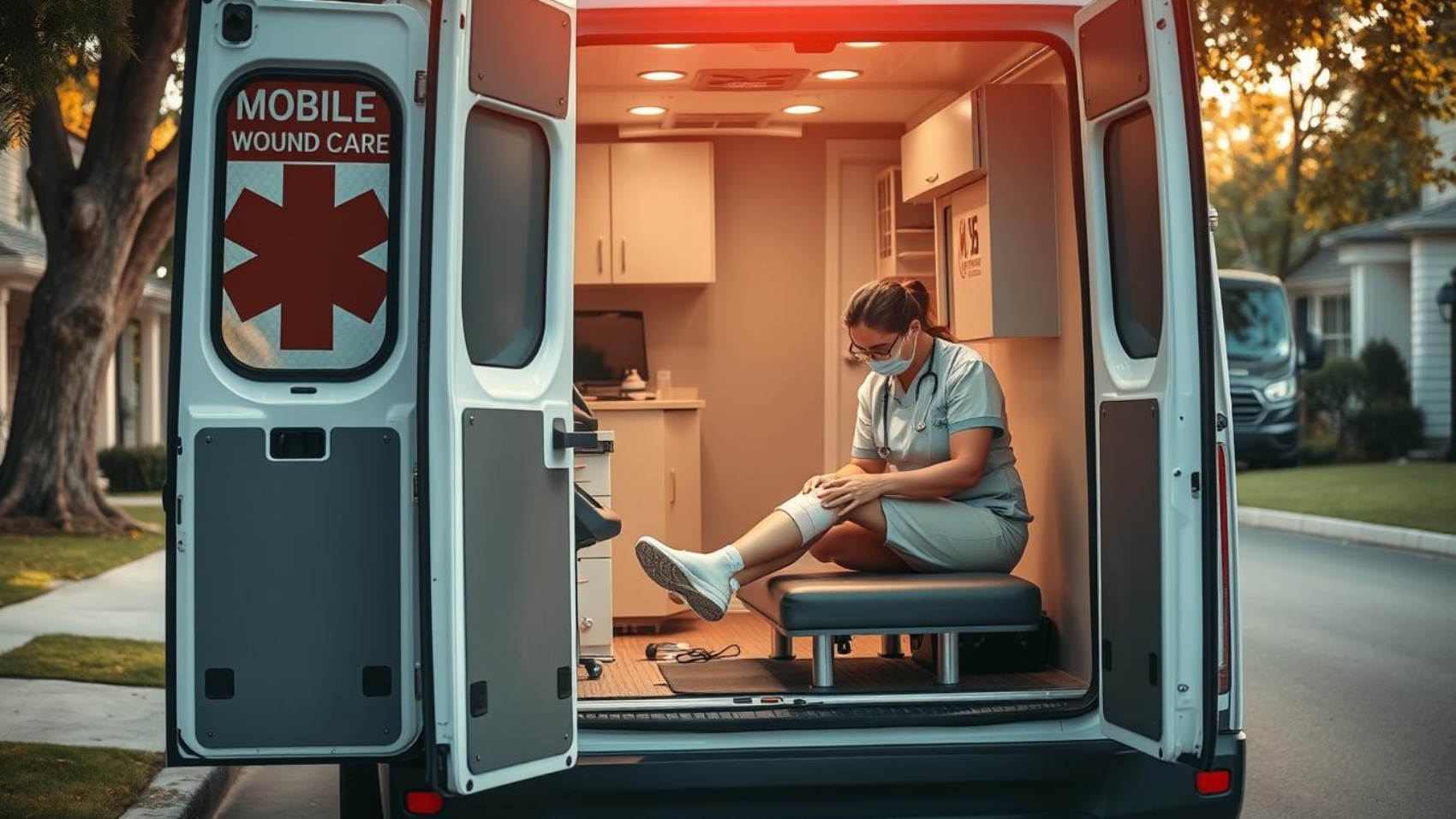
Wound care appointments

What to Expect During Ongoing Mobile Wound Care Visits

Getting wound care doesn’t mean you have to go to the hospital. Dominion Mobile Wound Care brings experts right to your home. This makes getting care easy and comfortable for you.

At your visits, you’ll see how your healing is going. Our team will check on you, change treatments if needed, and give care that fits you best. This helps you get better faster.

Key Takeaways

  • Convenient wound care at your bedside
  • Expert specialists for personalized treatment
  • Ongoing progress tracking for optimal healing
  • Adjustments to treatment plans as needed
  • Comfortable and stress-free care experience

The Evolution of Mobile Wound Care Services

Mobile wound care has changed how we treat patients, making it easier and more convenient. It brings treatment updates right to patients at home, in assisted living, or healthcare settings.

How Mobile Wound Care Has Transformed Patient Treatment

Mobile wound care has changed from hospital care to more personal, home-based services.

From Hospital to Home-Based Care

This change has made patients more comfortable and safer from infections. They can get care in a calm setting.

Technology Advancements Enabling Mobile Services

New technology, like portable equipment and telehealth, lets doctors care for patients outside hospitals.

Dominion Mobile Wound Care’s Approach to In-Home Services

Dominion Mobile Wound Care focuses on top-notch in-home care.

Company History and Mission

Dominion Mobile Wound Care has a long history of quality care. Their mission is to improve patient outcomes with complete wound care services.

Service Areas in the United States

Dominion Mobile Wound Care covers many areas in the United States. This ensures patients everywhere can get their expert care.

Benefits of Receiving Wound Care in Your Home

Home-based wound care is changing how we treat patients. Getting care at home brings many wound care benefits. These benefits can greatly help your recovery.

Comfort and Convenience Factors

One big plus of home care is avoiding travel hassles. You don’t have to go to a healthcare facility. This is great for those who have trouble moving around.

Eliminating Transportation Challenges

Having your care provider visit you saves time. It also cuts down on the stress of getting to appointments.

Reducing Stress and Anxiety

Getting care at home can reduce stress and anxiety. This is because home is a more relaxed place than a clinical setting.

Reduced Risk of Hospital-Acquired Infections

Home care lowers the risk of getting infections in the hospital. This is very important for people with weak immune systems.

Personalized Care in Familiar Surroundings

Home care lets your provider tailor treatment to your needs. They can adjust care based on your home. This can help you reach healing milestones faster.

Preparing for Your First Mobile Wound Care Appointment

Getting ready for your first mobile wound care visit is key. Knowing what to expect can make it easier. If you’re new to mobile wound care, understanding the visit can help you feel more ready.

You’ll need to gather some documents and info. This includes your insurance details and any past treatment records for your wound.

Documentation and Medical History Requirements

Having the right documents is very important. You’ll need:

  • Insurance Information: Have your insurance cards and ID ready for billing.
  • Previous Treatment Records: Collect any records from past wound treatments, like doctor’s notes and test results.

Creating a Suitable Environment for Treatment

It’s also important to make the treatment area comfortable and easy to access. This means:

  • Make sure the area is clean and well-lit.
  • Have a clean table or surface for your provider’s equipment.

For more info on what to expect and how to prepare, check out resources like top questions to ask your wound care nurse before your first visit.

Being prepared can make your first mobile wound care visit a success. Reach out to Dominion Mobile Wound Care to schedule your appointment. Start your healing journey today.

The Initial Assessment Process

Dominion Mobile Wound Care starts with a detailed examination. This is to create a treatment plan just for you. Understanding your wound’s size, depth, and tissue type is key to finding the right treatment.

Comprehensive Wound Evaluation Techniques

A thorough wound evaluation involves several important techniques. Your healthcare provider will examine your wound closely. They consider many factors that affect how your wound heals.

Measurement and Documentation Methods

Measuring your wound accurately is essential. It involves measuring its length, width, and depth. Also, documenting its appearance through photos or notes is important. These methods help track your wound’s progress.

Tissue Assessment Procedures

Assessing the tissue in and around your wound is critical. Your provider will look for necrotic tissue, granulation, or other factors that can impact healing. This information helps them choose the best treatment options for you.

Diagnostic Tools Used During Home Visits

Dominion Mobile Wound Care uses advanced tools during home visits. These tools include non-invasive tests to check blood flow and tissue oxygenation. They provide insights into your wound’s healing ability.

Establishing Your Personalized Treatment Plan

After the initial assessment, your healthcare provider will create a personalized treatment plan for you. This plan will include the treatments you need, like dressing changes and medication. It will also outline the necessary follow-up appointments for your wound to heal.
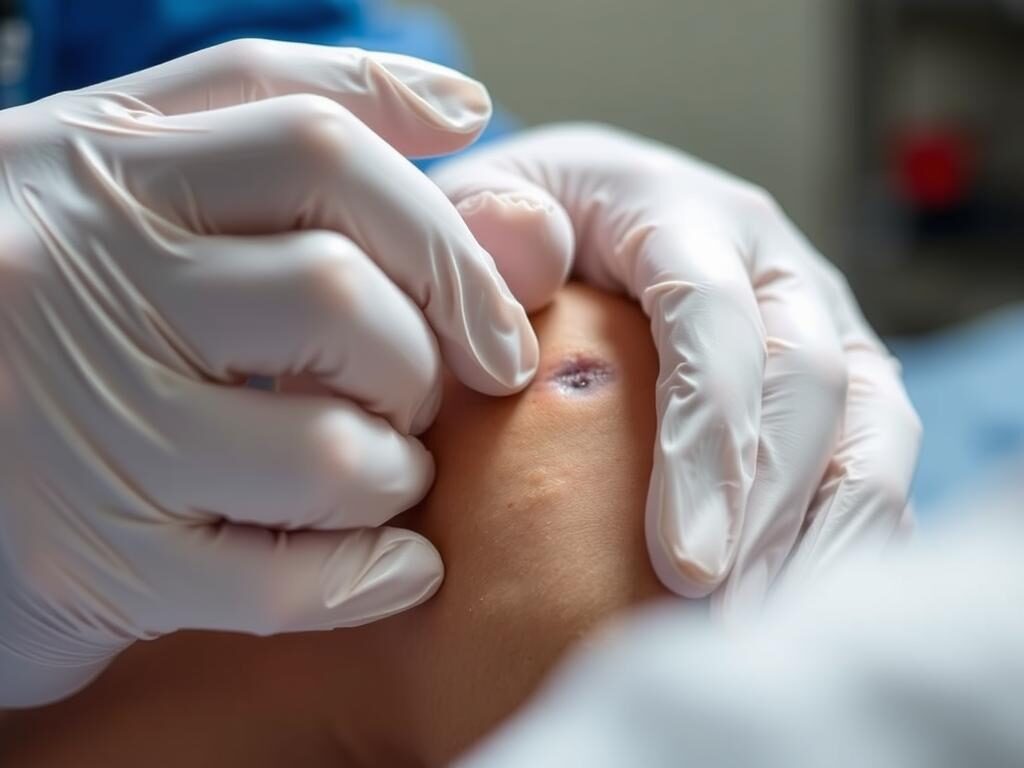
wound assessment

Understanding Your Ongoing Wound Care Appointments

As you keep going on your wound care journey, knowing what to expect is key. This knowledge makes each visit easier and more comfortable for you.

Step-by-Step Breakdown of a Typical Visit

A typical wound care visit has a set process. This ensures you get the best care possible. It includes several important steps.

Initial Check-In and Vital Signs

When you arrive, your healthcare provider will check your vital signs. This includes your temperature and blood pressure. It’s to see how you’re doing overall.

Wound Cleaning and Dressing Procedures

Next, they’ll clean your wound and put on a new dressing. This is a key part of making your wound heal.

Standard Protocols Followed by Professionals

Your healthcare provider will stick to established protocols. These are set to help your wound heal and avoid any problems.

Duration and Frequency Considerations

The length and how often you need to come in will depend on your situation. Your provider will talk about this with you at the start.

Appointment Component Typical Duration Frequency
Initial Check-In and Vital Signs 5-10 minutes Every visit
Wound Cleaning and Dressing 15-30 minutes As needed
Progress Tracking 5-10 minutes Every visit

Knowing what happens at your wound care appointments helps you track your progress. It also makes you more confident in your care.

Advanced Treatment Technologies Available at Home

With Dominion Mobile Wound Care, you get top-notch wound treatments at home. Our advanced products and technologies help wounds heal faster. Our team works hard to give you the best care possible.

Portable Wound Care Equipment and Innovations

Dominion Mobile Wound Care uses the latest portable equipment for your care. We use cutting-edge innovations like:

  • Negative Pressure Wound Therapy (NPWT): This treatment uses a vacuum to help wounds heal faster.
  • Ultrasound and Electrical Stimulation: These methods help wounds heal by improving tissue repair and blood flow.

Negative Pressure Wound Therapy

NPWT is a non-invasive method that boosts wound healing. It uses a controlled vacuum to stimulate healing and prevent complications.

Ultrasound and Electrical Stimulation

These treatments use sound waves or electrical currents to aid healing. They’re great for wounds that take a long time to heal.

Specialized Dressings and Applications

Dominion Mobile Wound Care also uses special dressings for your wound. These are chosen based on your wound type. They help create a healthy healing environment and are changed as needed.

Therapeutic Modalities for Different Wound Types

Our team knows how to pick the right treatment for your wound. Whether it’s a diabetic foot ulcer, pressure sore, or surgical wound, we’re here to help.

Tracking Your Healing Progress During Treatment

Tracking your healing progress is key when you’re getting mobile wound care. It helps your healthcare team make the best decisions for you. They can adjust your treatment as needed.

Documentation Methods Used by Providers

Keeping accurate records is vital for tracking your wound’s healing. Your provider uses different methods to monitor your progress.

Digital Imaging and Measurement Tools

Advanced tools help track your wound’s size, depth, and condition. These tools spot even small changes. This lets your team adjust your treatment plan quickly.

Progress Notes and Treatment Records

Your care journey is documented in detail. These records include your wound’s status, treatments, and any care plan changes.

Documentation Method Description Benefits
Digital Imaging High-resolution images of your wound Accurate tracking of wound size and condition
Measurement Tools Precise measurements of wound dimensions Identifies subtle changes in wound status
Progress Notes Detailed records of treatment and progress Ensures continuity of care and informed decision-making

Digital Monitoring and Telehealth Integration

Digital monitoring and telehealth add to your care. They let your team check on you remotely. This ensures you get all the support you need.

Understanding Your Healing Milestones

Your provider will help you understand your healing milestones. This teamwork makes sure you’re informed and involved in your recovery.

At Dominion Mobile Wound Care, we focus on your healing progress. If you need wound care, our mobile program can help. Contact us to learn more about supporting your healing journey.

Communication Between Scheduled Wound Care Appointments

Your wound care journey doesn’t stop between appointments. Here’s how to stay connected. At Dominion Mobile Wound Care, we know effective communication is key for healing.

When to Contact Your Wound Care Provider

Knowing when to call your wound care provider is important. It helps you get the help you need quickly.

Warning Signs That Require Immediate Attention

  • Increased redness or swelling around the wound
  • Unusual odor or discharge
  • Severe pain or discomfort
  • Fever or chills

Non-Emergency Questions and Concerns

Got questions about your treatment or wound care? Contact your provider. We’re here to help and support you.

Available Support Systems

At Dominion Mobile Wound Care, we offer full support for your healing. Our team is ready to answer your questions and guide you.

Support Channel Description Availability
Phone Support Direct line to your wound care provider Monday – Friday, 9am – 5pm
Email Support Email your questions or concerns 24/7, response within 24 hours
Patient Portal Secure online platform for messaging and updates 24/7

Using Technology to Stay Connected

We use technology to improve your wound care experience. Our patient portal lets you securely message your provider, see your care plan, and track your progress.
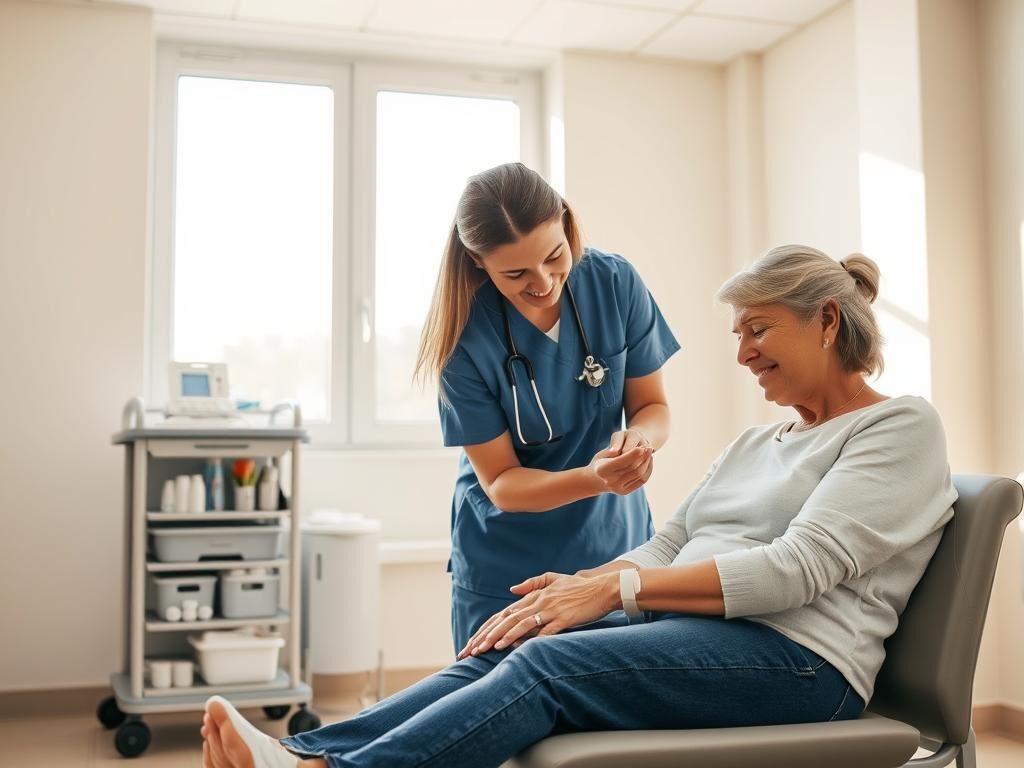
wound care support

The Role of Caregivers in Mobile Wound Care

Having a supportive caregiver by your side can greatly help in wound care. They offer emotional support and help with the practical tasks of wound care. This support is key in the recovery process.

How Family Members Can Support Treatment

Family members can greatly impact treatment by being involved in daily care. They can remind patients to take medication, keep the area clean for wound care, and offer emotional support. This support is vital for the patient’s well-being.

Training Opportunities for Caregivers

Caregivers can get trained to better support patients in wound care. This training covers important skills like:

  • Basic Wound Monitoring Skills: Learning to assess the wound’s condition and spot any complications.
  • Dressing Maintenance Between Visits: Getting to know how to change dressings and keep the wound clean.

Basic Wound Monitoring Skills

Caregivers can learn to track the wound’s healing. They can note any signs of infection or other issues that need medical attention.

Dressing Maintenance Between Visits

Keeping the wound clean is essential for healing. Caregivers can learn how to change dressings and keep the wound clean between visits.

Balancing Professional and Family Care

It’s important to balance professional medical care with family support. When family and medical teams work together, patients get the best care. This care meets their medical, emotional, and practical needs.

Insurance Coverage and Payment Options for Ongoing Wound Care

Knowing your insurance options is key when it comes to wound care. At Dominion Mobile Wound Care, we help you understand your insurance. This way, you can get the care you need without worrying about money.

Medicare and Medicaid Considerations

If you have Medicare or Medicaid, you can get wound care services. Medicare Part B covers doctor visits and some medical supplies. Medicaid coverage changes by state, so check your plan.

Private Insurance Navigation

Private insurance can be tricky. Here are some important things to remember:

  • Pre-authorization Requirements: Some plans need approval before certain treatments or supplies.
  • Documentation for Coverage: Your doctor must document your treatment plan for insurance.

Pre-authorization Requirements

Pre-authorization means your insurance needs your doctor’s team to get approval for treatments. It makes sure the treatment is needed and covered.

Documentation for Coverage

Good documentation is key for insurance. Your doctor will detail your wound, treatment, and progress to support your claim.

Financial Assistance Programs

If money is tight, there’s help available. Dominion Mobile Wound Care can help you find financial aid. This includes patient programs and non-profit organizations that help with wound care costs.

Understanding your insurance is the first step to managing wound care costs. At Dominion Mobile Wound Care, we’re here to help you. We want to make sure you get the best care possible.

Treatment Updates and Adjustments Throughout Your Care Journey

Your wound care plan will change as you heal. This keeps your care effective and tailored to you.

When and Why Treatment Plans Change

Plans change for many reasons. This includes changes in your wound, new findings, or complications. Your healthcare team will watch your progress and adjust as needed.

Incorporating New Therapies as Needed

New treatments and technologies might be added to your care. This could include advanced dressings or new therapies.

Responding to Healing Plateaus

If healing slows, your team will review your plan. They might add new strategies to keep you moving forward.

Addressing Complications Promptly

Quick action is key if complications arise. Your team will adjust your plan to avoid further problems.

Collaborative Decision-Making with Your Provider

Your input is important. Working with your provider ensures your care meets your needs and preferences.

At Dominion Mobile Wound Care, we focus on personalized care. If you need wound care, our team is here to help.

Conclusion: Partnering with Dominion Mobile Wound Care for Optimal Healing

Knowing what to expect from mobile wound care visits helps you heal better. Dominion Mobile Wound Care offers top-notch care right at home. Their team creates a treatment plan just for you.

At your appointments, you’ll get a full check-up and the latest treatments. Dominion Mobile Wound Care also offers ongoing support. They have systems to keep track of your healing.

Choosing Dominion Mobile Wound Care lets you focus on getting better. Start your healing journey by booking your appointment today. Enjoy the ease and comfort of mobile wound care services.

FAQ

What is mobile wound care, and how does it work?

Mobile wound care brings treatment to your home. A healthcare expert comes to you. They assess, clean, and dress your wound. This care is personalized and given in your own space.

What are the benefits of receiving wound care at home?

Getting wound care at home is very comfortable. It also lowers the risk of infections from hospitals. Plus, you get care that fits your specific needs.

How do I prepare for my first mobile wound care appointment?

For your first visit, collect your medical records. Make your home clean and comfy for treatment. Have all needed supplies ready.

What happens during the initial assessment process?

At the start, your healthcare provider checks your wound. They use special tools and create a treatment plan just for you.

What can I expect during ongoing wound care appointments?

Future visits include checking your vital signs and cleaning your wound. They follow strict protocols to ensure your care.

How is my healing progress tracked during treatment?

Your healing is tracked through notes and digital tools. This lets your provider adjust your care as needed. You can celebrate your healing steps.

How do I communicate with my wound care provider between appointments?

You can reach your provider by phone, email, or online portals. Use these tools to stay in touch and share any concerns.

What role do caregivers play in mobile wound care?

Caregivers are key in supporting your care. They can learn to help with wound care. This helps balance work and family life for better healing.

What are my insurance options for ongoing wound care?

Look into Medicare, Medicaid, and private insurance for wound care. Also, check out financial help programs. This will help you understand your payment options.

How are treatment plans adjusted throughout my care journey?

Your treatment plan changes based on your progress. New therapies are added as needed. Your provider works with you to ensure the best healing.

What advanced treatment technologies are available at home?

Home treatments include portable equipment, special dressings, and therapies. These help meet your wound care needs.
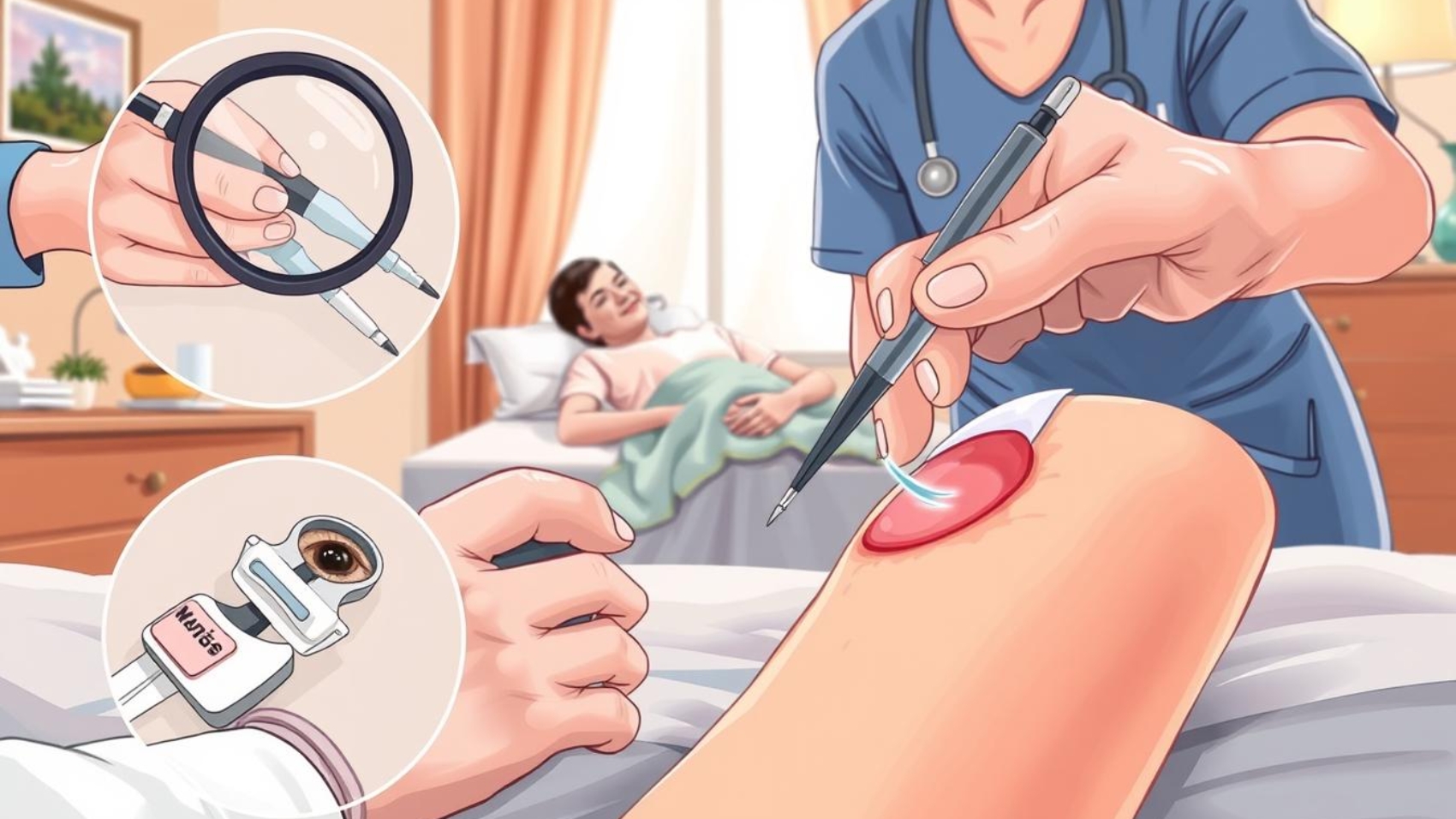
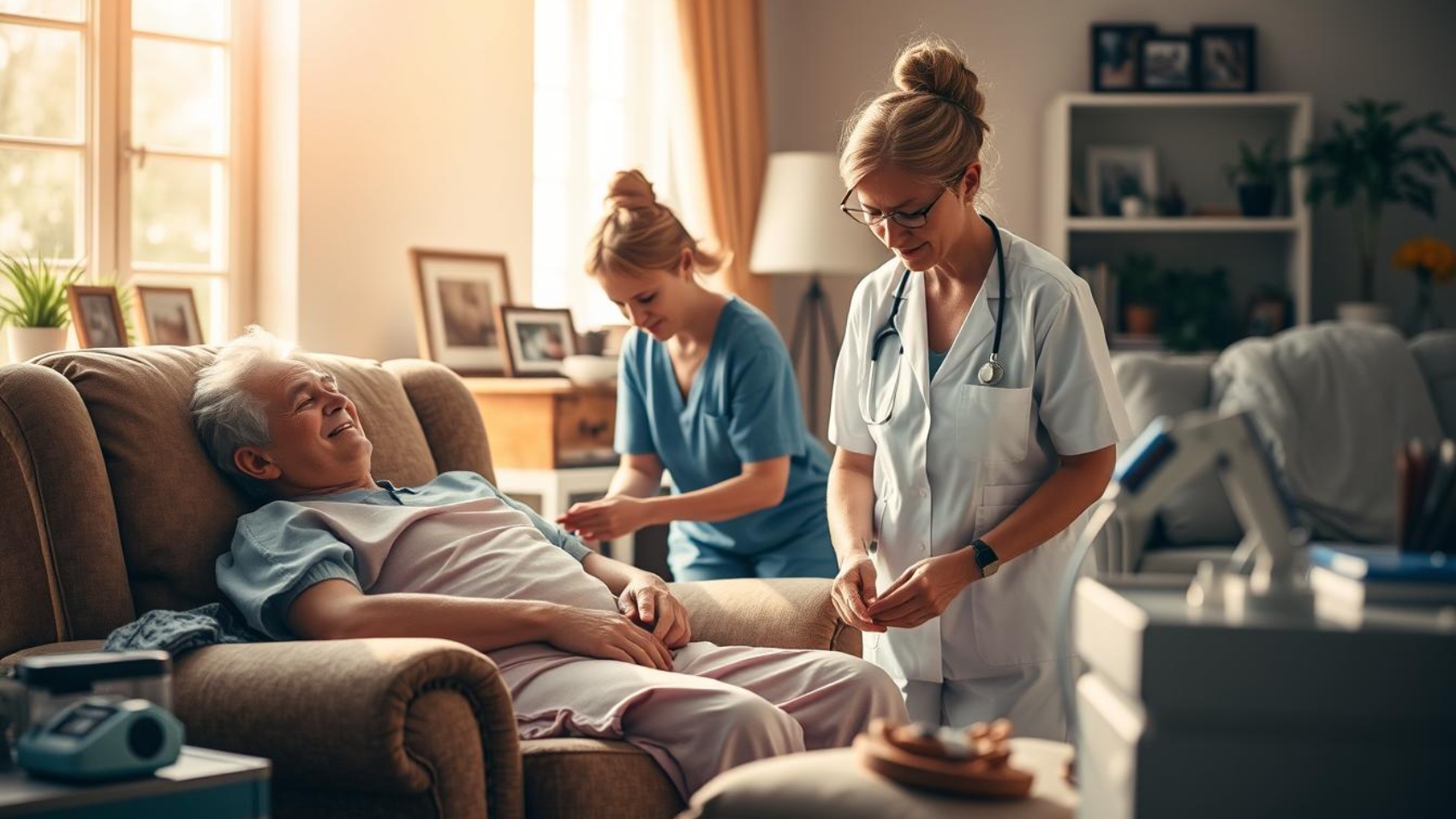
Homebound Patients

Why Homebound Patients Benefit from Mobile Wound Care

Being unable to leave home changes how you get medical attention. Millions of older adults struggle to travel for appointments, face isolation, and risk avoidable hospital stays. Mobile wound care brings skilled clinicians to your door, reducing travel and speeding up treatment.

Receiving care at home helps clinicians see real barriers and supplies, tailor dressing plans, and catch infections early. This approach also boosts comfort and adherence so you can keep routines and involve your family in care decisions.

Dominion Mobile Wound Care blends home health care with targeted wound services to match your wound type and goals. You’ll learn what a typical visit includes and how in-home care complements broader health care needs. Hire Dominion Mobile Wound Care to help heal your wounds.

Key Takeaways

  • In-home care reduces travel burdens and speeds interventions.
  • Clinicians assess safety, supplies, and barriers in your home.
  • Mobile wound services improve comfort, adherence, and outcomes.
  • Care plans link with your physician and existing health services.
  • Dominion Mobile Wound Care offers tailored, timely in-home help.

Understanding Homebound Status and Eligibility for Care at Home

Determining eligibility for care at home begins with how your ability to leave the house affects medical support. Insurers and Medicare use clear criteria to judge when you qualify for home health care.

What “homebound” means under Medicare and private insurance

To meet homebound status, you must usually need help from another person or an assistive device to leave home due to illness or injury. Alternately, leaving home could make your condition worse.

Allowed outings without losing status

Short, infrequent trips are permitted. Examples include getting care not available at home, licensed adult day programs, religious services, special family events, or essential grooming.

Real-world examples of being considered homebound

  • Severe osteoarthritis needing a walker and stair assistance.
  • COPD with oxygen who becomes breathless after a short walk.
  • Post-surgical recovery with high pain and prolonged fatigue.

Your physician must document a face-to-face visit and order intermittent, skilled services from a Medicare-certified agency. If you want at-home wound care, Hire Dominion Mobile Wound Care to help heal your wounds.

The Scale, Risks, and Inequities Affecting Older Adults at Home

Millions of people now spend most of their time at home, and that reality changes how you get care. About two million older adults are completely homebound and another 5.5 million are partially homebound. Many live with multiple chronic disease risks and limited access to routine health services.

Invisible to health systems, these people often miss preventive visits. They have higher hospitalization rates and a 65% six-year mortality among the most frail. Only about 12% of completely homebound individuals receive home-based primary care, and services concentrate in cities and among white populations.

home health care

The pandemic made access gaps worse. In 2020, prevalence for adults 70+ rose to 13%, with larger increases for Black and Hispanic/Latino groups. More than half lacked a computer or did not go online, limiting telehealth and leaving time-sensitive needs untreated.

  • You face higher risks of worsening symptoms and preventable hospital costs when routine care is missing.
  • Inequities by race, income, and place shape who gets home health care and the overall quality of care.
  • Bringing skilled care to your home can reduce costs, improve outcomes, and support your community.

Hire Dominion Mobile Wound Care to help heal your wounds and close access gaps where you live.

Why Homebound Patients Benefit from Mobile Wound Care

Timely wound care delivered at home can cut preventable hospital trips and reduce long-term costs. By treating wounds where you live, clinicians intervene earlier and monitor healing more closely.

Clinical advantages

Fewer emergency visits — clinicians address infection risks and dressing problems before they escalate.

On-site assessments let providers adjust dressings, manage edema, and start infection treatment immediately. That speeds recovery and improves safety.

Comfort, continuity, and cost-effectiveness

Seeing the same clinician in your home builds trust, improves adherence, and makes daily self-care easier to learn.

Integrated health services mean wound care teams coordinate with your physician, nutrition support, and therapy to manage chronic conditions and reduce complications.

  • Reduce exposure and unnecessary trips by catching issues early.
  • Tailored care for pressure injuries, diabetic foot ulcers, and other wounds.
  • Visit frequency matches your healing to prevent rehospitalization.

Hire Dominion Mobile Wound Care to help heal your wounds and get coordinated, in-home services that support recovery, comfort, and long-term quality of care.

What Mobile Wound Care Looks Like at Home

A mobile wound visit brings skilled clinicians, tools, and a plan tailored to your daily life. You’ll see how each visit follows evidence-based steps to protect healing and prevent infection.

home health

Skilled services and clinical steps

Visits begin with a comprehensive wound assessment: measurements, photos when needed, and stage documentation.

When indicated, clinicians perform debridement, select evidence-based dressings, and set a clear change schedule. Infection management includes cultures when ordered and close monitoring of drainage and odor.

Your at-home care team

Skilled nursing leads wound care, while therapy improves mobility and offloading. All care follows physician-directed plans that change as you improve.

Safety, equipment, and technology

Clinicians set up and maintain devices like compression systems and negative pressure wound therapy. They also check the home for fall risks and pressure points.

Coordinating supports

Care services extend beyond clinicians. Home health aides, social work, and community programs help with nutrition, transport, and caregiver support.

  • What a visit includes: assessment, debridement when needed, dressings, and clear follow-up.
  • How infection is managed: testing, monitoring, and fast communication with your providers.
  • Team approach: nursing, therapy, and physician-directed plans coordinated with aides and social work.

Dominion Mobile Wound Care integrates these home health services so your plan is measurable and aligned with your goals. Hire Dominion Mobile Wound Care to help heal your wounds.

How to Get Started and What’s Covered

The path to Medicare-covered home health care depends on orders, documentation, and agency certification.

Steps to access Medicare-certified home health and physician orders

  1. Talk with your physician. Ask for a face-to-face visit and an order that spells out the skilled nursing or therapy needs for your wound.
  2. Confirm clinical criteria. Your doctor documents why you need intermittent skilled visits and why those visits must occur at your home.
  3. Choose a Medicare-certified agency. Compare providers on Medicare’s Care Compare and pick one that offers wound-focused services and clear quality data.
  4. Set the plan with care providers. Agencies coordinate with health care providers to set visit frequency, goals, and measurable healing targets.
  5. Understand coverage basics. Intermittent skilled visits are authorized when medically necessary; frequency can be daily for short periods or scheduled per your needs.

Dominion Mobile Wound Care works with your physician and local home health teams to streamline referrals, scheduling, and on-site wound care. Hire Dominion Mobile Wound Care to help heal your wounds.

Conclusion

Conclusion

Delivering coordinated wound care where you live makes treatment more practical and improves healing chances. Bringing high-quality services into your home helps you manage illness, disease, and symptoms without the burden of travel.

In-home nursing and therapy that align with your providers can speed recovery and reduce complications. This model also supports family involvement and fits your daily routines so plans are realistic for your homes.

Home health connects you to broader supports in the community and ensures care needs are met comprehensively. If you are considered homebound, the right documentation can unlock covered services at the right time.

You are ready to work with a trusted partner that coordinates care, guides your options, and delivers compassionate in-home wound care. Hire Dominion Mobile Wound Care to help heal their wounds.

FAQ

What does it mean to be considered homebound under Medicare and private insurance?

You’re generally viewed as unable to leave your residence without considerable effort or assistance because of illness, injury, or frailty. Medicare requires a physician’s assessment that leaving home is taxing and that normal activities are limited. Private insurers may use similar criteria but can vary, so check your plan for specifics about eligibility for home health services, skilled nursing, and therapy.

What types of outings are allowed without losing eligibility for in-home care?

Short, infrequent trips for medical appointments, religious services, or essential errands typically don’t affect your status. Leaving for a medical test, dialysis, or a brief family visit is usually permitted. Document these outings and keep your clinician informed so coverage and care plans remain valid.

Can you get real examples of when someone is considered homebound?

Yes. For example, if you need a wheelchair, walker, or another person to leave home, or if leaving causes severe fatigue or symptoms that require recovery, you’ll likely qualify. Another example is when a recent surgery or infection makes travel unsafe, and clinicians prescribe home-based skilled nursing and wound care.

How many people are confined to home and why does this matter for wound care?

Millions of older adults face limited mobility, chronic disease, or recovery needs that keep them at home. That concentration of need raises demand for in-home services like wound assessment and infection control. Providing care where you live reduces hospital visits and prevents complications that otherwise drive higher health costs.

Are there disparities in access to home-based services for older adults?

Yes. People in rural areas, low-income households, and marginalized communities often face fewer home health providers, longer wait times, and lower access to skilled nursing and therapy. These gaps lead to preventable complications and higher overall costs for families and the health system.

What lessons from COVID-19 apply to home-based wound care and telehealth?

The pandemic showed telehealth helps with check-ins and triage but often can’t replace hands-on wound debridement, dressing changes, or skilled assessments. You benefit most from a hybrid approach: virtual visits for monitoring and in-person skilled nursing for clinical procedures and complex management.

What clinical advantages does mobile wound care provide compared to clinic or hospital visits?

Receiving skilled services at home cuts travel-related strain, speeds intervention when problems arise, and lowers exposure to hospital-acquired infections. You also get timely assessment, individualized dressing plans, and coordinated infection management, which support faster, safer healing.

How does in-home care improve comfort, continuity, and cost-effectiveness?

Being treated in familiar surroundings reduces stress and supports better sleep and adherence to care plans. Continuity comes from a consistent team—skilled nurses, therapists, and physician-directed plans—who communicate and adjust treatment quickly. That coordination often lowers emergency visits and long-term costs.

What services are included in skilled mobile wound care at home?

Skilled services typically include wound assessment, debridement, advanced dressings, infection monitoring, and topical or systemic treatment per a clinician’s orders. Therapy services—physical or occupational—may assist mobility and pressure offloading to prevent recurrence.

Who makes up the at-home care team and what roles do they play?

Your team often includes skilled nurses for wound care, physical or occupational therapists for mobility and pressure relief, a physician or nurse practitioner who sets the plan, and care coordinators or social workers who connect you to community resources and aides for daily support.

What safety measures and equipment support healing at home?

Safety includes infection control, sterile supplies, wound vacuums when indicated, pressure-relief mattresses, and point-of-care testing. Clinicians also assess your home for fall risks and provide education on wound care, nutrition, and symptom monitoring to reduce complications.

How are aides, social work, and community supports coordinated with clinical care?

Care coordinators or case managers connect clinical teams with home health aides for personal care, social workers for benefits and caregiver support, and community programs for meals or transportation. This integrated approach addresses medical and social needs that affect healing.

What steps do you need to take to start Medicare-certified home health and receive physician-ordered wound care?

First, get a physician’s order stating you need skilled nursing or therapy at home. Contact a Medicare-certified home health agency to start services. The agency will perform an initial assessment and create a plan of care. Verify coverage, ask about copays, and confirm how supplies and durable medical equipment are provided.

What coverage and documentation should you expect when seeking at-home wound services?

Expect a treatment plan documented by your physician and periodic clinical notes from the home health team. Medicare and many insurers cover skilled nursing and therapy that are medically necessary. Keep records of visits, orders, and any medical devices or dressings supplied for claims and continuity of care.

home wound care in San Antonio

Why More San Antonio Patients Are Choosing In-Home Wound Care

Dominion Mobile Wound Care brings clinical oversight to the place patients prefer most. This mobile model delivers thorough assessment, cleansing, dressing changes, and infection monitoring with a focus on safety and comfort.

The local team works with physicians and insurers to keep treatment plans on track. Many major plans accept visits, which helps reduce trips to clinics and lowers exposure to healthcare-associated infections.

Patients report smoother recovery thanks to frequent progress checks and tailored pain management. The approach supports chronic lesion management, prevention education, and timely adjustments without disrupting daily routines.

To arrange a first visit or learn how the process works, readers are invited to hire Dominion Mobile Wound Care for coordinated, patient-centered support that emphasizes quality and results.

Key Takeaways

  • Mobile visits bring medical oversight and comfort to the patient’s residence.
  • Coordination with providers and insurers improves continuity.
  • Frequent checks enable timely treatment adjustments.
  • Services range from routine dressing changes to chronic management.
  • Dominion Mobile Wound Care offers local, quality-focused support.

Why San Antonio Patients Are Moving to In‑Home Wound Care

Patients increasingly select on-site services to reduce travel, lower exposure risk, and speed recovery. Bringing expert assessment, irrigation, dressing changes, and infection monitoring to a residence removes many repeated clinic trips and saves time.

Close observation lets clinicians adjust treatment quickly. Frequent visits support faster healing and reduce complications by spotting changes early. Coordination with a patient’s physicians keeps plans aligned with medications and other conditions.

Practical advantages include less travel fatigue, tailored guidance for daily routines, and reduced exposure to high-traffic facilities that can raise infection risk.

Key benefits at a glance

  • Fewer trips and better convenience for patients with mobility limits.
  • Lower exposure to infection while enabling timely treatment adjustments.
  • Personalized support that helps maintain steady progress toward recovery.

For coordinated, patient-focused support, hire Dominion Mobile Wound Care to help heal their wounds.

Home wound care in San Antonio: Local, specialized care where patients heal best

Local specialists deliver tailored, clinic-level treatments directly where patients rest and recover. This approach suits people who have limited mobility or chronic conditions that make travel hard. It also helps those who need frequent visits for reliable progress.

Who benefits from in‑home wound care services

Patients managing postoperative incisions, diabetic foot ulcers, pressure injuries, venous leg ulcers, traumatic lacerations, or fragile skin gain clear advantages. Regular visits reduce delays and support consistent adherence to offloading, compression, and nutrition guidance.

Common wound types and complications addressed in the home

Clinicians assess size, depth, tissue type, and exudate to guide treatments. They provide cleansing, irrigation, dressing changes, infection monitoring, and prevention education. Coordination with physicians keeps treatment aligned with diabetes, vascular issues, or neuropathy.

  • Targeted dressings for moisture balance and protection
  • Early identification of pressure, friction, or edema
  • Clear documentation to track healing and prevent complications

Hire Dominion Mobile Wound Care to bring specialized support and help heal their wounds.

Comprehensive In‑Home Wound Care Services Offered by Dominion Mobile Wound Care

Dominion Mobile Wound Care offers a full suite of in‑home services designed to evaluate and treat complex skin conditions at the bedside. The program blends structured assessment, hands‑on treatments, and close monitoring to support steady healing.

Assessment and evaluation

Clinicians document size, tissue type, drainage, and periwound condition to tailor treatments and track progress with clinical precision.

Cleansing, irrigation, and dressing changes

Evidence‑informed cleansing and irrigation reduce bioburden. Dressing protocols balance moisture and protection between visits.

Infection monitoring and chronic management

Regular checks flag early signs of infection such as increased pain, redness, warmth, or odor so prompt treatment can begin.

Management plans address chronic issues with offloading, compression, and skin protection strategies when needed.

Pain, education, and collaboration

Pain strategies match each patient’s goals to support mobility and recovery. Education equips patients and family to recognize warning signs and follow safe daily routines.

The dedicated team coordinates with physicians and specialists to integrate medication changes, imaging, or referrals quickly.

Hire Dominion Mobile Wound Care to bring experienced wound care specialists and reliable services that help speed healing and protect quality of life.

Benefits Patients Value Today: Comfort, Quality, and Faster Recovery

Receiving clinical visits where they live helps people preserve energy and stay on schedule with treatment. That convenience supports steady healing and better adherence to plans.

comfort

Care delivered for greater comfort and convenience

Fewer trips mean less fatigue and more rest between visits. Patients can follow dressing and activity instructions without frequent disruptions.

Reduced risk of healthcare-associated infections

Limiting exposure to high-traffic facilities lowers infection risk for those with complex wounds. This safeguard is especially important for people with diabetes or weakened immunity.

Personalized attention from dedicated specialists

Specialists tailor dressing choices, offloading strategies, and skin protection steps to each person. This focused approach helps keep treatment aligned with goals.

Close monitoring with timely adjustments

Frequent checks let clinicians tweak moisture balance, compression, or topical treatment quickly. Small, prompt changes can speed recovery and prevent setbacks.

Coordinated care that supports overall outcomes

  • Medication and nutrition align with wound management and overall health.
  • Education helps patients and families recognize warning signs and follow daily steps.
  • Predictable visits reduce disruption and support independence.

Dominion Mobile Wound Care provides this combination of comfort, quality oversight, and responsiveness. Hire Dominion Mobile Wound Care to help heal their wounds.

Insurance Coverage, Access, and Care Coordination in San Antonio

Insurance and coordination are often the unseen drivers that let patients focus on healing instead of paperwork.

Dominion Mobile Wound Care accepts a broad network of plans to support access across san antonio, including Aetna, Blue Cross Blue Shield, Cigna, Humana, Medicare, Medicaid, Multiplan, TriCare/TriWest, and United Healthcare.

The team handles authorizations and documentation to reduce delays. That administrative expertise helps patients begin treatment faster and keeps recovery on track.

  • Coordinated messages to physicians, specialists, and case managers maintain consistent treatment and medication lists.
  • Visit notes, measurements, and photo documentation are shared when appropriate to show progress.
  • Scheduling balances insurance limits with the patient’s calendar to avoid gaps in therapy.

Benefits: clear coverage guidance, fewer redundant appointments, and fewer interruptions in treatment.

Hire Dominion Mobile Wound Care to bring experienced coordination and support that helps heal their wounds.

What to Expect During an In‑Home Visit from Dominion Mobile Wound Care

A typical in‑home visit begins with a focused clinical review that sets clear goals for healing. The clinician conducts a detailed assessment, discussing risks to skin integrity and any mobility or nutrition factors. Patients receive a clear care plan with expected visit frequency and measurable goals.

in-home wound care visit

First visit: Comprehensive assessment, risk review, and care plan

The first appointment measures the wound, documents tissue type and exudate, and screens for pressure, moisture, and shear risks. The clinician explains the treatment schedule and agrees on shared goals with the patient and caregiver.

Ongoing visits: Progress tracking, dressing changes, and adjustments

Follow-up visits focus on cleansing, dressing changes, and objective tracking with photos and measurements when appropriate. The team adjusts treatments as healing trends appear or if complications require physician input.

Safety protocols and infection‑prevention measures in the home

Infection-prevention steps include hand hygiene, clean work surfaces, proper disposal of used dressings, and safe supply storage. Visits end with a short recap of warning signs to report and simple daily routines that protect quality and comfort.

  • Review of offloading and positioning to reduce pressure
  • Prompt coordination with wound care specialists if healing stalls
  • Tailored visit cadence for San Antonio patients to match needs

Hire Dominion Mobile Wound Care to bring hospital‑grade attention into the home and help heal their wounds.

Conclusion

Dominion Mobile Wound Care combines clinical protocols with flexible scheduling to meet each patient’s recovery timeline. Their services pair assessment, cleansing, dressing changes, infection monitoring, and chronic management so treatments stay consistent and effective.

The dedicated team aligns with physicians and wound care specialists to reduce delays and prevent complications. Education and pain strategies help families follow daily steps that support healing and protect surrounding skin.

For personalized guidance and scheduling, patients can begin care services that fit their needs today. Hire “Dominion Mobile Wound Care” to help heal their wounds.

FAQ

Why are more San Antonio patients choosing in‑home wound care?

Many residents prefer treatment delivered at home because it reduces travel, lowers exposure to infections, and improves comfort. Trained specialists provide personalized assessment and treatment plans that support faster healing and better recovery outcomes.

Who typically benefits from in‑home wound care services?

Patients with limited mobility, recent surgeries, chronic skin conditions, diabetes-related ulcers, venous or arterial ulcers, and those at high risk for complications often benefit most. Family members and caregivers also gain education and support to manage wounds safely.

What common wound types and complications are addressed during in‑home visits?

Clinicians treat pressure injuries, diabetic foot ulcers, surgical incisions, traumatic wounds, and chronic non‑healing sores. They monitor for infection, necrosis, delayed healing, and other complications and intervene early to prevent deterioration.

What services does Dominion Mobile Wound Care provide during a visit?

The team offers comprehensive assessments, cleansing and irrigation, dressing changes, infection monitoring and treatment, chronic wound management, pain control, and caregiver education. Clinicians also coordinate with physicians and other providers to ensure continuity of care.

How does infection monitoring and early intervention work in a residence?

Specialists inspect the site for redness, drainage, odor, and systemic signs, take cultures when needed, adjust antibiotics with physician collaboration, and apply appropriate topical agents. Timely action reduces hospital transfers and promotes safer recovery.

Will insurance cover in‑home wound treatment?

Many major plans accept coverage, including Aetna, Blue Cross Blue Shield, Cigna, Humana, Medicare, Medicaid, Multiplan, TriCare/TriWest, and UnitedHealthcare. Coverage varies by plan and medical necessity, so clinicians help verify benefits and coordinate billing.

What should patients expect at the first in‑home visit?

The clinician completes a detailed assessment, reviews health risks and medications, documents the wound, creates a personalized care plan, and performs initial treatments or dressing changes. They also explain the schedule and goals for recovery.

How are ongoing visits structured to support healing?

Follow‑up visits focus on progress tracking, dressing changes, pain management, and adjustments to the treatment plan. The team communicates changes to the primary doctor and updates family members on goals and prevention strategies.

What safety protocols are followed to prevent infection during in‑home care?

Clinicians follow strict hand hygiene, use sterile techniques for dressing changes, wear appropriate personal protective equipment, and properly dispose of contaminated materials. They also educate families on wound hygiene and signs that require urgent attention.

How does in‑home wound management improve overall recovery?

Personalized attention, close monitoring, and reduced exposure to clinical settings promote healing. Coordinated plans with physicians and therapists address comorbidities, mobility, nutrition, and pain — all factors that speed recovery and reduce readmissions.

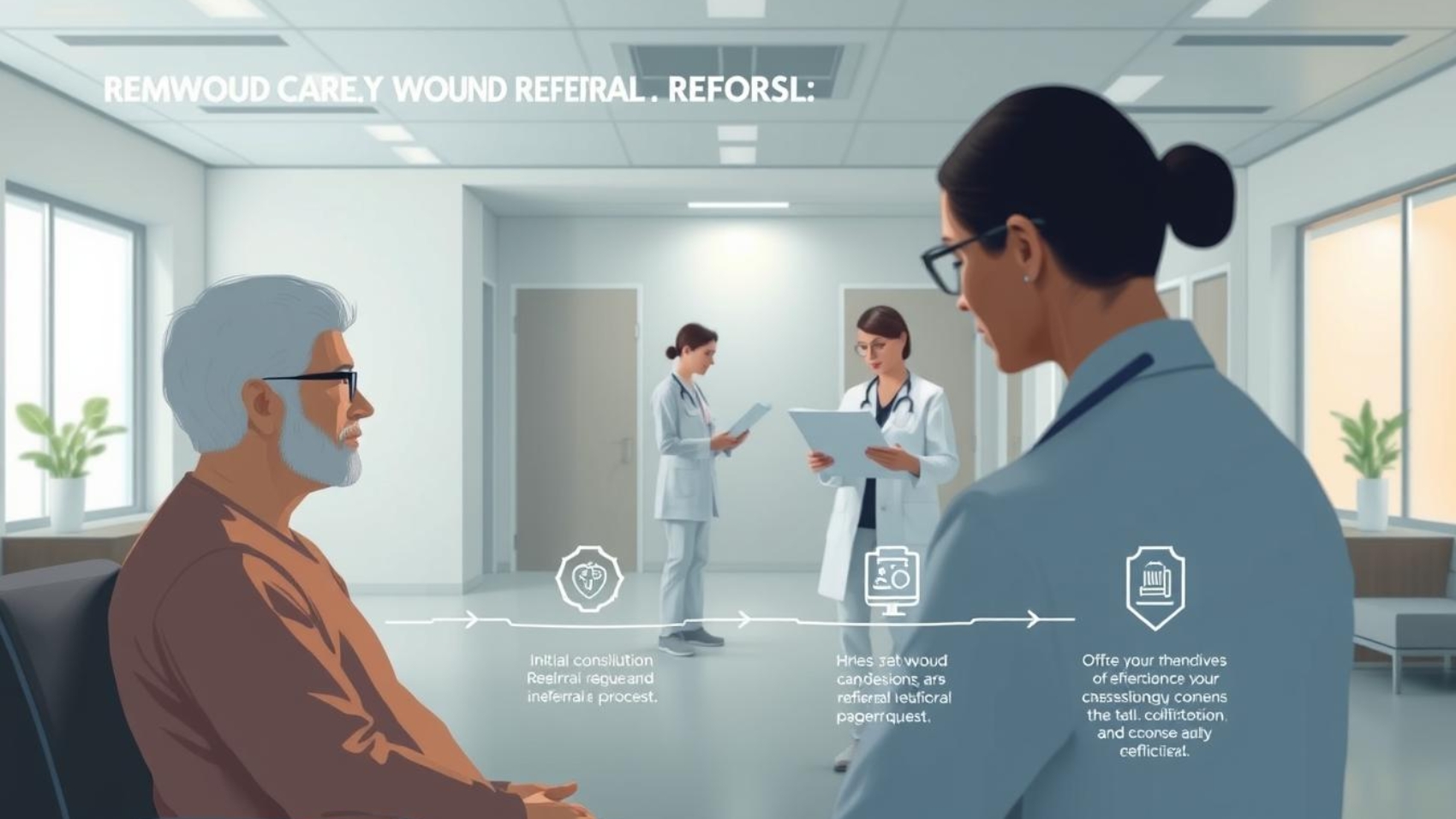
wound care referral process

How to Get a Referral for In-Home Wound Care

Dominion Mobile Wound Care explains how a provider or caregiver can navigate the wound care referral process for an in-home option. This short guide clarifies what patients and families need to know to start services quickly.

Non-healing wounds are not the same as an acute injury. They often stall and need advanced evaluation. Experienced programs treat venous, pressure, arterial, and diabetic ulcers, burns, and post-surgical issues.

Dominion Mobile Wound Care acts as a mobile clinical partner, bringing advanced modalities such as negative pressure therapy and cellular products to the home. The team aligns with the referring clinician’s plan so existing relationships remain intact.

This overview sets clear expectations for what information to gather and which contact steps to take to initiate a referral. Early engagement can reduce complications, shorten time to improvement, and improve overall health and quality of life.

Key Takeaways

  • Understand why non-healing wounds require specialized evaluation.
  • Know what patient details and records to have ready before contact.
  • Dominion Mobile Wound Care delivers services that align with clinicians’ plans.
  • Early in-home intervention can speed improvement and lower risks.
  • A multidisciplinary team supports patients and existing providers.

Hire Dominion Mobile Wound Care to help heal their wounds.

In-Home Wound Care Eligibility and Why It Matters

Patients with stalled skin deficits often need more than basic bandaging at home. A timely, focused evaluation at the bedside can identify problems that simple dressings miss.

When in-home services are appropriate

Criteria include limited mobility, frequent dressing changes, complex tissue loss, or unstable comorbidities that make clinic visits risky.

Bedside assessment helps monitor perfusion, control edema, and reduce infection risk. These steps protect overall health and function.

Common types seen at home

  • Venous leg ulcers
  • Pressure injuries and arterial ulcers
  • Diabetic foot ulcers, burns, and post‑surgical breaks

Advanced options delivered in the home

Dominion Mobile Wound Care brings imaging review and evidence-based protocols to the patient’s residence.

Available therapies include hyperbaric oxygen coordination, negative pressure therapy, cellular/tissue-based products, and total contact casting when standard measures fail.

Selection depends on depth, exudate, prior response, and comorbidities. Timely in-home intervention can lower hospitalization and amputation risk while improving comfort and independence.

Hire Dominion Mobile Wound Care to deliver expert in-home evaluations and advanced treatment to help heal their wounds.

The wound care referral process: How to refer a patient for home-based care services

Referring a patient for home-based treatment starts with a single call or secure submission. Dominion Mobile Wound Care streamlines intake and coordinates with referring providers to begin services quickly.

wound care referral

Step-by-step: from initial contact to scheduling and treatment planning

  1. Initial contact: share basic patient details and urgency.
  2. Triage: the team reviews records and prioritizes scheduling.
  3. At-home visit: a clinician arrives with a plan informed by records.
  4. Collaborative treatment planning: goals are aligned with the referring clinician.

What documents to include

To accelerate review, include current wound photos, the patient’s History and Physical, and recent progress notes.

How to submit referrals

Send documents by secure email, fax, or the online referral portal. If email or fax is used, completing the online form is not required. Dominion Mobile Wound Care confirms receipt and requests any missing information before the first visit.

Special considerations

Surgical wounds within the 90-day global period need a surgeon’s signed order before evaluation and treatment. Scheduling depends on acuity, infection risk, and patient availability to protect overall health.

  • Who to contact: referring clinician via secure channel.
  • What to send: photos, H&P, progress notes.
  • How to send: secure email, fax, or portal.
  • Milestones: acceptance, confirmation, first at-home dressing change.

Hire Dominion Mobile Wound Care to help heal their wounds.

Insurance, Medical Records, and Care Team Coordination

Confirming insurance details early prevents unexpected delays in starting in-home services. Dominion Mobile Wound Care verifies eligibility, checks plans, and secures authorizations so services can begin on schedule.

insurance verification

Insurance and coverage information

Providers should share payer names, member IDs, referral numbers, and any prior authorization notes up front. This helps the team confirm benefits and estimate visit frequency and supply approvals.

Dominion Mobile Wound Care handles preauthorization coordination and documents plan requirements to avoid surprises for patients and offices.

Coordination with existing providers

The referring clinician retains clinical leadership while the mobile team adds focused expertise and support. Communication touchpoints include initial plan confirmation, progress updates, and discharge summaries.

Medical records flow securely and only necessary records are shared to inform assessment. Practices should document comorbidities and current medications to reduce payer questions and speed approvals.

  • When to refer: unstable healing, complex needs, or frequent dressing changes.
  • What to send: H&P, recent notes, photos, medication list, and insurance info.
  • Who signs orders: the responsible clinician per payer rules.
  • How coverage affects care: visit cadence and supply authorizations vary by plan.

These coordinated services improve access and health outcomes across communities by bringing advanced support to the home. For a reliable partner that verifies insurance, manages records, and strengthens the care team, Hire Dominion Mobile Wound Care to help heal their wounds.

Conclusion

Quick, clear documentation speeds access to in‑home services and improves patient outcomes. Timely notes and photos cut administrative back‑and‑forth and get clinicians to the bedside sooner.

Patients with complex or stalled wounds benefit from specialist oversight delivered at home. Eligibility cues include limited mobility, frequent dressing needs, or slow progress despite standard measures.

Dominion Mobile Wound Care coordinates advanced options—hyperbaric oxygen therapy, negative pressure therapy, cellular/tissue‑based products, and total contact casting—when clinically appropriate. These therapies integrate into individualized plans to restore function and comfort.

Clear communication pathways shorten time to first visit and reduce delays. Act promptly when healing stalls: Hire Dominion Mobile Wound Care to help heal their wounds.

FAQ

How does a clinician start the referral for in-home wound care?

The provider contacts a home-based therapy agency by secure email, fax, or an online portal. They include a brief history, current medications, and photos of the affected area. After intake, the agency schedules an initial visit to assess the patient and build a treatment plan.

Who is eligible for in-home treatment and why does eligibility matter?

Patients who have limited mobility, chronic non-healing lesions, or complex needs that make clinic visits difficult are ideal candidates. Eligibility affects the type of interventions available, the frequency of visits, and what insurers may authorize.

What types of conditions are commonly treated at home?

Clinicians often manage venous and arterial ulcers, pressure injuries, diabetic foot ulcers, burns, and post-surgical sites. These diagnoses guide dressing selection, offloading strategies, and when to consult specialists.

Which advanced therapies can be provided in a patient’s home?

Agencies can arrange negative pressure therapy, select cellular and tissue-based products, and total contact casting for appropriate patients. Limited hyperbaric oxygen therapy options exist through outpatient centers with home follow-up support when needed.

What are the key steps from initial contact to treatment planning?

Steps include: referral submission, intake review, scheduling an initial home visit, performing a focused assessment, creating a personalized plan, and coordinating with the primary provider for interventions and follow-up.

What documentation should accompany the referral?

Include recent clinical notes, a focused history and physical, current medication list, pain assessment, and clear photographs showing size and tissue appearance. Progress notes highlighting prior treatments and response help expedite approval.

How should clinicians submit referrals securely?

Use HIPAA-compliant methods: encrypted email, a secure referral portal, or a designated fax line. Confirm receipt and follow up by phone if documentation is time-sensitive.

Are there special rules for surgical sites within the 90-day global period?

Yes. Providers should document whether the issue is part of routine post-operative care or represents a complication. Coordination with the surgical team helps determine billing, authorization needs, and appropriate interventions.

How do insurers affect home-based treatment plans?

Coverage varies by plan and may require prior authorization. The agency verifies benefits, obtains necessary approvals, and provides the carrier with documentation to support medical necessity and expected outcomes.

How is coordination handled with the primary care and specialty teams?

The home agency communicates assessment findings, treatment recommendations, and progress reports to the referring clinician and relevant specialists. Regular updates ensure continuity and reduce duplicate services.

What should be included in medical records maintained by the home agency?

Records typically include initial assessment, treatment plan, daily or visit notes, photographs with measurements, pain scores, and discharge summaries. These documents support clinical decisions and insurer audits.

How can patients and families prepare for the first home visit?

Have a list of current medications, recent provider notes, and any prior studies. Clear the area for assessment, ensure good lighting, and provide transportation or contact information for the primary clinician if questions arise.

How long does home-based treatment typically continue?

Duration depends on healing progress, underlying conditions, and payer authorization. Some patients require short-term skilled visits, while others need ongoing support with regular reassessments and therapy adjustments.

in-home wound assessment

What Happens During an In-Home Wound Care Assessment

The visit begins with a licensed clinician observing the patient and the home environment. They check safety, infection risks, pain levels, mobility, nutrition, and current medications. This simple review shapes a personalized plan of care.

Next, clinicians examine the wound and related signs. They use standardized measurements and digital photos to set a baseline and track progress over time. This method supports faster healing and fewer complications.

Care is coordinated with the physician and home health team to match goals and orders. Clinicians perform dressing changes, pain management, and debridement when needed. They also teach patients and caregivers practical steps to improve outcomes.

Documentation and timely communication guide ongoing management and adjustments. The approach reduces stress for patients and improves adherence to instructions. For help with coordinated services and better outcomes, consider hiring Dominion Mobile Wound Care to manage healing at home.

Key Takeaways

  • Assessments evaluate both the wound and the patient’s home context to plan safe care.
  • Standardized tools and photos create a clear baseline for tracking progress.
  • Coordination with physicians and home health teams aligns treatment with goals.
  • Home visits lower stress, improve follow-up, and support better outcomes.
  • Documentation and timely changes in management aim to speed healing and prevent complications.

Understanding the purpose of an in-home wound assessment

A home visit lets clinicians see how daily routines and the living space affect recovery. This view helps design practical plans that fit a patient’s life and speed healing.

Seeing the home reduces travel stress and keeps patients in familiar surroundings. Clinicians can spot hazards, mobility limits, and issues like poor footwear or nutrition that affect healing.

How home health and home wound care fit into the healing journey

Home health links skilled nursing with therapies to treat conditions that delay recovery, such as diabetes or poor circulation. This coordinated approach supports consistent care and lowers infection risk.

  • Family involvement boosts confidence and helps patients follow instructions between visits.
  • Patients may choose an agency and review quality via Medicare Care Compare.
  • Early, proactive evaluation often reduces complications and shortens recovery time.

Role of Dominion Mobile Wound Care: They emphasize a patient-first experience and work with physicians to deliver seamless care that advances healing goals.

How to prepare for the clinician’s visit

Preparing the home and records before the clinician arrives makes the visit faster and safer. Dominion Mobile Wound Care advises patients to gather key documents and set up a tidy space so clinicians can focus on care and treatment.

Gathering medical history, medications, and supplies

Collect recent discharge paperwork, a current medication list (including OTC and supplements), allergy info, and prior photos of the wound when available. This helps the clinician verify safety and avoid interactions.

Bring any instructions from prior visits or the physician, plus a short list of changes to symptoms, pain, drainage, or odor to review during the visit.

Setting up a clean, well-lit space in the home health setting

Choose a well-lit area with a firm surface for measurements and dressing changes. Lay out clean towels, trash bags, soap or hand sanitizer, and any prescribed dressings or compression supplies.

  • Pre-identify comfort needs like pillows or timing for pain control.
  • Arrange for pets and family to stay clear so the clinician can work calmly.
  • Keep dressings moisture-balanced; avoid letting the wound dry out or stay exposed to air.

Align preparation with the clinician’s instructions so services can begin promptly and immediate treatment needs are addressed.

What the clinician does on arrival: safety check and rapport building

On arrival, the clinician runs a quick safety sweep and starts a calm conversation to learn what matters most to the patient.

home health visit

The visit usually begins with a concise walk-through to spot tripping hazards, poor lighting, and clutter. Clinicians check safe access to bathrooms and bedrooms and look for support surfaces that prevent pressure injuries.

They confirm that dressings and clean supplies are available and that hand hygiene supports exist to lower infection risk.

Reviewing symptoms, pain levels, and recent changes

A focused review captures new or worsening symptoms, changes in drainage or odor, and pain intensity. Pain is measured and documented to guide immediate and longer-term pain management tied to dressing steps.

The clinician also verifies medication updates and comorbidities so the care plan stays aligned with current health status.

  • Builds trust: a brief, clear discussion about goals and comfort preferences.
  • Education starts early: each step is explained to reduce anxiety and boost cooperation.
  • Actionable findings: arrival observations guide targeted management changes to reduce risk and help healing.

in-home wound assessment

Clinicians begin with precise measurements and clear records to guide care.

Measuring location, size, depth, stage, and appearance

The clinician records length, width, and depth and notes undermining or tunneling. They also identify tissue types such as granulation, slough, or eschar.

Accurate sizing creates a baseline that supports consistent dressing changes and treatment decisions.

Checking blood flow, infection signs, and exudate

Local circulation is checked by observing skin color and temperature around the site. Drainage amount, color, consistency, and odor are documented to distinguish normal healing from infection.

Infection screens include increased pain, redness, warmth, swelling, or systemic symptoms that prompt timely escalation of services.

Using photos and standardized tools to track wound healing

Digital photos taken with consistent lighting and scale let clinicians compare progress across visits in the home health setting.

  • Standardized scoring tools track the process and guide dressing changes, compression, or advanced therapies.
  • Debridement is explained and coordinated when needed to remove devitalized tissue and support granulation.
  • Documentation forms an objective baseline for future reviews and ongoing management with physicians and home health teams.

Translating findings into a personalized care plan

Assessment data is converted into a concise care plan that maps visits, supplies, and measurable goals. Dominion Mobile Wound Care synthesizes exam results into specific steps for home care and clinician visits.

Coordinating with the physician and home health services

The clinician reviews findings with the ordering physician to align medical orders and therapies. This coordination ensures management reflects comorbidities, current status, and needed services.

Setting goals: faster healing, lower infection risk, pain reduction

Clear goals are set: reduce size, prevent infection, lower pain, and improve function. The plan names dressing protocols, visit intervals, and advanced options like compression or negative pressure when appropriate.

  • The plan defines who does daily care—patient or caregivers—and how to escalate concerns.
  • Education targets cover hand hygiene, dressing sequencing, and red flags that require contact.
  • Outcomes are tracked against benchmarks so the plan adapts as the wound responds.

Each care plan is part of a larger path to independence, aiming to cut complications and restore health through clear roles, timely management, and measurable progress.

Treatment approaches used during home wound care visits

Skilled nurses deliver tailored treatments during each home visit to address healing barriers and comfort needs.

Dressing changes and moisture balance

Clinicians perform gentle dressing changes that keep tissue moist but not saturated. Moisture-balanced dressings protect tissue, control exudate, and create an environment that promotes wound healing.

Debridement and timing

When devitalized tissue slows progress, nurses use selective debridement techniques. This step restarts healing and pairs with dressings and topical therapies.

Pain control tailored to the patient

Pain management is planned before, during, and after procedures. Timing analgesics and using calm technique improve tolerance and adherence to care.

Advanced therapies

  • Compression for venous issues, with skin checks and clear warning signs.
  • Negative pressure systems to remove fluid and boost granulation.
  • Education on safe dressing changes, hand hygiene, and supply management between visits.

Dominion Mobile Wound Care delivers evidence-based practice at home and supports patients with targeted services for diabetic foot ulcers and complex needs.

The role of the multidisciplinary team in wound management

A coordinated team brings specialized skills to each stage of healing so the patient gets consistent, practical care at home.

Skilled nursing leadership and specialist oversight

Skilled nurses lead day-to-day care and make treatment decisions. Wound specialists provide oversight for complex or chronic cases and guide advanced therapies.

Physical and occupational therapy for mobility and offloading

Physical therapy improves gait, strength, and safe transfers. Occupational therapy adapts daily tasks and recommends devices to offload pressure and protect skin.

Nutrition, speech, social work, and community supports

Dietitians optimize protein and micronutrients while speech therapists address swallowing and hydration when needed.

Medical social workers and the agency link patients to resources, resolve barriers, and help caregivers manage strain.

  • Home health aides observe skin changes and report early problems.
  • Collaboration reduces complications and supports sustainable routines around the wound.
  • Dominion Mobile Wound Care coordinates disciplines and the physician to keep care aligned and responsive to the home setting.

Educating patients and caregivers for day-to-day success

Hands-on coaching builds confidence so patients and caregivers can manage daily treatment tasks. Dominion Mobile Wound Care provides practical training and follow-up to turn clinical steps into safe home routines.

Hands-on training for dressing changes and infection prevention

Clinicians demonstrate clean technique, sequencing, and safe disposal in short, repeatable steps. Patients and caregivers then practice under supervision until they feel confident.

Key skills include hand hygiene, correct dressing order, and checking for early infection signs like increased redness or malodor.

Lifestyle guidance: nutrition, smoking cessation, and activity

Training covers protein, vitamin C, zinc, and hydration to support healing. Staff explain how smoking harms circulation and slow recovery, and they set simple activity plans that protect skin while keeping the patient mobile.

Caregiver support to improve adherence and outcomes

Caregiver stress is addressed with checklists, visuals, and clear escalation steps. Ongoing coaching and scheduled feedback loops help maintain best practice between visits.

  • Timing pain relief before dressing changes to improve comfort
  • Footwear reminders and pressure relief schedules for daily home practice
  • Written checklists and quick contacts for urgent health questions

Risk, eligibility, and when to escalate care

Knowing when to seek higher-level care can protect recovery and prevent complications. This section explains who qualifies for services and which signs require same-day action.

risk

Who qualifies for home health services and coverage basics

Coverage usually requires a physician’s order, a documented care plan, and a need for intermittent skilled nursing or therapy. Many programs also use a homebound standard—leaving home must be difficult or unsafe.

Care plans document progress and justify ongoing services. Updates align care with the patient’s changing needs and desired outcomes.

Red flags requiring urgent communication or hospital care

Call the clinician same day for rapidly spreading redness, sudden swelling, rising fever, or a big change in drainage or smell after dressing changes.

  • Uncontrolled pain or new numb, cold, or blue digits
  • Foul odor, blackened tissue, or sudden wound size increase—especially with diabetic foot ulcers
  • Marked decline in function or breathing problems

For severe signs, contact the physician or seek emergency care. Early reporting and clear escalation protect outcomes and keep the home setting safe.

Conclusion

Effective home care links skilled clinical input to easy, reliable steps patients and caregivers follow daily.

The thorough review described in this article turns clinical findings into a clear care plan that fits the home setting. Coordinated services and ongoing measurement keep progress visible and guide treatment choices to speed healing and reduce infections.

Patients and caregivers benefit from simple routines: clean technique, timely reporting of changes, and consistent follow-through. Personalized goals, pain control, and the right therapies improve comfort and outcomes while lowering complication risk.

Choose experienced care professionals who work with the physician and support daily care. To start a tailored plan and bring skilled wound care home, schedule a visit and hire Dominion Mobile Wound Care to help heal wounds and restore independence.

FAQ

What happens during an in-home wound care assessment?

A clinician reviews medical history, current medications, and recent changes in health. They perform a safety check of the home, examine the affected area for size, depth, appearance, blood flow, and signs of infection, and document findings with measurements and photos. The clinician develops a personalized plan for dressing changes, pain management, and any needed referrals to home health services or specialists.

Why do assessments at home improve comfort, safety, and outcomes?

Home visits reduce travel stress and exposure to other illnesses, allow clinicians to evaluate the real living environment and fall risks, and let the care team tailor recommendations to the patient’s daily routines. This practical approach often increases adherence to treatment plans and speeds healing while lowering the chance of complications.

How do home health and home wound care fit into the healing journey?

Home health teams coordinate skilled nursing, therapy, and ancillary services to manage complex skin injuries. They provide consistent follow-up, perform dressing changes, implement advanced therapies when appropriate, and communicate with the patient’s physician to adjust the plan as healing progresses.

How should a patient prepare for the clinician’s visit?

Patients or caregivers should gather medical records, a current medication list, and any supplies already in use. Clear a clean, well-lit area where the clinician can work, and have mobility aids nearby. Prepare questions about treatment, pain control, and expected milestones to discuss during the visit.

What supplies and information are most useful to have on hand?

A list of prescriptions, over-the-counter medicines, allergy information, recent lab results, and photos of the affected area taken over time help the clinician assess progress. Clean dressings, gloves, saline, and any prescribed topical products also speed care and education during the visit.

What does the clinician check on arrival regarding home safety?

The clinician screens for fall hazards, adequate lighting, clutter, and accessibility of essential items. They assess the patient’s mobility, need for assistive devices, and caregiver support to reduce injury risk and improve adherence to treatment.

How are symptoms, pain levels, and recent changes reviewed?

The clinician asks structured questions about pain intensity, timing, wound odor or drainage, fever, and changes in mobility or nutrition. They use pain scales and symptom checklists to document status and guide immediate interventions or referrals.

What specific measurements and observations are made during the exam?

The clinician records wound location, length, width, depth, and tissue type. They note color, amount and type of drainage, surrounding skin condition, and any undermining. These objective measures inform staging and progress tracking.

How is blood flow and infection assessed at home?

Clinicians check pulses, capillary refill, skin temperature, and look for redness, swelling, warmth, or increased pain. They may swab for culture when infection is suspected and coordinate lab work or urgent referrals when systemic signs appear.

Are photos and tools used to track healing?

Yes. Standardized photography, wound measurement tools, and validated scoring systems help track healing over time. This documentation supports treatment decisions and communication with the primary physician and specialists.

How are findings translated into a personalized care plan?

The clinician synthesizes assessment data to set clear goals—faster closure, lower infection risk, pain control—and prescribes dressing regimens, frequency of visits, and any advanced therapies. They coordinate with the physician and home health team to align orders and services.

When is debridement performed and what options exist in the home?

Debridement is done when nonviable tissue hinders healing. Options include conservative sharp debridement by a skilled nurse, enzymatic agents, or referral for surgical debridement. The clinician chooses the safe, effective method based on the wound, pain, and home setting.

What dressing strategies support moisture balance and healing?

Clinicians select dressings that manage exudate, maintain a moist environment, and protect surrounding skin. Choices range from foam and hydrocolloid to alginate or antimicrobial dressings, adjusted as drainage and infection risk change.

What pain management strategies are used during care?

Pain is managed with a combination of topical agents, appropriate systemic medications, gentle dressing techniques, and timing interventions around peak discomfort. Clinicians educate patients and caregivers on pre-procedure pain control and nonpharmacologic methods.

What advanced therapies might be used in the home setting?

Advanced options include compression therapy for venous-related issues and negative pressure wound therapy when indicated and when safe application and monitoring can occur in the home. The team assesses eligibility and trains caregivers on device care.

Who is involved in the multidisciplinary team for wound management?

A typical team includes skilled nurses, a wound care specialist or certified wound ostomy nurse, physical and occupational therapists, dietitians, social workers, and the patient’s physician. This collaborative approach addresses medical, functional, and psychosocial needs.

How do physical and occupational therapy support healing?

Therapists provide mobility training, offloading techniques for pressure relief, and adaptive equipment to reduce mechanical stress on the affected area. Improving mobility and positioning accelerates healing and lowers recurrence risk.

What role do dietitians and social workers play?

Dietitians assess nutrition and recommend protein, vitamin, and calorie adjustments to support tissue repair. Social workers identify barriers to care, connect families with resources, and help arrange coverage for needed services.

How are patients and caregivers educated for daily wound care?

Clinicians offer hands-on training for dressing changes, infection prevention, hand hygiene, and safe disposal of supplies. They provide simple written or digital instructions and schedule follow-up visits to reinforce correct techniques.

What lifestyle guidance helps with healing?

Advice includes protein-rich nutrition, smoking cessation, blood glucose control for people with diabetes, gentle activity, and avoiding pressure or friction on the affected area. Small, achievable changes improve outcomes significantly.

How is caregiver support provided to improve adherence?

The team teaches caregivers step-by-step care actions, monitors competency, offers emotional support, and connects them to respite services or community programs. Clear communication and realistic expectations reduce caregiver burnout.

Who qualifies for home health services and what about coverage?

Eligibility typically requires a physician’s order, a medical need for skilled services, and the patient being homebound or having difficulty accessing clinic-based care. Coverage varies by insurer and Medicare criteria; the agency or social worker can help verify benefits.

What red flags require urgent communication or hospital care?

Seek immediate care for spreading redness, increasing pain, foul odor, heavy or bloody drainage, fever, chills, sudden wound breakdown, or signs of systemic infection. The clinician will provide clear escalation instructions during each visit.

How often will clinicians visit and how is progress measured?

Visit frequency depends on wound severity, chosen therapies, and patient needs—ranging from multiple times per week to weekly follow-up. Progress is measured using size, depth, tissue type, drainage amount, and photographic documentation against set goals.

Can home care prevent hospital readmission for chronic wounds?

Yes. Timely skilled interventions, infection control, therapy to improve mobility, and close coordination with the physician reduce complications and the risk of readmission for many patients.