


When you have a chronic wound, taking care of it is key. A big part of this is getting rid of dead tissue. This helps create a better space for healing.
Effective wound care is more than just dressing the wound; it’s about a full plan. This plan includes removing dead tissue to stop infections and help healing.
Dominion Mobile Wound Care offers top-notch services to aid in your recovery. Their team knows how vital proper wound debridement is for healing.
Key Takeaways
- Debridement is key for healing chronic wounds.
- Getting rid of dead tissue stops infections.
- A complete wound care plan is needed for healing.
- Dominion Mobile Wound Care offers expert care.
- Good wound care can greatly improve healing.
Understanding Wound Debridement
Debridement is key in wound care. It removes dead tissue that slows healing. Knowing about debridement, its types, and why it’s important is vital.
What is Wound Debridement?
Wound debridement is a medical process. It removes dead, infected, or damaged tissue from wounds. This makes the wound ready for healing.
By taking out dead tissue, debridement lowers infection risk. It also helps healthy tissue grow back.
Types of Debridement
There are many types of debridement, each with its own use and benefits. Here are a few:
- Autolytic Debridement: Uses the body’s enzymes to break down dead tissue. It works best in a moist environment.
- Enzymatic Debridement: Uses enzymes to dissolve dead tissue. It’s precise, leaving healthy tissue intact.
- Mechanical Debridement: Uses physical forces to remove dead tissue. This includes irrigation and special dressings.
- Biological Debridement: Uses larvae to eat dead tissue. It’s a natural way to clean wounds.
- Surgical Debridement: A more invasive method. It involves surgery to remove dead tissue, often for severe wounds.
Importance in Chronic Wounds
Debridement is critical for chronic wounds. These wounds don’t heal quickly because of dead tissue. Debridement helps by:
- Lowering infection risk
- Creating a healthy healing space
- Boosting tissue growth
Effective debridement is essential for managing chronic wounds. It helps wounds heal faster and improves patient results.
Benefits of Debridement in Wound Care
Debridement in wound care offers many benefits. It helps wounds heal faster and better. It removes dead tissue and debris, making it easier for wounds to heal.
Promoting Faster Healing
Debridement promotes faster healing by getting rid of dead tissue. This tissue can slow down healing. It allows for:
- The growth of new tissue
- Improved wound contraction
- Enhanced epithelialization
Debridement keeps the wound clean. This supports the body’s natural healing process. It leads to quicker recovery times.
Reducing Infection Risk
Debridement also reduces the risk of infection. It removes bacteria and dead tissue. This lowers the chance of wound complications.
The main benefits are:
- Lower bacterial load
- Reduced risk of wound infection
- Less likelihood of developing antibiotic resistance
Common Methods of Debridement
There are many ways to clean wounds in healthcare. Each method has its own good and bad points. Knowing these helps doctors choose the best way to care for wounds.
Autolytic Debridement
Autolytic debridement uses the body’s own enzymes to break down dead tissue. It’s gentle and selective, perfect for sensitive wounds. It uses moist dressings to help the body’s healing process.
This method is good because it’s not painful and keeps healthy tissue safe. But, it’s not for every wound, like those with lots of bacteria or dead tissue.
Mechanical Debridement
Mechanical debridement uses physical forces to remove dead tissue. It includes irrigation, wet-to-dry dressings, and surgery. It’s quick and effective but can hurt and damage healthy tissue if not done right.
It’s good for quickly getting rid of dead tissue and handling big or complicated wounds. But, it needs skilled people to do it without causing more harm.
Enzymatic Debridement
Enzymatic debridement uses special enzymes to break down dead tissue. It’s very useful for wounds with a lot of dead tissue that other methods can’t handle.
It’s good because it targets dead tissue without harming healthy tissue. But, it might need to be done more than once and can cost more.

In conclusion, picking the right debridement method depends on many things. These include the wound’s type and condition, how comfortable the patient is, and the doctor’s skill. Knowing about all these methods helps doctors give better care for wounds.
- Autolytic debridement is gentle and selective.
- Mechanical debridement is quick but can be painful.
- Enzymatic debridement is useful for wounds with significant necrotic tissue.
The Role of Debridement in Chronic Wounds
Debridement is key in chronic wound care. It helps remove non-viable tissue. This process is essential for effective wound management. It creates a better environment for healing by removing dead tissue.
Identifying Non-viable Tissue
Debridement’s main role is to spot and remove non-viable tissue. This tissue can hinder healing by causing infections. Healthcare professionals use debridement to check the wound, remove dead tissue, and evaluate its condition.
Removing non-viable tissue accurately is vital. It prevents infections and helps create a healthy wound environment. This makes it easier to apply treatments that aid in healing.
Enhancing Tissue Regeneration
Debridement does more than just remove dead tissue. It also boosts tissue regeneration. By clearing out non-viable tissue, it kickstarts the body’s healing process. This can lead to quicker wound closure and better outcomes for patients.
- Promotes a healthy wound environment
- Stimulates tissue regeneration
- Reduces the risk of infection
Effective debridement greatly impacts chronic wound management. Understanding its role in removing non-viable tissue and boosting regeneration helps healthcare providers give better care to patients.
When to Consider Debridement
Knowing when to use debridement is key for good wound care. It’s needed when there’s dead tissue, slough, or biofilm in the wound. These things can slow down healing. Healthcare experts can make wounds cleaner by choosing the right time for debridement.
Signs Indicating the Need for Debridement
There are clear signs that show when debridement is needed. Look for dead, black, or brown tissue, or yellow or white slough. Biofilm, a mix of microorganisms, also needs to be removed.
Other signs include more drainage, a bad smell, or not healing with usual treatments. If you see these, talk to a wound care expert. For more on when to get help, check out our article on wound care specialists.
Assessing Wound Types
Not every wound needs debridement. It’s important to check the wound type first. Wounds with dead tissue, slough, infection signs, or biofilm are good candidates.
Healthcare pros should look at the wound’s size, depth, and if it has tunneling or undermining. This helps decide if debridement is the best choice.
How Debridement Fits into Overall Wound Care
Effective wound care is a team effort, with debridement being a key player. It’s not just about removing dead tissue. It’s about making the environment right for healing.
Debridement is a vital part of a complete wound care plan. It works with other treatments to create the best healing conditions. By combining debridement with other strategies, healthcare providers can greatly improve patient results.
Integrating Debridement with Other Treatments
Debridement is often paired with other treatments like dressings and offloading. This approach tackles different parts of wound healing. It removes dead tissue and reduces pressure on the wound.
| Treatment | Purpose | Benefits |
|---|---|---|
| Debridement | Remove dead tissue | Promotes healing, reduces infection risk |
| Dressings | Protect the wound | Maintains a moist environment, promotes tissue regeneration |
| Offloading | Reduce pressure | Prevents further tissue damage, enhances healing |
By mixing these treatments, healthcare providers can make a custom wound care plan. This plan meets the unique needs of each patient.
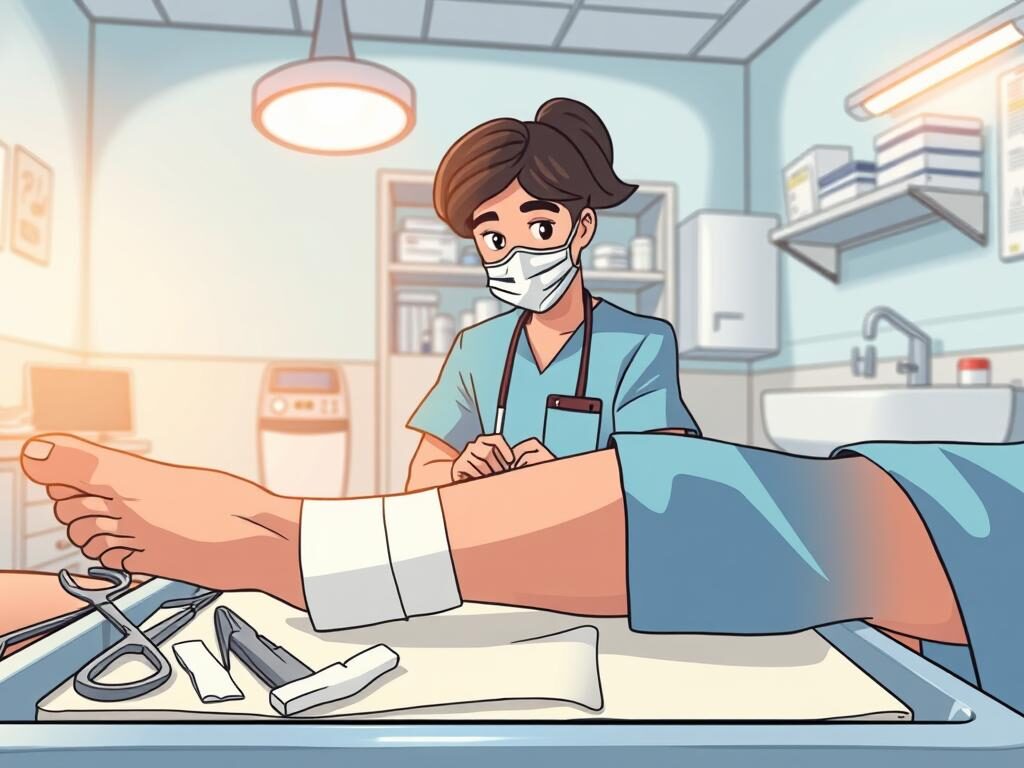
The Importance of Patient Education
Patient education is key to effective wound care. When patients know their role in healing, they can actively help in their recovery. They learn about wound cleaning, dressing changes, and spotting complications.
Empowering patients with knowledge helps them manage their condition better. This reduces the chance of complications and speeds up healing.
A patient who knows their treatment plan is more likely to follow it. This makes patient education a critical part of wound care.
Preparing for a Debridement Procedure
The debridement procedure is key in managing chronic wounds. Getting ready for it is important. Knowing what to expect can make the experience less scary.
What to Expect During Treatment
Your healthcare provider will first check the wound. They will decide the best way to treat it. This might include cleaning, removing dead tissue, and applying a dressing to help it heal.
You might get local anesthesia to reduce pain. This depends on how serious the wound is and how much pain you can handle.
Aftercare Following Debridement
Aftercare is vital for the wound to heal right. Your healthcare provider will tell you how to take care of your wound. This includes how to change dressings and watch for infection signs.
Aftercare Instructions:
| Aftercare Aspect | Description | Frequency |
|---|---|---|
| Dressing Changes | Change the dressing as instructed by your healthcare provider to keep the wound clean. | Daily or as instructed |
| Wound Cleaning | Clean the wound with the recommended solution to prevent infection. | With each dressing change |
| Monitoring for Infection | Watch for signs of infection, such as increased redness, swelling, or discharge. | Daily |
By following these aftercare steps and going to follow-up appointments, you can help your wound heal well.
Choosing the Right Professional for Debridement
You need a skilled healthcare provider for safe and effective debridement. Debridement is key in wound care. Its success depends on the professional’s expertise.
The Role of Healthcare Providers
Healthcare providers, like those in wound care, are vital in debridement. They assess wounds, choose the best debridement method, and do the procedure with care.
Key responsibilities of healthcare providers include:
- Conducting thorough wound assessments
- Selecting the most effective debridement technique
- Performing the debridement procedure
- Providing post-debridement care instructions
Why Experience Matters
Experience is key in wound care. It affects debridement’s success and safety. Experienced providers can handle complex wounds safely.
The benefits of choosing an experienced healthcare provider include:
- Improved wound healing outcomes
- Reduced risk of infection and other complications
- Enhanced patient comfort and satisfaction
Hire Dominion Mobile Wound Care
Effective wound healing needs professional care. You need a reliable partner for the healing process. Dominion Mobile Wound Care offers expert mobile wound care services. They bring professional care right to you.
Expertise You Can Trust
With Dominion Mobile Wound Care, your wound care needs are in good hands. Their team provides personalized care. They ensure you get the best treatment for your wound type.
Get Professional Care Today
Don’t let wounds disrupt your life. Contact Dominion Mobile Wound Care for a consultation. Start your journey to effective wound healing with their professional care.
FAQ
What is debridement and why is it necessary for wound healing?
Debridement is the process of removing dead tissue and debris from a wound. It’s key for wound repair, preventing infection, and keeping the wound clean.
What are the different types of debridement methods?
There are three main types of debridement: autolytic, mechanical, and enzymatic. Each has its own benefits and drawbacks.
How does debridement promote faster healing?
Debridement helps wounds heal faster by removing dead tissue. It also reduces infection risk and boosts tissue growth. This creates a better environment for healing.
When should I consider debridement for my wound?
You might need debridement if your wound has dead tissue, signs of infection, or isn’t healing well. A healthcare professional should assess your wound first.
What can I expect during a debridement procedure?
During debridement, a healthcare professional will check your wound and remove dead tissue. They’ll also give you care instructions to help with healing and prevent problems.
Why is patient education important in wound care?
Learning about wound care helps you actively participate in your treatment. It teaches you about debridement and how to follow a wound care plan.
How do I choose the right healthcare provider for debridement?
Look for a healthcare provider with experience and expertise in debridement. Check if they offer quality care, like Dominion Mobile Wound Care.
What is the role of debridement in chronic wound management?
Debridement is vital in managing chronic wounds. It removes dead tissue, boosts tissue growth, and aids in wound repair. This improves treatment results.
How does debridement fit into overall wound care?
Debridement is a key part of a complete wound care plan. It works alongside treatments like dressings, antibiotics, and education to help wounds heal well.
Add a Comment