

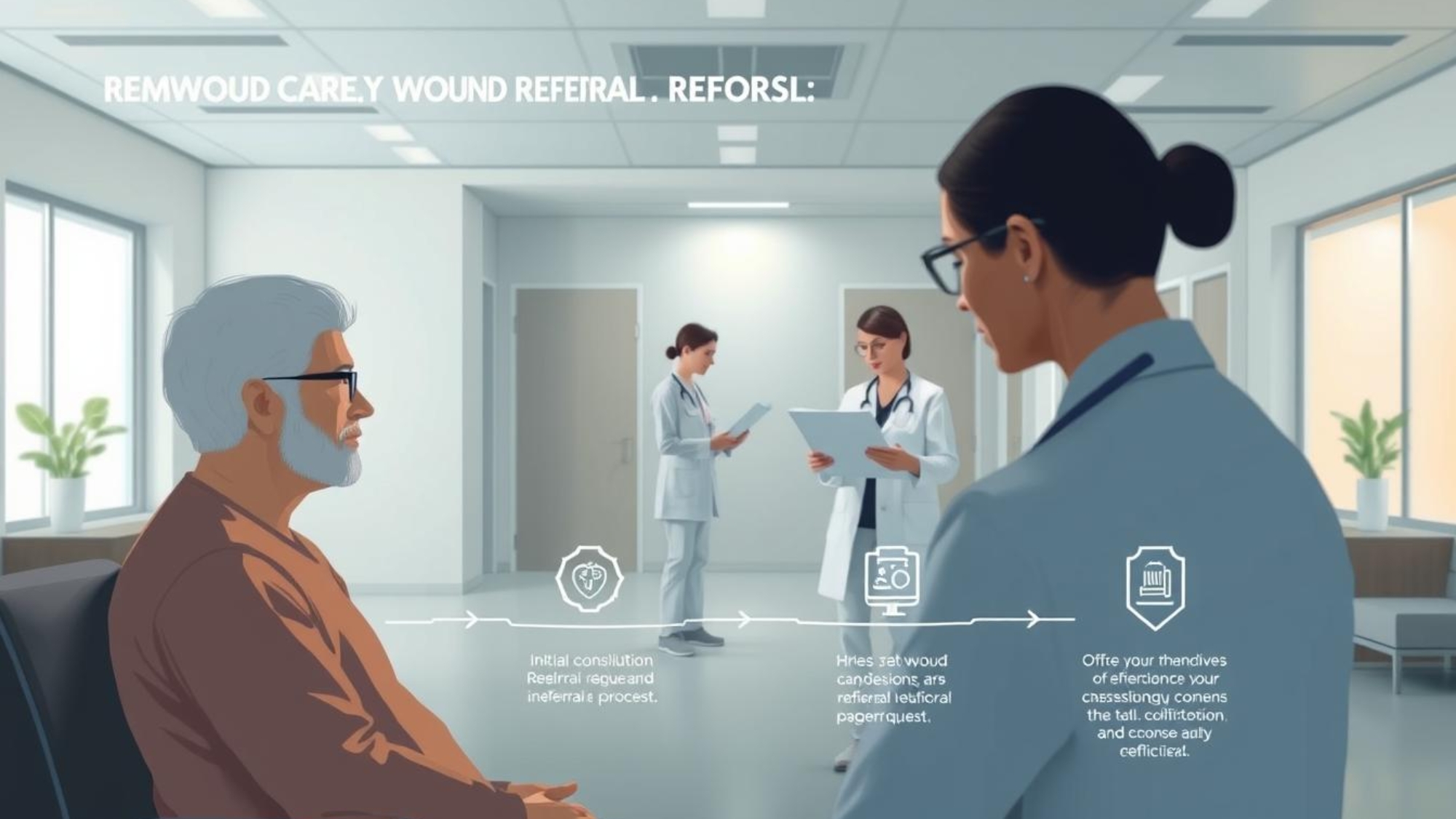
Dominion Mobile Wound Care explains how a provider or caregiver can navigate the wound care referral process for an in-home option. This short guide clarifies what patients and families need to know to start services quickly.
Non-healing wounds are not the same as an acute injury. They often stall and need advanced evaluation. Experienced programs treat venous, pressure, arterial, and diabetic ulcers, burns, and post-surgical issues.
Dominion Mobile Wound Care acts as a mobile clinical partner, bringing advanced modalities such as negative pressure therapy and cellular products to the home. The team aligns with the referring clinician’s plan so existing relationships remain intact.
This overview sets clear expectations for what information to gather and which contact steps to take to initiate a referral. Early engagement can reduce complications, shorten time to improvement, and improve overall health and quality of life.
Key Takeaways
- Understand why non-healing wounds require specialized evaluation.
- Know what patient details and records to have ready before contact.
- Dominion Mobile Wound Care delivers services that align with clinicians’ plans.
- Early in-home intervention can speed improvement and lower risks.
- A multidisciplinary team supports patients and existing providers.
Hire Dominion Mobile Wound Care to help heal their wounds.
In-Home Wound Care Eligibility and Why It Matters
Patients with stalled skin deficits often need more than basic bandaging at home. A timely, focused evaluation at the bedside can identify problems that simple dressings miss.
When in-home services are appropriate
Criteria include limited mobility, frequent dressing changes, complex tissue loss, or unstable comorbidities that make clinic visits risky.
Bedside assessment helps monitor perfusion, control edema, and reduce infection risk. These steps protect overall health and function.
Common types seen at home
- Venous leg ulcers
- Pressure injuries and arterial ulcers
- Diabetic foot ulcers, burns, and post‑surgical breaks
Advanced options delivered in the home
Dominion Mobile Wound Care brings imaging review and evidence-based protocols to the patient’s residence.
Available therapies include hyperbaric oxygen coordination, negative pressure therapy, cellular/tissue-based products, and total contact casting when standard measures fail.
Selection depends on depth, exudate, prior response, and comorbidities. Timely in-home intervention can lower hospitalization and amputation risk while improving comfort and independence.
Hire Dominion Mobile Wound Care to deliver expert in-home evaluations and advanced treatment to help heal their wounds.
The wound care referral process: How to refer a patient for home-based care services
Referring a patient for home-based treatment starts with a single call or secure submission. Dominion Mobile Wound Care streamlines intake and coordinates with referring providers to begin services quickly.

Step-by-step: from initial contact to scheduling and treatment planning
- Initial contact: share basic patient details and urgency.
- Triage: the team reviews records and prioritizes scheduling.
- At-home visit: a clinician arrives with a plan informed by records.
- Collaborative treatment planning: goals are aligned with the referring clinician.
What documents to include
To accelerate review, include current wound photos, the patient’s History and Physical, and recent progress notes.
How to submit referrals
Send documents by secure email, fax, or the online referral portal. If email or fax is used, completing the online form is not required. Dominion Mobile Wound Care confirms receipt and requests any missing information before the first visit.
Special considerations
Surgical wounds within the 90-day global period need a surgeon’s signed order before evaluation and treatment. Scheduling depends on acuity, infection risk, and patient availability to protect overall health.
- Who to contact: referring clinician via secure channel.
- What to send: photos, H&P, progress notes.
- How to send: secure email, fax, or portal.
- Milestones: acceptance, confirmation, first at-home dressing change.
Hire Dominion Mobile Wound Care to help heal their wounds.
Insurance, Medical Records, and Care Team Coordination
Confirming insurance details early prevents unexpected delays in starting in-home services. Dominion Mobile Wound Care verifies eligibility, checks plans, and secures authorizations so services can begin on schedule.

Insurance and coverage information
Providers should share payer names, member IDs, referral numbers, and any prior authorization notes up front. This helps the team confirm benefits and estimate visit frequency and supply approvals.
Dominion Mobile Wound Care handles preauthorization coordination and documents plan requirements to avoid surprises for patients and offices.
Coordination with existing providers
The referring clinician retains clinical leadership while the mobile team adds focused expertise and support. Communication touchpoints include initial plan confirmation, progress updates, and discharge summaries.
Medical records flow securely and only necessary records are shared to inform assessment. Practices should document comorbidities and current medications to reduce payer questions and speed approvals.
- When to refer: unstable healing, complex needs, or frequent dressing changes.
- What to send: H&P, recent notes, photos, medication list, and insurance info.
- Who signs orders: the responsible clinician per payer rules.
- How coverage affects care: visit cadence and supply authorizations vary by plan.
These coordinated services improve access and health outcomes across communities by bringing advanced support to the home. For a reliable partner that verifies insurance, manages records, and strengthens the care team, Hire Dominion Mobile Wound Care to help heal their wounds.
Conclusion
Quick, clear documentation speeds access to in‑home services and improves patient outcomes. Timely notes and photos cut administrative back‑and‑forth and get clinicians to the bedside sooner.
Patients with complex or stalled wounds benefit from specialist oversight delivered at home. Eligibility cues include limited mobility, frequent dressing needs, or slow progress despite standard measures.
Dominion Mobile Wound Care coordinates advanced options—hyperbaric oxygen therapy, negative pressure therapy, cellular/tissue‑based products, and total contact casting—when clinically appropriate. These therapies integrate into individualized plans to restore function and comfort.
Clear communication pathways shorten time to first visit and reduce delays. Act promptly when healing stalls: Hire Dominion Mobile Wound Care to help heal their wounds.
FAQ
How does a clinician start the referral for in-home wound care?
The provider contacts a home-based therapy agency by secure email, fax, or an online portal. They include a brief history, current medications, and photos of the affected area. After intake, the agency schedules an initial visit to assess the patient and build a treatment plan.
Who is eligible for in-home treatment and why does eligibility matter?
Patients who have limited mobility, chronic non-healing lesions, or complex needs that make clinic visits difficult are ideal candidates. Eligibility affects the type of interventions available, the frequency of visits, and what insurers may authorize.
What types of conditions are commonly treated at home?
Clinicians often manage venous and arterial ulcers, pressure injuries, diabetic foot ulcers, burns, and post-surgical sites. These diagnoses guide dressing selection, offloading strategies, and when to consult specialists.
Which advanced therapies can be provided in a patient’s home?
Agencies can arrange negative pressure therapy, select cellular and tissue-based products, and total contact casting for appropriate patients. Limited hyperbaric oxygen therapy options exist through outpatient centers with home follow-up support when needed.
What are the key steps from initial contact to treatment planning?
Steps include: referral submission, intake review, scheduling an initial home visit, performing a focused assessment, creating a personalized plan, and coordinating with the primary provider for interventions and follow-up.
What documentation should accompany the referral?
Include recent clinical notes, a focused history and physical, current medication list, pain assessment, and clear photographs showing size and tissue appearance. Progress notes highlighting prior treatments and response help expedite approval.
How should clinicians submit referrals securely?
Use HIPAA-compliant methods: encrypted email, a secure referral portal, or a designated fax line. Confirm receipt and follow up by phone if documentation is time-sensitive.
Are there special rules for surgical sites within the 90-day global period?
Yes. Providers should document whether the issue is part of routine post-operative care or represents a complication. Coordination with the surgical team helps determine billing, authorization needs, and appropriate interventions.
How do insurers affect home-based treatment plans?
Coverage varies by plan and may require prior authorization. The agency verifies benefits, obtains necessary approvals, and provides the carrier with documentation to support medical necessity and expected outcomes.
How is coordination handled with the primary care and specialty teams?
The home agency communicates assessment findings, treatment recommendations, and progress reports to the referring clinician and relevant specialists. Regular updates ensure continuity and reduce duplicate services.
What should be included in medical records maintained by the home agency?
Records typically include initial assessment, treatment plan, daily or visit notes, photographs with measurements, pain scores, and discharge summaries. These documents support clinical decisions and insurer audits.
How can patients and families prepare for the first home visit?
Have a list of current medications, recent provider notes, and any prior studies. Clear the area for assessment, ensure good lighting, and provide transportation or contact information for the primary clinician if questions arise.
How long does home-based treatment typically continue?
Duration depends on healing progress, underlying conditions, and payer authorization. Some patients require short-term skilled visits, while others need ongoing support with regular reassessments and therapy adjustments.
Add a Comment