

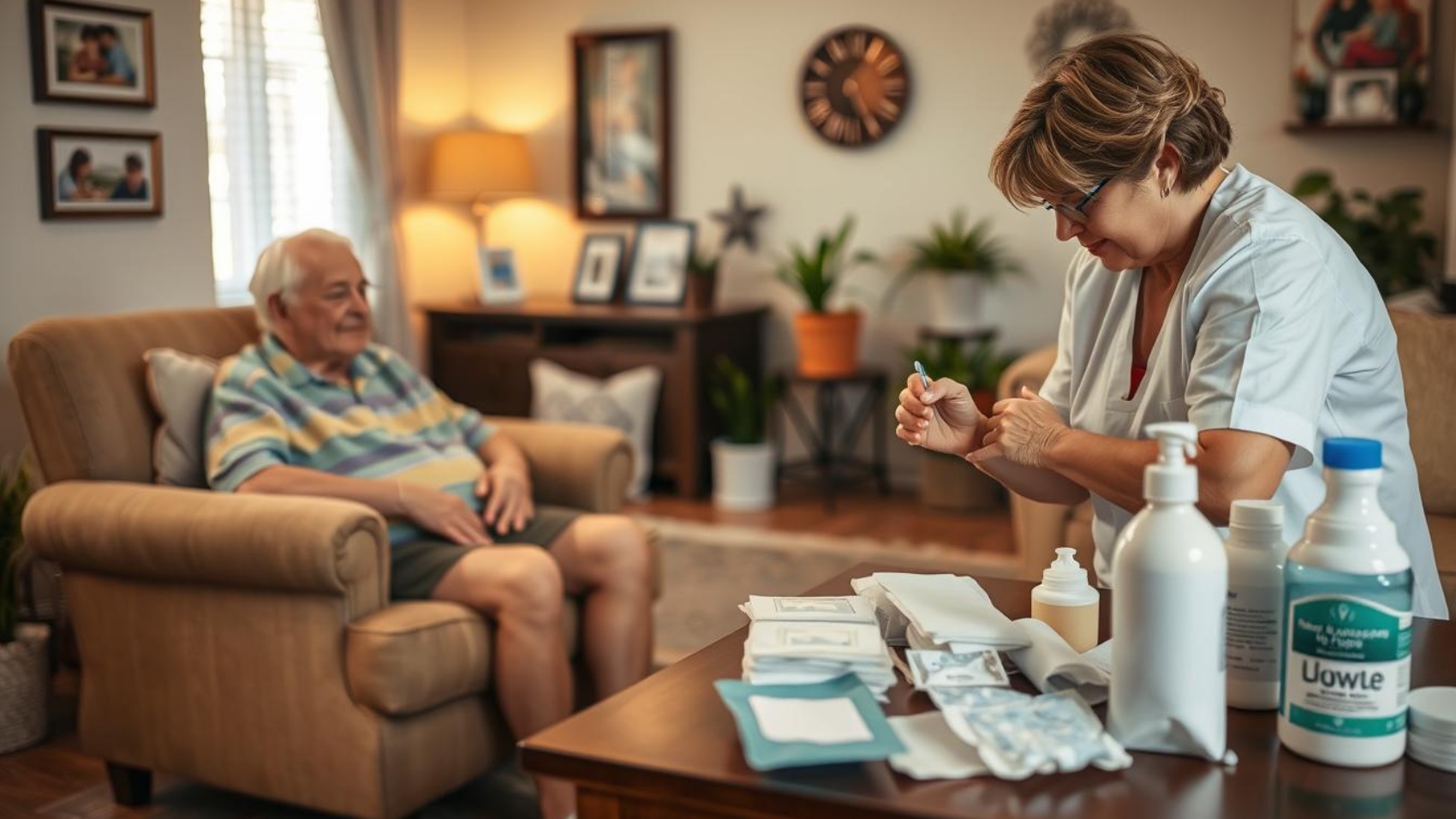
Understanding our body’s signals is key to better health. Pressure sores, or bedsores, can mean we need in-home wound care. In San Antonio, knowing this is vital because these sores are serious.
They can get worse if not treated right. We’ll look into why these sores matter. We’ll also explore their causes, symptoms, and stages. This will help us take charge of healing.
Key Takeaways
- Pressure sores indicate potential health issues requiring attention.
- In-home wound care can prevent complications associated with pressure sores.
- Timely management of pressure sores is crucial for effective healing.
- Understanding their causes and symptoms aids in better prevention.
- Awareness of available resources in San Antonio enhances care options.
Understanding Pressure Sores: Causes and Symptoms
Pressure sores, also known as bed sores, happen when skin doesn’t get enough blood. This is because of too much pressure. It’s important to know why they happen to stop them.
Things that can cause pressure sores include not moving much. This is common in older people or those who can’t move easily. Also, some health issues like diabetes or poor blood flow can lead to them. Not eating enough nutrients is another reason.
Spotting the signs early is key to treating bed sores. At first, the skin might look red or different colors. It might not go back to normal when you press on it. For darker skin, look for purple or shiny spots.
Seeing these signs quickly is very important. It helps stop the sore from getting worse.
Stages of Pressure Sores and Their Implications
It’s important to know the stages of pressure sores to manage and prevent them. These sores can grow fast, mainly in people who can’t move much. There are four main stages, each showing how bad the sore is.
- Stage I: This first stage shows as a red or discolored skin area without a break. Even though the skin is still whole, it’s a sign of damage starting.
- Stage II: At this point, the skin loss is partial and the sore is shallow. It’s a warning sign that the skin is hurt and needs care right away.
- Stage III: Here, the skin loss is full, and fat under the skin might show. This means the damage goes deeper and could lead to bigger problems.
- Stage IV: This is the worst stage, where muscle, bone, or tendons are affected. The risks of infections and serious health issues are higher at this level.
Knowing these stages helps us see how bad an ulcer is. Acting fast when the skin changes can help avoid worse problems. This way, we can lower the risks of serious issues.

Importance of Early Detection in Pressure Sore Management
Early detection is key in managing pressure sores. Finding pressure sores early helps prevent serious problems. It lets us start treatment fast, which helps them heal better.
Many don’t know that catching Stage I pressure sores early can fix them in just three days. Waiting too long can make healing take longer. It also raises the chance of infection and costs more money. We need to check skin every day to catch problems early.
Effective Pressure Sore Care at Home San Antonio
At home in San Antonio, we use special ways to prevent and treat pressure sores. One key thing is to change how we sit and lie down often. This helps a lot in avoiding sores.
Utilizing Proper Positioning Techniques
People in wheelchairs need to move every 15 minutes. Those in bed should change their spot every two hours. Moving often helps avoid sore spots.
We can use reminders or alarms to help remember to move. This is very important for taking care of pressure sores.
Implementing Supportive Cushions and Mattresses
Using special cushions and mattresses is also key. Air or water-filled cushions spread out the weight, making it easier on sore spots. We should talk to doctors to find the right ones for each person.
Using these cushions helps us feel better and speeds up healing. They are a big part of taking care of ulcers at home.

Role of Wound Care Nurses in Homecare
Wound care nurses are key in home care, focusing on pressure sores. They know how to check wounds and treat them right. They make plans just for us, based on our needs.
They don’t just care for wounds. They teach our family and caregivers too. They show us how to clean and dress wounds right. This helps avoid big problems with wounds.
They also help us pick the right food for healing. They look at both our body and diet to help us heal at home. This way, we get the best care for our wounds.
Nutrition’s Impact on Healing Pressure Sores
Nutrition is key for healing pressure sores. We need enough protein, vitamins, and minerals. These help fix and grow new tissue.
Vitamins A and C, and minerals like iron and zinc, are very important. They help our bodies heal faster.
Drinking enough water is also very important. It keeps our skin strong. This is vital for those with pressure sores.
Eating well helps our bodies heal naturally. It’s important for everyone, but even more so for those with pressure sores.
For those at risk of pressure sores, eating well is crucial. Good nutrition helps us heal faster. It also makes us healthier overall.
Preventative Measures to Avoid Pressure Sores
Preventing pressure sores is better than treating them. We can take several steps to stop them before they start. Moving people at risk often helps spread their weight and lowers pressure on sensitive spots.
- Using special mattresses and cushions helps a lot in preventing bed sores.
- Keeping the skin clean and dry is key to avoiding skin damage.
- Good nutrition helps keep the skin healthy and speeds up healing.
Teaching caregivers to check the skin daily is important. It helps find sores early. Keeping the skin dry and moisturized makes it stronger. By following these steps, we can keep our loved ones safe from pressure sores.
Conclusion
Pressure sores are serious and need good care, even at home. People at risk need special care to avoid big problems. Finding and treating sores early is key to keeping our loved ones safe.
Good care for pressure sores includes eating right and having help from wound care nurses. Their knowledge helps people get better faster. We should all care about keeping those at risk healthy and comfortable.
If you live in San Antonio, get help for your family. Dominion Mobile Wound Care offers top care for pressure sores at home. With their help, we can make our loved ones’ lives better.
FAQ
What are the primary causes of pressure sores?
Pressure sores happen when skin is under too much pressure for a long time. This often affects people who can’t move much. It also happens to those with diseases that affect blood flow, like diabetes, and people who don’t eat well.
How can I identify the early signs of pressure sores?
Look for skin that’s red or doesn’t turn white when pressed. If you have dark skin, look for purple or shiny spots. Finding these signs early is key to stopping them from getting worse.
What are the stages of pressure sores and their implications?
Pressure sores have four stages. Stage I is red skin that’s not broken. Stage II has skin loss but is shallow. Stage III shows fat under the skin, and Stage IV is very serious, affecting muscle and bone. Each stage needs different care and has different risks.
Why is early detection of pressure sores important?
Catching pressure sores early is crucial. Quick action can fix Stage I sores in just three days. Waiting too long can lead to longer healing times, infections, and higher medical costs.
How can proper positioning help in preventing pressure sores?
To stop pressure sores, change positions often. Wheelchair users should move every 15 minutes, and bedridden people every two hours. Using special cushions and mattresses can also help.
What role do wound care nurses play in home ulcer care?
Wound care nurses are very important. They check sore stages, suggest treatments, and teach caregivers. Their help can make sores heal faster and lower infection risks.
How does nutrition affect the healing of pressure sores?
Good food is key for sore healing. Eating foods high in protein and vitamins A and C helps fix tissues. Drinking enough water also keeps skin healthy.
What preventative measures can be taken to avoid developing pressure sores?
To avoid sores, move often, use special devices, keep skin clean, eat well, and teach others to check skin daily. These steps can help a lot.