

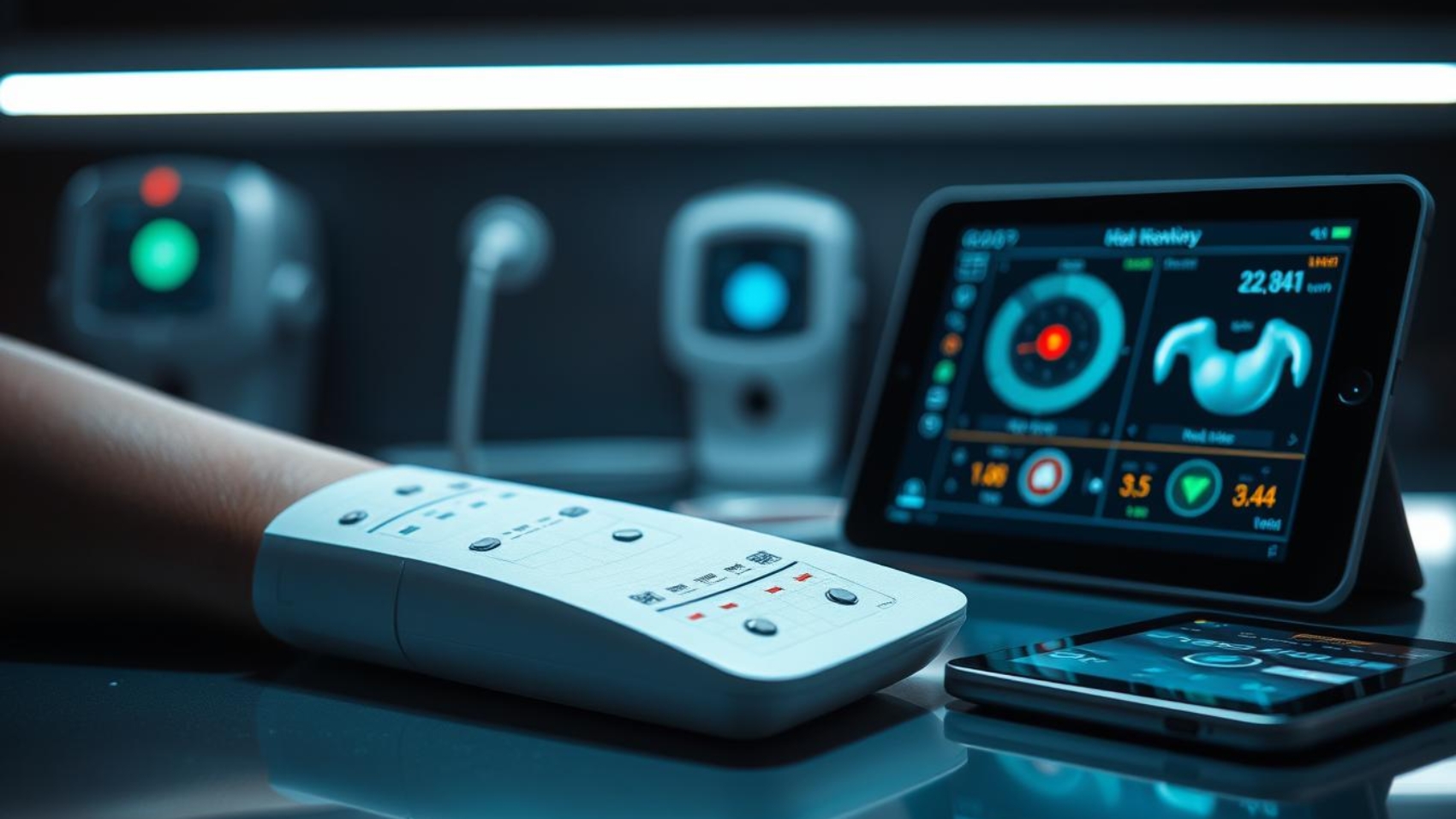
Dominion Mobile Wound Care brings hospital-grade assessment and treatment into the home. They combine evidence-based assessment, innovative dressings, and remote monitoring to speed healing for patients who prefer home-based recovery.
Nonhealing wounds affect a sizable share of the population and drive high Medicare costs. Moving treatment to home and outpatient models helps reduce avoidable admissions and improves quality of life.
Precision diagnostics and imaging are shifting management from subjective checks to data-driven decisions. Tools like biomarker analysis and spectral imaging clarify the wound microenvironment and guide targeted interventions.
Today’s transforming technologies include diagnostics, imaging, smart dressings, AI, robotics, and telemedicine. Dominion Mobile Wound Care pairs these tools with skilled clinical judgment to hit evidence-based benchmarks that predict closure and signal when to escalate therapy.
Key Takeaways
- Home-based, hospital-grade assessment speeds recovery and cuts admissions.
- Nonhealing wounds impose heavy clinical and economic burdens.
- Data-driven diagnostics improve targeted treatment decisions.
- Smart dressings, imaging, AI, and telemedicine reshape home workflows.
- Robust outcomes tracking is needed to validate tools in real-world care.
The scale of nonhealing wounds in the United States and why faster healing at home matters
Millions of patients in the U.S. live with stubborn wounds that prolong pain, limit mobility, and drive high medical spending. In developed countries, 1%–2% of the population has chronic lesions; in 2014, about 8.2 million Medicare beneficiaries had nonhealing wounds.
Estimated Medicare costs for all wounds range from $28.1 billion to $96.8 billion. Real-world registry data show that achieving healing rates above 40% for nonhealing wounds is difficult in routine practice. Delayed wound healing raises risks of infection, hospitalization, and amputation.
Home-based wound care shortens time to assessment and lets clinicians adjust treatment quickly. Frequent visits and tele-support cut preventable utilization and relieve caregivers. Faster healing at home reduces pain, restores mobility, and improves independence for patients.
- Prevalence & cost: large national burden and high Medicare spend.
- Complications: delays increase infection, hospital stays, and recurrence.
- Home impact: timely interventions speed healing and boost quality of life.
Dominion Mobile Wound Care aligns structured home protocols with early benchmarks. That approach supports earlier escalation when needed and aims to improve healing trajectories using better data and coordinated management.
The shift from hospital to home: how wound management moved closer to the patient
The locus of treatment shifted as payers and providers pushed services closer to patients’ daily lives. After 2000, many nonhealing cases moved to outpatient and home-based delivery. About 1,500 hospital-based outpatient payment systems were established to serve patients who did not need admission.
Key drivers: costs, chronic disease, and outpatient access
Cost containment and rising chronic disease rates forced change. Moving services out of inpatient settings reduced length of stay and lowered system expenses.
Home health agencies and hospital outpatient programs enabled flexible schedules and timely interventions using targeted protocols and frequent assessments.
Implications for caregivers, SNFs, and mobile teams
Families and facility staff now perform many daily tasks. This shifts burden to caregivers but also creates opportunities for mobile specialists to step in.
- Dominion Mobile Wound Care fills gaps between clinic visits with debridement, dressing changes, and infection surveillance.
- Clear documentation, timely communication with primary teams, and escalation pathways keep patients on a healing track.
- Frequent home assessments catch deterioration early and reduce emergency visits and admissions.
advanced wound care technology: a trend analysis of what’s transforming care in the present
New tools now convert tissue signals into clear action. This shift moves teams from subjective checks to objective metrics that guide personalized therapy. Precision approaches rely on biomarkers, imaging, and sensors to reveal risk and progress.
From subjective to data-driven: precision wound care as a new paradigm
Precision wound care means using measurable signals—proteases, temperature, pH, and spectral images—to tailor interventions. These data reduce guesswork and speed decisions that improve healing trajectories.
Core technology categories: diagnostics, imaging, smart dressings, and robotics
Leading domains include point-of-care diagnostics, multispectral imaging, sensorized dressings, and AI/robotic systems. Each offers distinct signals that inform treatment and predict outcomes.
Where home-based use is accelerating versus still emerging
Imaging-enabled mobile apps, sensorized dressings, and telewound platforms are ready for home use now. Remote robotic debridement and some AI interventions remain promising but need more trials.
- Integration challenges: interoperability, training, and reliable data capture.
- Operational fix: mobile teams standardize devices and protocols for consistent results.
- Dominion Mobile Wound Care: prioritizes clinically validated solutions that show safety, usability at home, and improved healing.
Advanced diagnostics and biomarkers: toward predictive, prescriptive, personalized wound management
Molecular signals from chronic lesions are beginning to guide precise bedside decisions for personalized healing plans.
Excessive proteolysis by matrix metalloproteinases (MMPs) and persistent inflammatory cytokines often mark nonhealing wounds. These factors break down extracellular matrix and stall the normal cell-driven repair process.
Proteases, inflammatory markers, and “molecular barcodes” of wounds
Molecular barcoding combines several biomarkers—proteases, acute phase reactants, and volatile emissions—into a single profile. This profile helps classify wound state and predict which therapies may work best.
Point-of-care diagnostic platform arrays and multi-biomarker systems
Point-of-care platforms that quantify multiple markers at once can inform immediate dressing and debridement choices. Rapid, multiplexed assays let clinicians tailor interventions during the visit rather than wait for lab results.
Evidence gaps and the need for high-quality randomized trials
Many promising markers lack simple, inexpensive bedside tests. Assay complexity, cost, and workflow fit limit home adoption today.
- Translational hurdles: complexity of assays and affordability.
- Validation need: randomized trials and registries must show improved wound healing endpoints.
- Practical use: Dominion Mobile Wound Care uses assessment-first protocols and bedside diagnostics to triage and personalize interventions.
Conclusion: Multi-biomarker diagnostics hold promise to make management more predictive and prescriptive, but rigorous trials and usable point-of-care arrays are essential before widespread home deployment.
Imaging innovations improving wound assessment at the bedside and at home
Bedside imaging workflows now supply measurable signals that help clinicians make faster, more confident decisions during home visits.
Ultrasound, autofluorescence, spectral imaging, and OCT
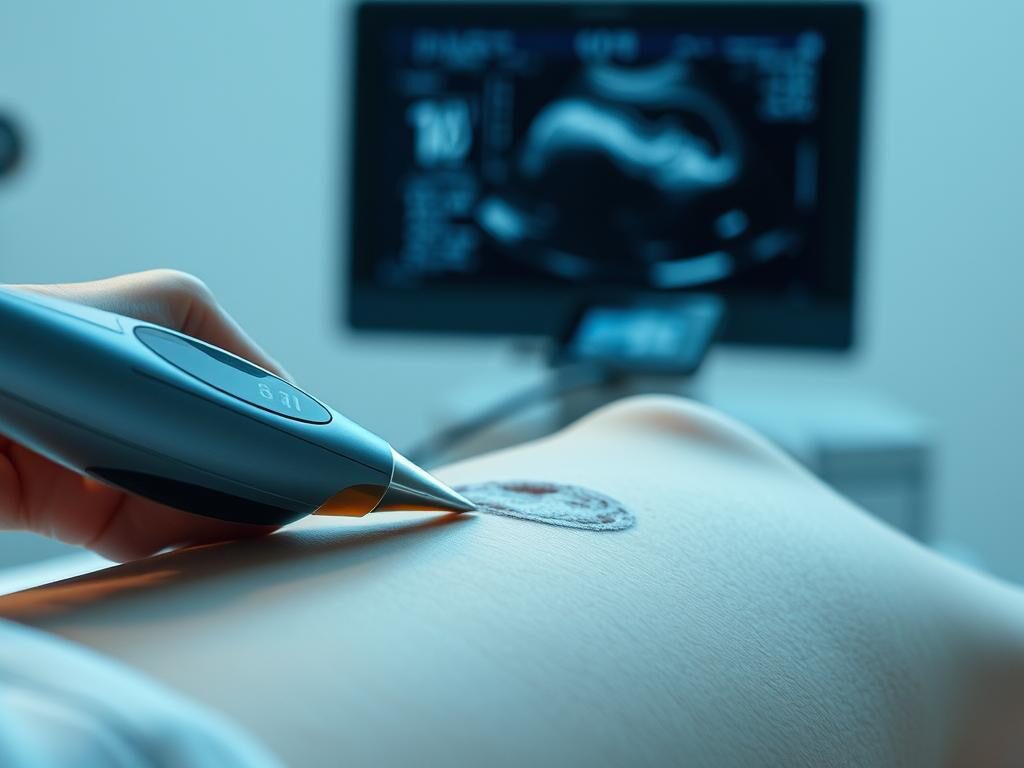
Handheld ultrasound maps tissue depth and detects fluid collections. It helps plan debridement and identify underlying abscesses in complex wounds.
Autofluorescence and spectral imaging reveal bacterial burden and perfusion gaps not visible to the eye. These methods guide topical choices and early infection control.
Optical coherence tomography (OCT) gives high-resolution views of the superficial skin architecture. OCT tracks re-epithelialization and the return of normal tissue layers.
Clinical utility today: tracking infection, perfusion, and healing trajectories
Serial imaging creates objective data on area, granulation, and biofilm signs. That information shapes dressing selection and the timing of repeat visits.
- Handheld ultrasound: assess depth, fluid, and debridement planning.
- Autofluorescence/spectral: visualize bacterial load and perfusion deficits.
- OCT: monitor superficial tissue architecture and re-epithelialization.
Practical home considerations include device portability, routine calibration, and standardized image capture protocols. Clear protocols reduce variability and support meaningful trend analysis.
Dominion Mobile Wound Care integrates portable imaging into regular visits to document progress and escalate when healing trajectories plateau. This system-level approach helps align treatment with objective signs and improves decision speed in home-based care.
Smart dressings and wearables: sensors, real-time feedback, and targeted therapies
Smart sensor dressings are turning everyday bandages into real-time monitors that flag early changes in the wound microenvironment.
Continuous sensing of pH and temperature can signal emerging infection before redness or odor appears. Moisture sensors help manage exudate and protect periwound skin, keeping conditions optimal for healing.
On-demand delivery at the bed of care
Some dressings can release antimicrobials or growth factors when sensors detect risk. This targeted delivery reduces systemic exposure and supports local tissue repair.
- Early alerts: remote notifications let clinicians intervene sooner and limit setbacks.
- Fewer changes: patients at home often need fewer routine dressing swaps, improving adherence.
- Moisture control: exudate management preserves skin integrity and speeds wound healing.
Practical considerations include sensor accuracy, stable connectivity, and data privacy in home networks. Dominion Mobile Wound Care configures alert thresholds and closes remote feedback loops so clinicians adjust therapies quickly and safely.
The evolution of dressings: from gauze to nanomaterials and biodegradable composites
Dressings have evolved from simple gauze to engineered composites that target infection and speed tissue repair.
Silver foams and Ag‑Mg composites for infection control
Silver-containing foams reduce microbial colonization and often ease pain in burns. Studies show silver-releasing foams can outperform creams in early diabetic foot ulcer management.
Ag‑Mg‑TPU composites boost silver ion release, offering stronger antimicrobial action for contaminated wounds while balancing tissue preservation.
Nanoparticles and sprayable thiolated biodegradable materials for regeneration
Sprayable, thiolated biodegradable bandages conform to complex anatomy. When combined with ZnO nanoparticles they promote tissue regeneration and can speed healing in irregular lesions.
Bilayer constructs for strength, biocompatibility, and closure speed
Bilayer designs such as PU/EEP over PCL/Gel merge mechanical stability with antibacterial and biocompatible layers. These constructs aim to support closure while protecting skin and underlying tissue.
- Progression: gauze → hydrocolloids/hydrofibers → metal‑enhanced foams → nano‑infused dressings.
- Evidence: silver dressings reduce bacteria and can accelerate early wound healing in select indications.
- Innovation: Ag‑Mg systems and ZnO‑nanoparticle bandages enhance antimicrobial release and regeneration.
- Design: bilayer composites balance strength with biocompatibility to potentially speed closure.
Dominion Mobile Wound Care selects and rotates dressings based on wound status and infection risk, aiming to balance antimicrobial activity with tissue preservation. New materials are promising, but many require rigorous clinical trials before routine home use.
Infection control, biofilms, and antimicrobial resistance in chronic wounds
Biofilms create a protected bacterial community that undermines healing and resists standard therapies. These communities trap bacteria like Pseudomonas aeruginosa, Escherichia coli, and Staphylococcus aureus, maintain inflammation, and block tissue repair.
Clinicians distinguish superficial infection—redness, warmth, increased exudate—from deep infection with systemic signs or new tissue breakdown. Targeted debridement plus topical agents reduces microbial load and helps tissue regain traction toward healing.
Balancing treatment and stewardship
Dominion Mobile Wound Care emphasizes culture-guided strategies and rotating topical therapies to limit resistance. Silver dressings can help short term, but judicious use preserves future options.
- Obtain cultures when clinical signs suggest deep or spreading infection or when initial therapy fails.
- Escalate to systemic antibiotics only for systemic signs, cellulitis, or confirmed deep infection.
- Use imaging or fluorescence tools to localize bacterial burden and focus interventions.
Practical approach: integrate debridement, targeted topical agents, and culture-directed systemic therapy when needed. This balances antimicrobial action with tissue-sparing techniques and long-term stewardship to protect therapy effectiveness and support sustained wound healing.
Data, algorithms, and precision medicine: integrating “omics” with clinical decision-making
Molecular profiles and clinic data are converging to make treatment choices more predictive than ever.
Genomic, proteomic, and metabolomic analyses map the biochemical fingerprints of stalled lesions. These signatures often show persistent inflammation, high MMP activity, and cellular senescence that block normal repair.
Algorithmic triage uses those profiles plus clinical factors to predict who will benefit from specific therapies. Predictive models rank patients for targeted interventions, helping clinicians choose the right path faster.
Practical steps toward precision include standardized data capture, digital measurement of wound area, and simple trend analysis across visits. Routine metrics and structured notes feed models that refine recommendations over time.
- Omics reveal dysregulated inflammation and protease activity tied to poor healing.
- Algorithmic triage links patient features and biomarkers to likely effective interventions.
- Pragmatic steps are standardized capture, digital area measures, and visit-to-visit trend analysis.
Evidence gaps remain; predictive algorithms need validation in diverse home populations. Dominion Mobile Wound Care builds structured pathways now so algorithmic insights can be incorporated as they mature and prove their value in real-world wound management.
Robotics, AI, and telemedicine: expanding access to expert wound care remotely
Telemedicine and AI image analysis shorten the path from problem detection to treatment. They let clinicians review high-resolution photos and advise on next steps between visits.
Remote debridement systems are emerging that enable precise procedures under clinician supervision. Teams must maintain a sterile field, use single-use instruments, and follow strict infection-control protocols when operating offsite.
AI-guided assessment and prediction
AI models can measure wound area, depth, and tissue types from standardized images. These models also predict healing trajectories and flag infection risk by analyzing serial photos and basic clinical data.
Barriers and practical steps
- Costs: capital outlay for robots and imaging is high; leasing or shared systems can reduce burden.
- Workflow: training and documentation must fit visit schedules and reduce clinician burden.
- Security: HIPAA-compliant platforms, encrypted image transfer, and strict access controls protect patient privacy.
Dominion Mobile Wound Care uses secure telewound visits, encrypted image sharing, and AI-assisted measurements where appropriate. Clinicians follow clear escalation criteria to bring patients in for hands-on intervention when images or predictions indicate slower healing.
Positioning established modalities within modern wound care
Combining time-tested modalities with contemporary assessment tools can sharpen treatment choices for complex patients. This approach pairs therapies like negative pressure, oxygen approaches, and electrotherapy with imaging and biomarkers to set clear objectives for healing.
Negative pressure and home-based use
Negative pressure wound therapy (NPWT) supports wound bed preparation by reducing edema, removing exudate, and promoting granulation. In the home setting, portable NPWT devices let clinicians manage complex wounds while documenting area and tissue response via serial photos and dressings.
Hyperbaric oxygen: evidence and selection
Hyperbaric oxygen has mixed evidence for diabetic foot ulcers; some trials show benefit while others are inconclusive. Careful patient selection—refractory ischemic ulcers with clear indications—matters most when considering this treatment.
Electrotherapy and monitoring response
Electrotherapy and cell-based products show variable results across trials. They may be useful adjuncts when objective benchmarks—area reduction, granulation, and perfusion—demonstrate a positive trajectory within defined intervals.
- Precision use: diagnostics and imaging guide indications and duration for each therapy.
- Monitoring: set objective benchmarks (area, granulation, infection markers) and reassess at defined intervals.
- Dominion Mobile Wound Care criteria: initiate when diagnostics show targetable deficits, monitor weekly with imaging and biomarkers, and discontinue if benchmarks are not met or risks emerge.
Mapping technologies to wound types: DFUs, VLUs, and pressure injuries
Different lesion types demand specific tools and clear early goals to speed healing at home.
Diabetic foot ulcers result from ischemia and neuropathy, so priority is offloading and vascular optimization. Dominion Mobile Wound Care emphasizes devices and referral when perfusion limits progress.
Benchmarks for early progress
Evidence-based goals guide escalation. For diabetic foot ulcers aim for ~50% area reduction by week four.
Venous leg ulcers typically target ~30% reduction in four weeks and require consistent compression to hit that mark.
Pressure injuries are tracked with the PUSH Tool, which scores size, exudate, and tissue type to monitor healing.
Personalizing interventions across differing pathophysiology
DFUs need offloading, vascular assessment, and targeted topical options for ischemic foot ulcers. Venous leg ulcers demand compression, duplex imaging, and local management of leg ulcers to address venous hypertension.
Pressure problems focus on pressure redistribution, moisture control, and frequent repositioning for pressure injuries.
- When to add diagnostics: failure to meet benchmarks at week four prompts culture, imaging, or perfusion testing.
- Adjuncts: consider antimicrobial dressings, NPWT, or biologics when trajectories stall despite standard measures.
- Care model: Dominion Mobile Wound Care builds personalized plans tied to etiology and benchmark-driven reviews to guide timely escalation and improve wound healing for each patient.
Evidence, validation, and regulation: from promising pilots to real-world outcomes
Regulators and clinicians increasingly demand real-world proof that new devices and treatments improve healing outside tightly controlled trials. Many pivotal randomized controlled trials exclude patients with complex comorbidities, limiting generalizability to home populations.
Bridging RCTs, registries, and everyday practice in chronic wound care
Pragmatic trials and registries fill gaps left by RCTs. Large databases like the U.S. Wound Registry supply data and trend analysis that reflect routine clinical decision-making.
- Limitations: many RCTs for cell‑ and tissue‑based products and HBOT exclude high-risk home patients.
- Real‑world validation: pragmatic trials and registries test effectiveness across diverse chronic wounds.
- Key outcomes: time to 50% area reduction, complete closure rates, infection‑related hospitalization, and amputation.
Transparent reporting of adverse events and adherence to antimicrobial stewardship are essential to protect future options. Dominion Mobile Wound Care contributes standardized documentation and outcomes tracking to build reliable evidence.
Measurement-based management enables continuous protocol refinement. That approach helps translate pilot promise into consistent improvements in wound healing and patient-centered treatment.
Economic impact and ROI: how technology can reduce complications and costs
When clinicians accelerate healing, they remove common drivers of costly hospital care. Faster wound closure reduces complications such as infection, dehiscence, and amputation—events that often trigger emergency visits and surgical procedures.
Targeted diagnostics and smart dressings help clinicians choose the right product and duration. This minimizes supply waste and shortens time to healing, cutting downstream spending on antibiotics, imaging, and repeat visits.
Dominion Mobile Wound Care builds cost-conscious plans that prevent complications, lower readmissions, and optimize supplies to meet payer expectations. In 2014, Medicare spending for wounds was estimated at $28.1–$96.8 billion, so even modest improvements in healing rates can yield big savings.
- Faster healing → fewer complications and lower hospital costs.
- Precision tools reduce unnecessary product use and treatment days.
- Proactive home monitoring prevents avoidable ED visits and admissions, improving ROI.
Balancing up-front expense against avoided complications shows clear value when protocols target early closure and align with value-based payment goals.
Implementation roadmap for home-based advanced wound care
A clear assessment-first pathway sets the stage for consistent, measurement-driven management at home. Dominion Mobile Wound Care begins with a focused history, vascular and neuropathic checks, wound measurement, and a baseline photo.

Assessment-first protocols: diagnostics, imaging, and risk stratification
Use bedside diagnostics and imaging when clinical risk or stalled progress is suspected. Point-of-care tests and spectral imaging help stratify infection risk and healing potential.
Care pathways: smart dressings, infection control, and remote monitoring
Assign bundles based on assessment: select dressings for exudate control, antimicrobial need, or edge advancement. Add NPWT or adjunct therapies if benchmarks are not met.
- Early reassessment at four weeks; for example, a DFU should show ~50% area reduction by week four.
- Monitoring cadence: weekly telewound check-ins plus scheduled in-person reviews tied to benchmarks.
- Escalation policy: culture, change debridement strategy, consult specialists, or refer for higher-level interventions when healing stalls.
Documentation must capture images, measurements, diagnostics, and justification for therapies to support outcomes tracking and payer authorization.
Patient and caregiver training covers aseptic technique, signs to report, and how remote monitoring alerts are handled. This system boosts early intervention and improves wound healing in the home.
Conclusion
Modern home programs now combine precise diagnostics and frequent oversight to shorten healing timelines for patients.
Dominion Mobile Wound Care applies point-of-care imaging, smart dressings, and tele-enabled follow-up to create objective, personalized wound care pathways at home.
Teams balance faster closure with strict antimicrobial stewardship and continuous outcome measurement. Benchmarks guide early escalation and optimize resource use.
Precision diagnostics, imaging, and emerging technologies are reshaping wound healing, but ongoing trials and real-world data remain essential to confirm broad impact.
Hire Dominion Mobile Wound Care to bring experienced clinicians and integrated tools into the home and help heal their wounds faster and more safely.
FAQ
How does modern advanced wound care technology help patients heal faster at home?
New devices and systems bring diagnostics, imaging, and sensor feedback to the home setting. They enable earlier detection of infection, continuous tracking of moisture and temperature, and timely delivery of topical therapies. This reduces delays in treatment, supports personalized regimens, and shortens healing time compared with infrequent clinic visits.
How large is the problem of nonhealing wounds in the United States, and why does faster healing at home matter?
Millions of Americans live with chronic nonhealing wounds such as diabetic foot ulcers and venous leg ulcers. Prolonging open wounds raises risks of infection, hospitalization, amputation, and escalating costs. Faster healing at home lowers complications, decreases use of acute resources, and improves quality of life for patients and caregivers.
What factors drove the shift of wound management from hospitals to home and outpatient settings?
Rising healthcare costs, growing chronic disease burdens like diabetes, and expanded home health services pushed treatment toward community settings. Policy incentives and improved medical devices also made safe, effective home-based care more feasible for patients and skilled nursing facilities.
What are the implications of home-focused wound management for caregivers and long-term care facilities?
Caregivers and facility staff must adopt assessment protocols, basic diagnostic tools, and remote consultation pathways. Training in device use, infection control, and documentation is essential. Mobile wound clinics and telemedicine can support staff and reduce transfers to higher-acuity centers.
Which categories of technologies are transforming current wound management?
Key categories include point-of-care diagnostics and biomarker assays, imaging modalities (ultrasound, spectral and infrared imaging), smart dressings and wearables with embedded sensors, and robotic or AI-enabled assessment tools. Each contributes to more objective, data-driven decision-making.
Where is home-based use of these solutions accelerating, and where is it still emerging?
Continuous monitoring dressings, temperature and moisture sensors, and telehealth triage are already scaling in home care. Advanced imaging, routine molecular profiling, and robotic interventions remain more common in clinics and hospitals while evidence and cost models mature.
What diagnostic biomarkers show promise for predicting wound healing trajectories?
Protease activity, inflammatory cytokines, bacterial load signatures, and metabolite patterns can indicate stalled healing or infection. Multiplex point-of-care arrays that combine several markers aim to move from reactive to predictive management, but broader validation is needed.
Are there reliable point-of-care diagnostic platforms for use outside hospitals?
Several platforms exist for measuring pH, protease levels, and simple pathogen indicators at the bedside. Multi-biomarker systems are advancing, yet high-quality randomized trials and standardization are necessary to confirm clinical and economic benefits in home settings.
How are imaging innovations improving bedside and home assessments?
Portable ultrasound, autofluorescence devices, and affordable spectral cameras let clinicians and home providers detect perfusion deficits, map bacterial burden, and quantify tissue depth. These tools enhance objective tracking of healing progress and inform timely interventions.
What clinical utility do imaging technologies offer today?
They support diagnosis of soft-tissue infection, assessment of blood flow, and monitoring of closure over time. In many cases, imaging reduces unnecessary dressing changes and guides decisions on debridement or escalation to systemic therapy.
How do smart dressings and wearables contribute to better outcomes?
Embedded sensors measure pH, temperature, moisture, and bacterial markers continuously and can trigger alerts or controlled release of antimicrobials and growth factors. This targeted approach preserves healthy tissue, limits overuse of antibiotics, and helps maintain an optimal healing environment.
What advanced materials are being used to evolve traditional dressings?
Silver-containing foams, Ag-Mg composites, nanoparticles, sprayable biodegradable polymers, and bilayer constructs that combine strength with biocompatibility are all in use. These materials improve infection control, support tissue regeneration, and simplify application in outpatient settings.
How do clinicians balance infection control with antimicrobial stewardship?
Providers use targeted topical agents informed by diagnostics, limit systemic antibiotics to clear indications, and rotate or combine modalities to reduce resistance pressure. Regular monitoring of bacterial burden and biofilm status guides selective therapies.
How are data, algorithms, and precision medicine integrated into wound decision-making?
Genomic, proteomic, and metabolomic data can identify biological drivers of stalled healing. Machine-learning models then combine clinical and biomarker inputs to predict who needs advanced interventions. Integration into electronic health records supports algorithmic triage in real time.
What roles do robotics, AI, and telemedicine play in remote wound services?
Telemedicine expands specialist access, AI assists image-based assessment and prognosis, and robotic platforms aim to perform remote debridement or standardized procedures. Together they decrease travel burden and speed intervention, though cost and workflow barriers remain.
Which established therapies remain important alongside new techniques?
Negative-pressure wound therapy, hyperbaric oxygen, and electrostimulation retain roles for specific indications. New technologies often complement rather than replace these modalities, improving selection and timing for best outcomes.
How should clinicians map technologies to different wound types like DFUs, VLUs, and pressure injuries?
Matching tools to pathophysiology matters: perfusion imaging and offloading for diabetic foot ulcers, compression and biomarker monitoring for venous leg ulcers, and pressure redistribution plus moisture control for pressure injuries. Benchmarks such as 50% area reduction by week four for DFUs guide expectations.
What evidence gaps exist and what kinds of studies are needed?
More randomized controlled trials, pragmatic registries, and cost-effectiveness studies are necessary to validate many emerging tools. Real-world outcome data will help translate promising pilots into routine home practice.
How can home-based programs measure economic impact and ROI?
Programs should track reductions in hospitalizations, amputations, infection rates, dressing change frequency, and total episode costs. Comparative analyses that include device costs, staff training, and telehealth utilization demonstrate return on investment.
What are key steps in implementing a home-based advanced management roadmap?
Start with assessment-first protocols using diagnostics and imaging, stratify risk, deploy targeted dressings and monitoring for appropriate patients, and integrate remote specialist support. Clear care pathways, staff training, and data workflows ensure safe scale-up.

