

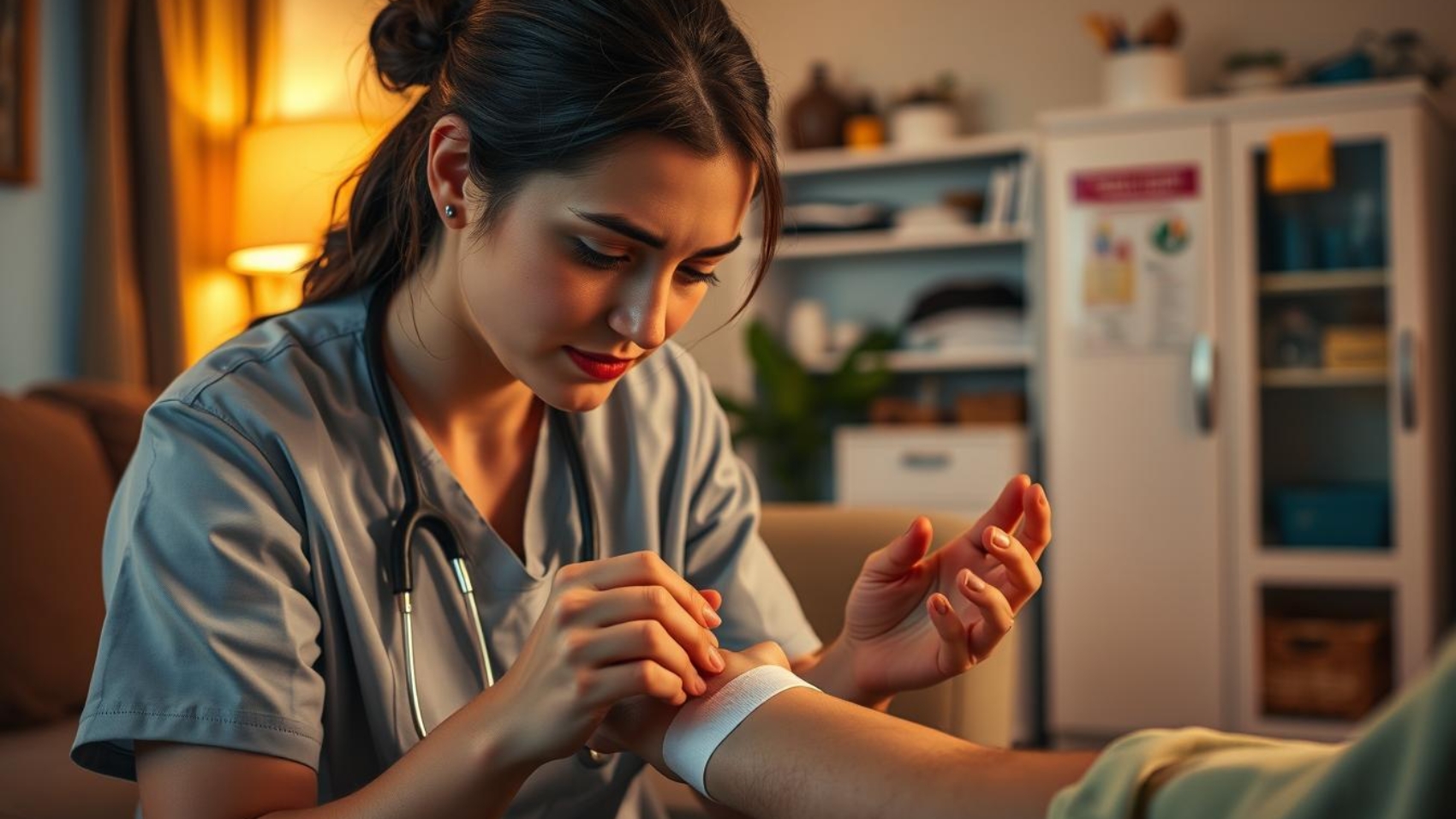
Dominion Mobile Wound Care brings clinical assessment, treatment, and clear education into the familiar setting of a patient’s residence. A dedicated clinician evaluates problems, follows evidence-based protocols, and works with the doctor to limit avoidable hospital visits.
The coordinated team includes therapists, aides, and social workers who follow a tailored care plan. This approach reduces infection risk, shortens healing timelines, and supports a loved one through daily needs like nutrition and mobility coaching.
Standardized assessments, digital photography, and timely documentation let the team measure progress and adjust treatment quickly. When appropriate, advanced options such as compression or negative pressure therapy are delivered safely at the residence.
Patients who qualify often find these services are covered by Medicare, Medicaid, or private plans, making expert care practical and cost-effective.
Key Takeaways
- Dominion Mobile Wound Care offers in-residence treatment that improves comfort and adherence.
- A coordinated team and clear care plan lower infection risk and speed healing.
- Evidence-based dressings and therapies are used, with progress tracked digitally.
- Nutrition, mobility, and medication review at the residence support better outcomes.
- Many patients have coverage, so hiring Dominion Mobile Wound Care is a practical option.
What Is Home Health Wound Care?
Medical teams bring structured treatment for chronic and complex lesions into the patient’s living environment. This model delivers skilled, physician‑directed services for people who need nursing or therapy and who have difficulty leaving their residence.
Defining home-based treatment for chronic and complex wounds
Home health wound care means licensed clinicians follow a doctor’s plan of care to assess, treat, and track healing. Services may include assessment, dressing changes, debridement when appropriate, and therapy to improve mobility and positioning.
Who benefits: common risk factors and patient profiles
Patients with diabetes, venous disease, limited mobility, recent surgery, dialysis, or multiple chronic conditions often need these services. Risk factors such as poor nutrition, smoking, and circulation problems can slow wound healing and increase complications.
Types of wounds treated at home
Typical wounds managed at residence-based programs include surgical incisions, pressure injuries, diabetic and neuropathic ulcers, venous stasis and arterial ulcers, burns, trauma, and non‑healing lesions that stall after two weeks.
- Skilled nursing visits for assessment and dressing changes
- Therapy for mobility and positioning to prevent pressure and promote healing
- Caregiver teaching and step‑by‑step instructions to reduce complications
Medicare, Medicaid, and many private plans often cover skilled services when criteria are met, and equipment may also be included if ordered by the doctor.
Dominion Mobile Wound Care serves as the at‑home partner for coordinated health support. Hire Dominion Mobile Wound Care to help heal their wounds.
How a Home Wound Care Nurse Speeds Up Recovery
Accurate, repeatable assessments let clinicians spot changes early and adapt treatment. At each visit, the clinician documents location, size, depth, stage, appearance, and exudate to track measurable progress and refine the wound care plan.
The team checks local blood flow, edema, and surrounding skin using standardized tools and digital photography. When thresholds are crossed, rapid communication to the physician helps avoid delays and reduce complications.
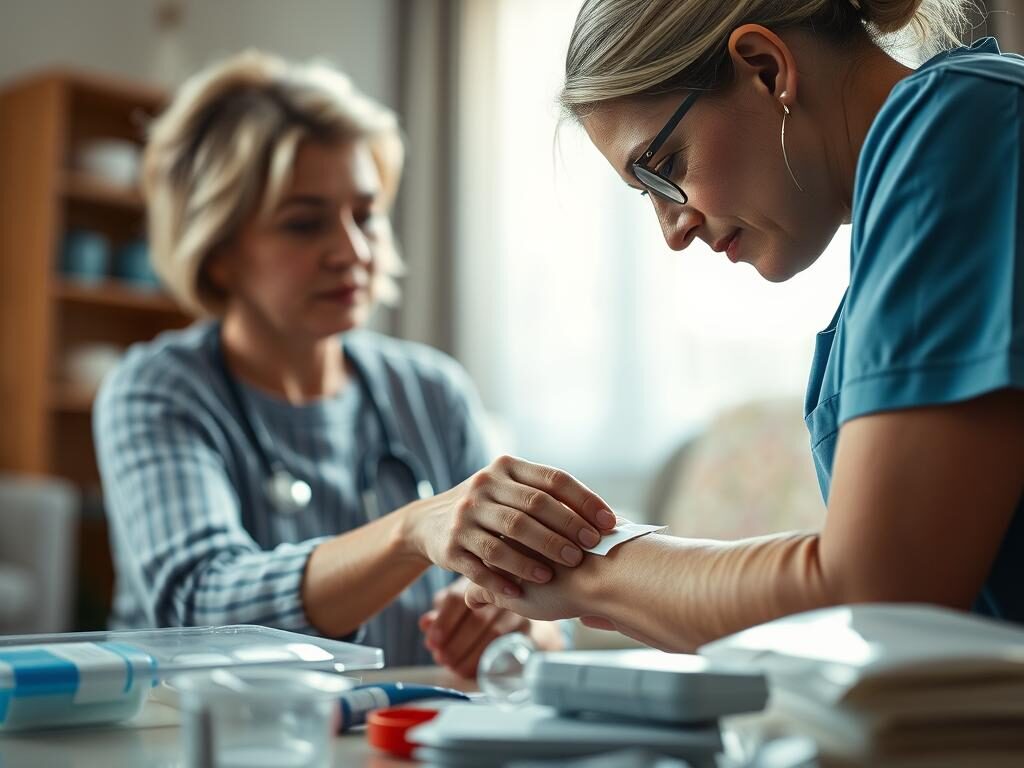
Evidence-based treatment and prevention
Evidence-based dressings are chosen for moisture balance and bioburden control. Debridement removes nonviable tissue to speed granulation. Aseptic technique and early infection recognition keep healing on track.
Advanced therapy and education
Compression supports venous return for suitable ulcers, while negative pressure wound and pressure wound therapy remove excess fluid and improve blood flow as ordered.
Patient and caregiver education covers hand hygiene, dressing steps, positioning, offloading, nutrition, and pain reporting. This teaching reduces emergency visits and prevents avoidable hospitalizations.
- Consistent home health documentation and outcome-focused tools enable data-driven decisions.
- A care nurse coordinates skilled nursing, wound care nurses, therapists, and social workers to address barriers in the care home setting.
- Therapy teams reinforce mobility, safe transfers, and pressure relief schedules to protect healing and prevent new injuries.
Dominion Mobile Wound Care provides nursing leadership and education at the residence. Hire Dominion Mobile Wound Care to help heal their wounds.
Home Wound Care Nurse Services at Dominion Mobile Wound Care
Dominion Mobile Wound Care brings skilled nursing and allied services to the patient’s living setting with a focus on measurable progress and fewer hospital visits.
Skilled nursing care
Skilled nursing builds an individualized care plan, performs precise dressing changes, assesses for infection, and completes suture removal. Medication reviews identify drugs that affect wound healing and guide adjustments with the physician.
Advanced therapies
Advanced options include compression to enhance venous return and negative pressure systems that remove excess fluid and support blood flow for complex or chronic wounds.
Nutrition and therapy services
Dietitians set protein‑calorie and hydration targets to support tissue repair. Physical, occupational, and speech therapy help with mobility, transfers, offloading, and safe swallowing.
Coordination and technology
The care team collaborates with the doctor for smooth transitions from hospital to residence. Standardized assessment tools and digital photography let clinicians quantify progress and adjust the wound care plan quickly.
Choose Dominion Mobile Wound Care for coordinated home health services. Hire Dominion Mobile Wound Care to help heal their wounds.
Eligibility, Coverage, and Costs for Care at Home
Before starting services, families should confirm eligibility, coverage limits, and likely out‑of‑pocket costs.

Meeting eligibility requirements
Eligibility typically requires a need for skilled nursing or therapy, a physician‑directed plan, and difficulty leaving the residence without help.
Simple rule: the doctor must order services, and the patient must be functionally or medically homebound.
Insurance insights and equipment
Medicare, Medicaid, veterans programs, and many private insurers often cover physician‑ordered skilled home health visits when clinical criteria are met.
- Durable medical equipment that is prescribed may include items needed for health wound management; Medicare often covers up to 20% of DME costs.
- Continuous 24‑hour in‑residence assistance is generally not covered by Medicare.
- Nurses coordinate with insurers to match visit frequency, supplies, and equipment to the care plan to reduce complications.
Families should gather medication lists, recent hospital records, and risk factors to speed authorization and start of services.
Contact Dominion Mobile Wound Care for help confirming benefits and to Hire Dominion Mobile Wound Care to help heal their wounds.
Choosing the Right Home Wound Care Partner
A high-quality partner pairs evidence-based protocols with fast communication so small changes are flagged before they become complications.
The best providers publish transparent quality measures and maintain specialist oversight. They train nurses and care nurses in advanced products and safe techniques. Standardized tools, digital photography, and clear documentation help the team spot trends and guide wound healing.
Family involvement and 24/7 support
Family members act as vital eyes at the residence. Teaching them what changes to report and how to follow the care plan reduces risks and speeds recovery.
Look for a responsive team with direct lines to the doctor and 24/7 access for urgent questions. Confirm coordination with therapy, nutrition, and social work so the whole person is treated—not just the lesion.
- Verify written education, supply logistics, and scheduled visits for easy adherence.
- Compare experience with complex wounds, pressure injury management, and consistent data capture.
- Choose a partner that uses assessment tools and data to intervene early and prevent avoidable hospitalizations.
Dominion Mobile Wound Care positions itself as a quality-first partner offering expert care, timely guidance, and coordinated team support. Hire Dominion Mobile Wound Care to help heal their wounds.
Conclusion
Integrated visits that combine assessment, treatment, and family instruction accelerate healing. A dedicated wound care nurse leads evidence‑based dressing choices, debridement when ordered, compression, and negative pressure safely in the patient’s home.
Standardized documentation and digital photography catch subtle trends so the team can act fast. This data‑driven approach reduces infections, shortens healing time, and helps avoid preventable hospital stays.
Clear instructions, family engagement, and 24/7 access for questions keep progress on track. When eligibility and coverage align, these home health services are an accessible option for many patients.
Choose Dominion Mobile Wound Care for coordinated in‑residence support and measurable results. Hire Dominion Mobile Wound Care to help heal their wounds.
FAQ
What is mobile wound treatment and who is it for?
Mobile wound treatment refers to skilled clinical services delivered at a patient’s residence for chronic and complex skin injuries. It benefits people with pressure injuries, diabetic foot ulcers, venous or arterial ulcers, surgical incisions that are slow to heal, burns, and traumatic lesions. Common risk factors include limited mobility, diabetes, peripheral artery disease, advanced age, and recent hospitalization. Healthcare teams tailor plans to each person’s medical needs and daily environment.
How does a visiting wound clinician speed recovery?
A visiting clinician completes a thorough assessment, measures the lesion regularly, and adjusts treatment based on objective progress. They apply evidence-based dressings, perform selective debridement when appropriate, and implement infection-control strategies. Therapies such as compression and negative pressure devices improve circulation and reduce edema, helping tissue regenerate faster. Ongoing monitoring reduces complications and lowers readmission risk.
Which advanced therapies might be offered during at‑residence treatment?
Advanced options include compression systems for venous insufficiency and negative pressure therapy to remove excess fluid and promote granulation. Clinicians may also use biologic dressings, enzymatic debriders, and topical antimicrobials guided by cultures. Selection depends on wound type, size, perfusion status, and overall health.
What should a patient expect during a typical visit?
The provider reviews medical history, inspects and photographs the lesion, measures dimensions and tissue type, and assesses surrounding skin and circulation. They change or apply dressings, perform debridement if needed, adjust devices like compression wraps, and document findings. Education for the patient and caregiver on positioning, offloading, and signs of infection is included.
How are nutrition and hydration addressed to support healing?
Clinicians screen for malnutrition and coordinate with registered dietitians to recommend higher-protein meals, calorie goals, and micronutrients such as vitamin C, zinc, and iron when indicated. Hydration status is monitored and urine output or lab data guide interventions. Optimizing intake accelerates tissue repair and reduces complication risk.
How does coordination with the primary physician work?
The specialist communicates findings promptly to the referring doctor, updates the physician on progress or setbacks, and obtains orders for antibiotics, imaging, or advanced treatments as needed. Care transitions from hospital to residence include medication reconciliation and a physician-directed plan of care to ensure continuity.
What insurance coverage applies to skilled domiciliary services?
Coverage varies. Medicare Part A or Medicare-certified agencies may cover skilled visits when criteria are met: need for skilled interventions, a physician-established care plan, and limited ability to leave the residence. Medicaid, VA benefits, and private plans have different rules for services and durable medical equipment like compression systems or negative pressure devices. Financial counselors can clarify authorization and out-of-pocket obligations.
Who is eligible for skilled visits at the place they live?
Eligibility generally requires a documented need for skilled clinical procedures that only licensed providers can perform, a physician’s signed plan of care, and evidence that leaving the setting is difficult due to illness or mobility limits. Case managers help determine qualification and arrange coverage approvals.
How are progress and outcomes measured?
Teams use standardized tools to track size, depth, and wound bed characteristics, often with serial digital photography. Healing milestones include reduction in surface area, improved granulation tissue, and absence of infection. Objective measures guide therapy adjustments and inform timelines for expected recovery.
What role do family members and caregivers play?
Caregivers assist with daily skin checks, dressing changes when taught, positioning, and ensuring adherence to nutritional and mobility plans. Education focuses on recognizing signs of infection, proper device use, and when to contact the clinical team. Active involvement reduces complications and speeds recovery.
How does infection get prevented and treated in out‑of‑facility settings?
Prevention includes sterile technique for dressing changes, appropriate antimicrobial dressings, timely debridement, and surveillance cultures when infection is suspected. If systemic infection occurs, clinicians coordinate antibiotics guided by cultures and local resistance patterns and involve the physician for escalation or hospitalization if necessary.
What technology supports remote monitoring and documentation?
Providers use electronic medical records, standardized assessment tools, and secure digital photography to document healing. Telehealth check‑ins enable timely symptom review and specialist consultation. These tools improve communication with the interdisciplinary team and maintain accurate treatment records.
How long does it typically take for complex skin lesions to heal?
Healing time varies with wound type, size, blood supply, nutrition, and underlying conditions such as diabetes. Superficial injuries may close in weeks, while chronic or ischemic lesions can take months and require staged interventions. Regular reassessment allows clinicians to set realistic goals and modify therapy to accelerate recovery.
What should families look for when choosing a specialty provider?
Families should evaluate clinical qualifications, evidence‑based protocols, specialist oversight by physicians such as vascular surgeons or wound care experts, documented outcomes, and 24/7 access for urgent concerns. Clear communication, coordinated transitions, and use of advanced therapies when indicated are key quality indicators.
How are mobility and positioning addressed to prevent pressure‑related injuries?
Therapists assess mobility and recommend pressure‑redistribution mattresses, cushions, and repositioning schedules. Physical and occupational therapy improve strength, transfers, and safe positioning. Reducing prolonged pressure promotes tissue perfusion and prevents new lesions.