Diabetic patients require expert wound care to prevent complications. Dominion Mobile Wound Care offers the specialized services you need. Hire them to help heal your wounds.
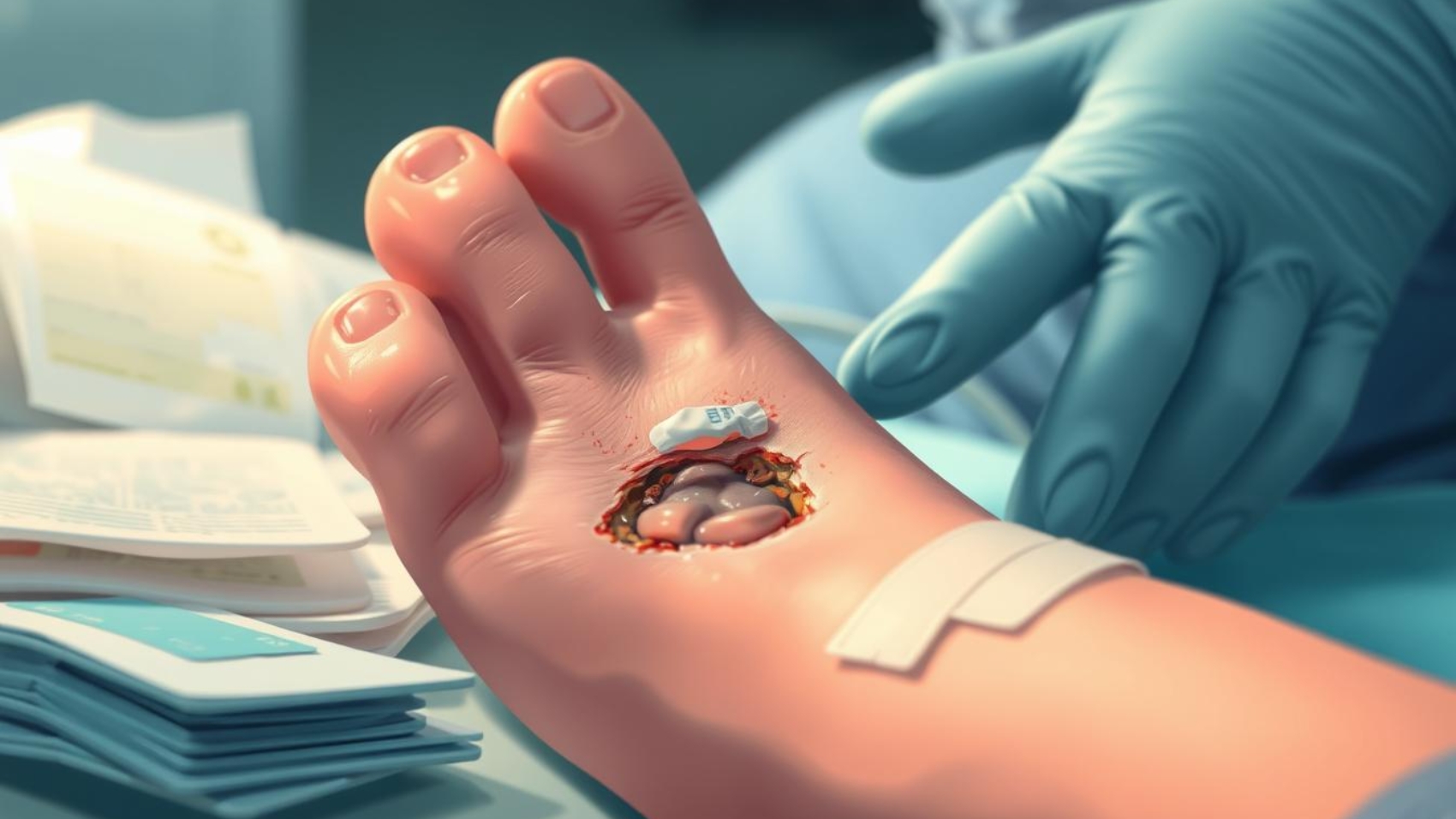


Promoting Healthy Skin
Diabetic patients require expert wound care to prevent complications. Dominion Mobile Wound Care offers the specialized services you need. Hire them to help heal your wounds.
Understanding when to see a wound care specialist in San Antonio is key. Chronic wounds are hard to heal and hurt our health and life quality. This article will help you know when to get help.
We’ll talk about managing chronic wounds. We’ll learn about factors that cause them and why early help is important. We’ll also see how personalized care can help wounds heal.
Chronic wounds are hard to heal and last more than three weeks. Knowing the types helps us treat them better. Experts say it’s key to know each type to heal them right.
Experts help manage these wounds and aid in healing. They guide us on how to care for these wounds.
Let’s look at the different chronic wounds:
Knowing why wounds don’t heal is key to fixing them. Many things can stop wounds from healing:

Knowing when to get help is key for healing wounds. We must watch for signs of chronic wounds. These can slow down our healing.
Getting help early is very important. It helps avoid big problems and ensures the best results.
Look out for certain signs that mean you need a specialist. If a wound gets red, warm, has pus, or swells, act fast. These are signs of a chronic wound.
These signs can lead to serious health issues if not treated. So, it’s crucial to get help right away.
Getting help quickly is very important for healing. Waiting too long can cause infections. These can be very serious, even leading to losing a limb.
Understanding the need for early help helps us tackle non-healing wounds. This improves our health and well-being.

We have many advanced wound treatment options to help us heal. Hyperbaric oxygen therapy and mobile wound treatment are two big ones. They are both helpful and easy to get.
Hyperbaric oxygen therapy is a big step forward in treating wounds. It lets patients breathe pure oxygen in a special room. This helps damaged tissues get more oxygen, which helps them heal faster and reduces infection risks.
People with long-lasting wounds really benefit from this. It makes them heal quicker and helps their body heal itself.
Mobile wound treatment comes to your home. It’s great for those who can’t go out for care. Home health nurses give you the care you need right at home.
This makes it easier to follow your treatment plan. It also makes your recovery place feel more like home.
Having a care plan made just for you is key. Each plan is made to fit your specific needs. It uses things like hyperbaric oxygen therapy to help you heal fast.
These plans help you focus on getting better. They make sure you get the care you need to be healthy and happy.
When we face chronic wounds, getting help from a wound care specialist is key. They start by checking us out and figuring out what’s wrong. This helps fix the problem, not just the symptoms.
A wound care specialist does a deep check to find out what’s wrong with our wounds. They look at our health history and the wound itself. This helps make a plan that really works for us.
Getting better takes teamwork. A wound care specialist works with others like nutritionists and physical therapists. This team effort makes sure we get the best care for our wounds.
Understanding wound care is key. Knowing when to see a specialist in San Antonio is very important. It helps us heal better.
We learned that knowing about different wounds and their causes helps us recover faster. We should not ignore signs that we need special care. Early help can make a big difference in healing.
Today, we have new treatments and expert care for chronic wounds. This means we can heal faster and get back to our lives sooner. If you have a chronic wound, think about Dominion Mobile Wound Care. They are dedicated to helping us heal.
Let’s take action together. We should aim for lasting healing, not just managing wounds. Our journey to get better starts with knowledge, support, and the right care.
A chronic wound is a sore or ulcer that doesn’t heal in three weeks. It includes diabetic ulcers, ischemic ulcers, and more. These are wounds that don’t heal fast.
Seek care if your wound gets red, warm, or has pus. Do this if it hasn’t healed in two weeks. Early help can make a big difference.
Chronic wounds often come from diabetes, poor nutrition, and bad blood flow. Too much pressure can also cause them. Knowing these causes helps in treating them.
Treatments include hyperbaric oxygen therapy and mobile wound care. These allow for care at home. Each person gets a care plan that fits their needs.
A specialist is key in finding why wounds don’t heal. They make a detailed care plan. They work with others to cover all healing needs.
Early action is very important. It stops infections and serious health problems. Acting fast helps wounds heal better.
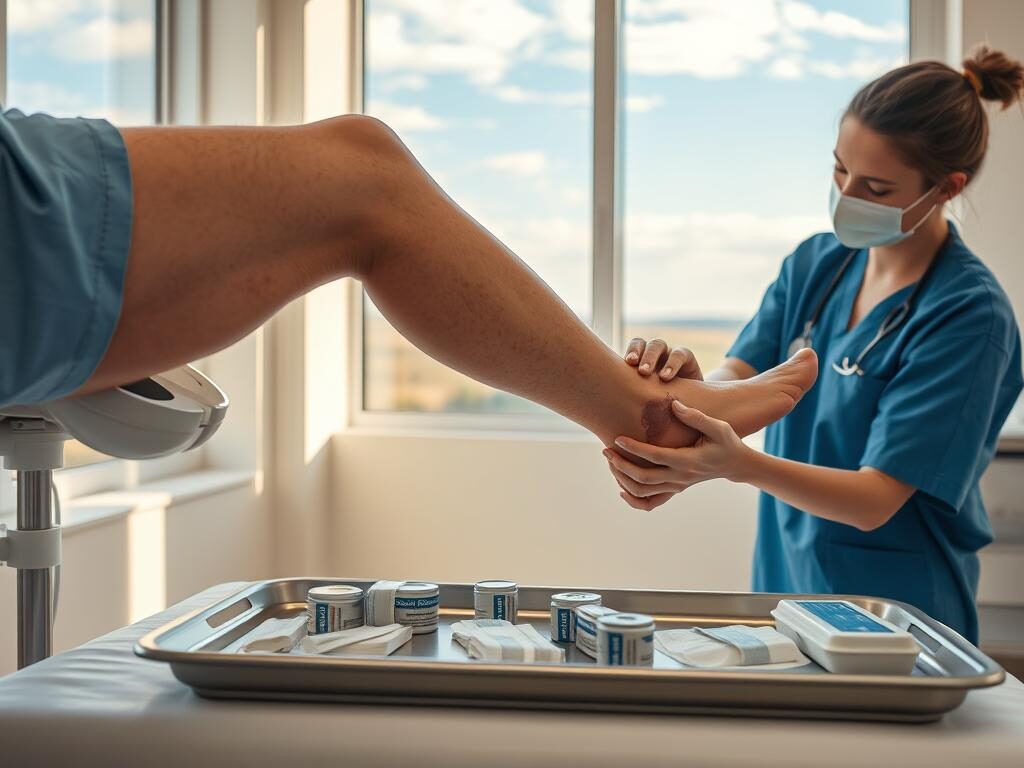
We’re exploring chronic wounds and how to treat them. This part talks about what you need to know in San Antonio. We’ll cover different types of wounds and what affects healing. We’ll also talk about the important role of wound care specialists.
Knowing this can help us care for wounds better. It helps us make good choices for our health.
Chronic wounds are hard for patients and doctors to deal with. They don’t heal in the usual time of four to twelve weeks, even with good care. Knowing about chronic wounds and their types is key for managing them well. This includes treatments in places like San Antonio.
Chronic wounds don’t heal like they should. They keep going on and on. Things like health problems, bad blood flow, or weak immune systems can cause them. Learning about wound care basics helps us spot these long-lasting injuries.
We see many kinds of chronic wounds. Each one needs its own special care:
These wounds need a team effort to heal right. Knowing what each type needs helps us do better in caring for them.
Knowing what affects wound healing helps us deal with chronic wounds better. Many things can help or hurt the healing process. Conditions like diabetes can make it hard for our body to heal.
Chronic wounds often happen to people with health problems. For example, diabetes can hurt blood flow and nerve function. Other issues like rheumatoid arthritis and peripheral vascular disease also slow healing.
By knowing these problems, we can work with doctors to find better treatments. This helps us tackle these challenges together.
Biofilms are a big problem in wound healing. They are groups of bacteria that form a shield on the wound. This shield makes it hard for our body to fight off infections.
Using the right treatments, like special dressings, can help. Knowing about these issues helps us take better care of our wounds. This way, we can heal faster and better.
In San Antonio, many treatments are available for chronic wounds. We need a mix of professional care and home solutions. Our aim is to improve healing for those with chronic wounds.
Wound management uses special therapies for each person. We use Negative Pressure Wound Therapy (NPWT), skin grafts, and special dressings. Each method is chosen based on the wound and the patient’s health.
In San Antonio, we make treatment plans just for you. This ensures the best results for each case.
Home care is key to faster healing. We teach about dressing changes, cleaning wounds, and eating right. Our team helps you learn how to care for wounds at home.
Being involved in your care helps a lot. We work together to make treatment in San Antonio more effective.
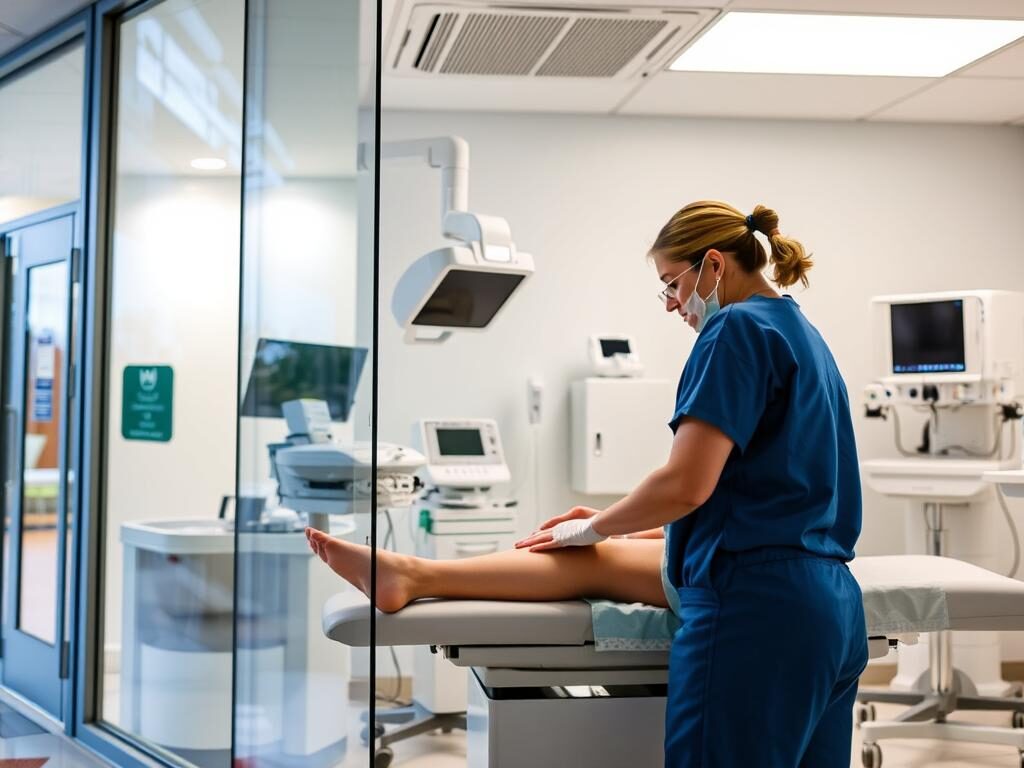
Managing chronic wounds needs special help. Wound care specialists have lots of knowledge. They help us treat wounds in San Antonio better.
They can see the small details of each wound. This lets them make plans just for you. These plans use the latest treatments and best ways to care for wounds.
Wound care specialists are key in healing. They check the wound, watch how it heals, and make special care plans. They think about our health too, which helps healing.
They help us understand different treatments. This improves our healing and life quality.
Working together is important for wound care. Doctors, nurses, and dietitians all help. This team makes a complete care plan for healing.
This teamwork makes sure we don’t miss important details. It helps us heal better in San Antonio.
Understanding chronic wounds is key to managing them well. We’ve talked about the different types and what affects healing. A team effort with wound care experts makes a big difference.
Using both professional and home care helps create a healing plan for each person. This approach is crucial for treating chronic wounds in San Antonio. Early action and ongoing care are vital.
With the right help and support, healing can get better. Dominion Mobile Wound Care offers personalized care and strategies. Our team is here to help you on your healing path.
A chronic wound doesn’t heal in the usual time. It takes more than four to twelve weeks. These wounds often happen because of diabetes or poor blood flow.
There are several types of chronic wounds. These include diabetic foot ulcers, venous leg ulcers, and pressure injuries. Each needs its own treatment plan.
Conditions like diabetes or poor blood flow slow down healing. It’s important to treat these conditions along with the wound.
Biofilm is a group of bacteria that forms on wounds. It can cause infections and slow healing. It’s important to manage it well.
In San Antonio, there are many ways to manage wounds. This includes Negative Pressure Wound Therapy (NPWT), skin grafts, and special dressings. Each patient gets a treatment plan that fits them.
Home care is key. It includes changing dressings, cleaning wounds, and eating right. These steps help wounds heal better.
Specialists are very important. They assess wounds, create treatment plans, and follow best practices. Their help is crucial for healing.
A team effort is best. It includes doctors, nurses, and dietitians working together. They focus on the wound and the patient’s overall health. This ensures the best care.