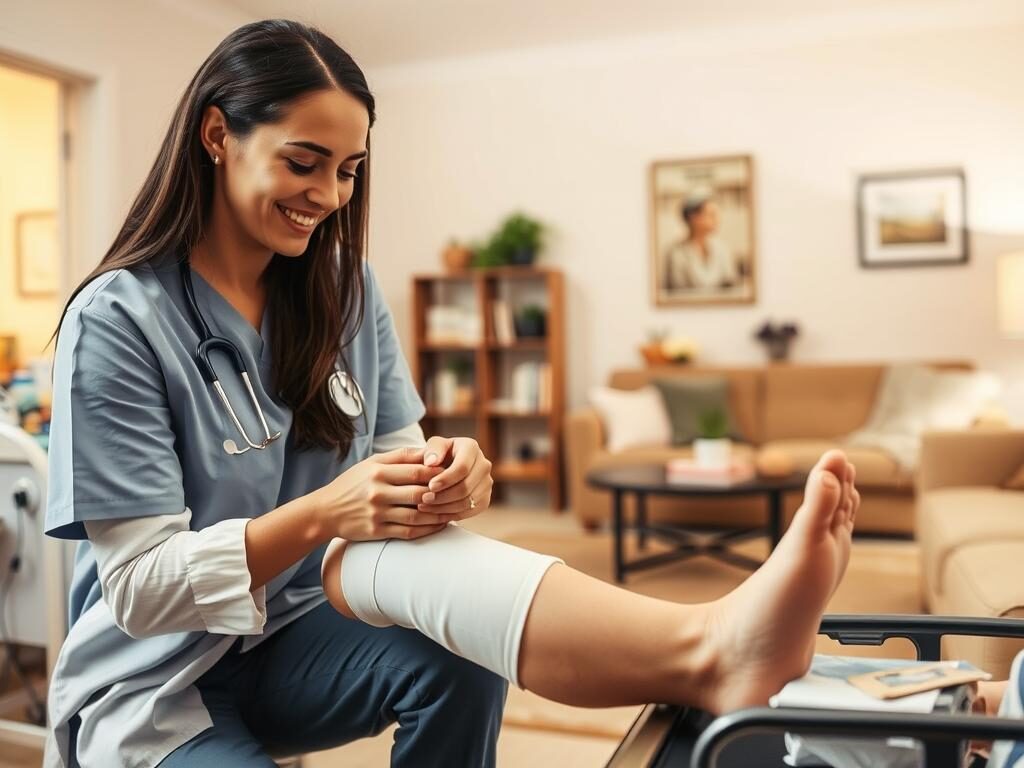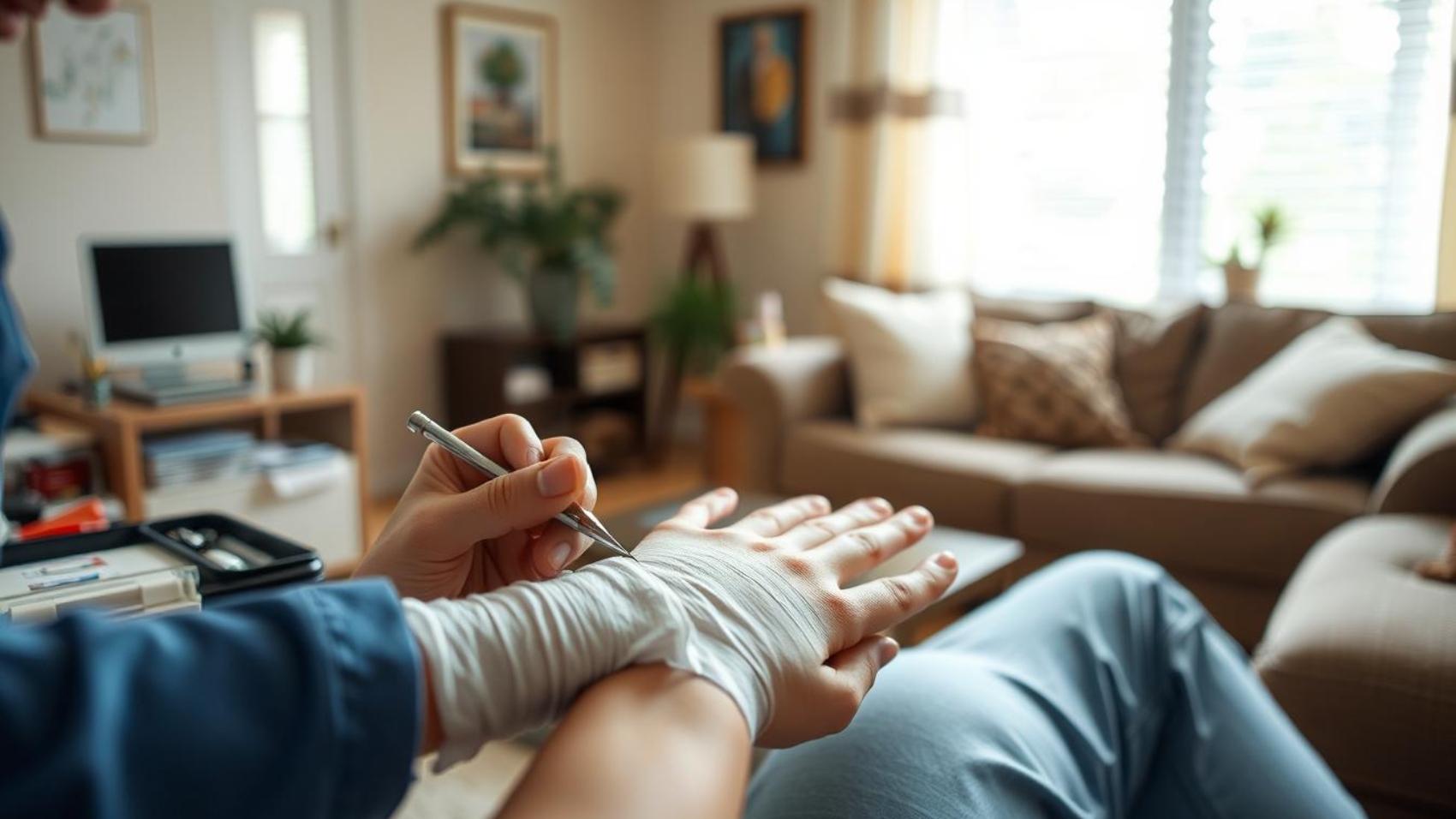
Get hospital-grade treatment delivered to your home. Dominion Mobile Wound Care brings certified specialists to you so you can start effective care today without delays.
The team uses a whole-person approach that looks beyond the surface. University Health notes advanced options like hyperbaric oxygen therapy and an interdisciplinary model that addresses root causes such as diabetes and poor nutrition.
You and your providers get clear information and coordinated plans. This simplifies access to specialized therapies while keeping your health and safety central.
Expect friendly guidance on what to expect, how to prepare, and how at-home support speeds recovery. Hire Dominion Mobile Wound Care to help heal their wounds.
Key Takeaways
- Expert, hospital-level care brought to your home for convenience and better outcomes.
- A dedicated team of specialists coordinates with your doctors to avoid fragmented treatment.
- A whole-person approach treats underlying causes, not just the symptom.
- Advanced options like hyperbaric oxygen are part of the interdisciplinary toolkit.
- Clear information and practical steps help you feel confident in the plan today.
Compassionate, Expert Wound Care Delivered to Your Home
Getting expert, coordinated treatment at home shortens the path from diagnosis to measurable healing. Dominion Mobile Wound Care offers assessments that look at your full health picture—nutrition, mobility, diabetes control, and home setup—so your plan fits daily life.
Comprehensive approach that looks at you, not just your wound
Your plan includes an overall assessment and clear milestones. The process explains each step, why it matters, and how you will track progress over time.
Certified wound care specialists and coordinated, interdisciplinary care
You are supported by certified wound care specialists and care specialists who work as one team. They coordinate with podiatry, orthopedics, physical therapy, and other specialists when needed.
- Evidence-based strategies that prioritize infection control, offloading, and moisture balance.
- Compassionate staff who answer questions and set realistic expectations.
- Education for you on dressing changes, warning signs, and lifestyle steps that speed healing.
Our team triages what can safely be done at home and when to escalate, saving you time and reducing unnecessary trips. Hire Dominion Mobile Wound Care to help heal their wounds.
Wound Care San Antonio: Local, At‑Home Access Across the Area
Local mobile teams bring skilled clinicians directly to your door across the metro area. You get timely, professional visits that reduce travel and help you stick to a healing plan.
Serving San Antonio and surrounding neighborhoods with timely visits
You can schedule visits that fit your day and preferred hours. Our staff coordinates times so on-site time is focused and efficient.
- You get at-home access throughout san antonio and nearby areas, easing travel for patients with mobility limits.
- Routine dressing changes and monitoring often happen at home, avoiding repeated office trips.
- Contact our team for scheduling, visit details, and what to prepare before each visit.
- Early evaluation is encouraged when wounds are not improving after about two weeks to speed recovery.
- Staff coordinate with your providers and update your documentation to keep the plan on time.
Clear communication, flexible hours, and coordinated logistics make local access simpler and safer. Hire Dominion Mobile Wound Care to help heal their wounds.
Chronic and Complex Wounds We Treat
When wounds stall or become complicated, early, focused intervention makes the biggest difference. You get precise evaluation of skin and tissue, plus plans that address medical causes like diabetes and poor nutrition.
Diabetic ulcers and neuropathic foot wounds
You receive targeted support for diabetic ulcers with offloading, glucose monitoring, and frequent checks to protect fragile tissue.
Pressure ulcers and immobilization-related skin breakdown
Plans for pressure ulcers focus on pressure redistribution, moisture control, and repositioning strategies that work at home.
Ischemic, venous insufficiency ulcers, and lymphedema-related wounds
Protocols include edema management and tailored support for circulation issues and venous ulcers to promote better healing.
Surgical wounds, traumatic injuries, and severe burns
Complex surgical wounds and injuries get meticulous wound bed preparation, dressing selection, and infection control to manage exudate and bioburden.
Radiation injuries and stalled, non‑healing wounds
Radiation and stalled wounds receive specialized approaches—debridement, advanced dressings, and therapies that restore oxygenation to tissue.
Amputation prevention through early, targeted treatment
Early evaluation reduces risk of complications and helps prevent amputation by treating problems before they worsen. You learn warning signs and when to request immediate support between visits.
- Individualized treatment that adapts as the wound evolves.
- Education and monitoring to catch issues early and limit complications.
- Coordination with your providers to address root causes and sustain healing.
Dominion Mobile Wound Care delivers these services to your door. Hire Dominion Mobile Wound Care to help heal their wounds.
Advanced Treatments and Technologies for Faster Healing
When standard measures stall, specialized technologies can restart healing and protect vulnerable tissue.
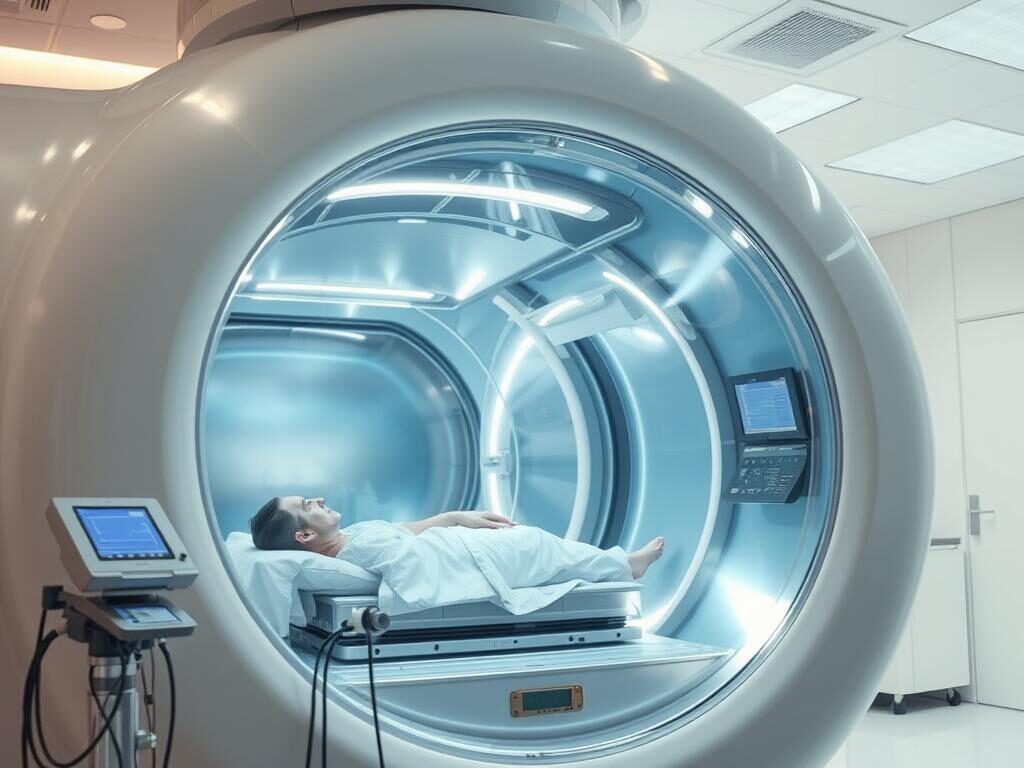
Hyperbaric oxygen therapy: bringing oxygen to tissue that needs it
You may be considered for hyperbaric oxygen therapy when extra oxygen helps damaged tissue recover. In a pressurized chamber you breathe pure oxygen so your lungs load more oxygen into the blood.
This increased oxygen reaches compromised tissue and supports infection defense, growth factor release, and stem cell activity. Dominion Mobile Wound Care coordinates evaluation and safe referral for care hyperbaric when indicated.
Debridement, negative pressure, and pressure relief
Sharp and surgical debridement remove non‑viable material to restart healing with a clean wound bed.
Negative pressure therapy manages exudate, encourages granulation, and helps approximate edges. Total contact casting reduces pressure and shear for diabetic ulcers so offloading is consistent.
- Advanced dressings for moisture balance and antimicrobial protection.
- Infection control, edema management, and pain strategies to keep you comfortable and adherent.
- Thoughtful sequencing of treatments so each step fits your routine.
Dominion Mobile Wound Care brings these options together into a practical plan. Hire Dominion Mobile Wound Care to help heal their wounds.
Your Personalized Care Plan and Healing Process
Assessment and diagnostics at home let the clinical team tailor treatment without unnecessary office trips.
At-home assessment and targeted testing start your plan. When needed, specialists perform skin biopsies or deep tissue DNA culture to identify organisms and guide precise therapy.
Nutrition, diabetes education, and lifestyle support
Practical guidance on nutrition, hydration, and glucose control is part of the plan. Small, usable changes in your kitchen and daily routine can speed the healing process and reduce complications.
Coordinated interdisciplinary team
You benefit from coordinated referrals to podiatry, orthopedics, physical therapy, infectious disease, and pain management. This reduces extra visits and keeps treatment aligned across providers.
- You start with a clear sequence that explains each step and expected milestones.
- Staff provide a single point of contact for questions, dressing info, and when to alert the team.
- Diagnostics inform antibiotic choices, debridement timing, and dressing selection so each decision is data-driven.
Plans adjust in real time based on measurements, exudate, and comfort to keep your process responsive and efficient. Hire Dominion Mobile Wound Care to help heal your wounds.
Why Choose Dominion Mobile Wound Care

Choose a mobile model built around expert staff and practical at‑home services. You get access to clinicians trained in complex and chronic wounds and physicians with advanced hyperbaric training.
Personalized plans mirror hospital standards. Care specialists and wound care specialists coordinate with your office and other providers so your process stays simple and focused.
- You receive advanced treatments and oxygen-based therapy options integrated into at‑home visits.
- Responsive scheduling respects your hours so patients avoid delays and stay on track.
- Clinicians monitor progress, escalate when needed, and teach clear steps that support healing.
- Start today with a streamlined intake; staff will gather records and align treatments across areas and teams.
Dominion Mobile Wound Care brings measurable healing, transparent therapy explanations, and staff who prioritize your results. Hire Dominion Mobile Wound Care to help heal their wounds.
Conclusion
A focused, home-based plan gives you control over healing and daily life. You get clear steps that protect skin and tissue, lower pressure on vulnerable areas, and reduce the chance of serious complications or amputation.
Dominion Mobile Wound Care connects you with advanced options, including hyperbaric oxygen and oxygen therapy when appropriate. These treatments help the body carry more oxygen to injured tissue and support infection defense and growth responses.
Your personalized plan adapts with each visit so treatments stay effective and convenient. Start today and hire Dominion Mobile Wound Care to help heal their wounds.
FAQ
What does expert wound care at home involve?
You receive a personalized plan delivered at home by certified specialists. The team assesses your skin, circulation, and overall health, performs necessary dressings or debridement, and coordinates any advanced therapies like hyperbaric oxygen therapy or negative pressure therapy to promote healing.
Who provides at-home treatment and what qualifications do they have?
A multidisciplinary team of certified wound care specialists, nurses, and clinicians delivers care. They work with podiatrists, orthopedic surgeons, and physical therapists when needed to make sure you get coordinated, expert treatment designed for your condition.
Which neighborhoods do you serve in the local area?
You can access at-home visits across San Antonio and surrounding communities. Scheduling aims for timely visits so you get prompt assessment and ongoing follow-up in your neighborhood.
What types of chronic and complex wounds are treated?
The program treats diabetic ulcers and neuropathic foot wounds, pressure-related skin breakdown, venous and ischemic ulcers, lymphedema-related wounds, surgical and traumatic wounds, severe burns, and radiation injuries. Early intervention helps lower the risk of amputation.
How does hyperbaric oxygen therapy help healing?
Hyperbaric oxygen therapy increases the oxygen available to damaged tissue, which supports new blood vessel growth, fights infection, and helps stalled wounds progress through the normal healing stages. Your clinician evaluates whether it’s appropriate for your condition.
What are other advanced treatments you might use?
Treatments include sharp or surgical debridement to remove nonviable tissue, negative pressure wound therapy to manage drainage and promote granulation, total contact casting for offloading diabetic foot ulcers, advanced dressings, and targeted pain and infection control.
How is a personalized care plan created for me?
Your clinician completes an at-home assessment, orders diagnostic tests when needed (including tissue cultures or biopsy), and develops a plan that covers wound treatment, nutrition, diabetes education, and mobility or offloading strategies to support healing.
Do you coordinate with my existing doctors and specialists?
Yes. The team communicates with your primary care provider, endocrinologist, podiatrist, and other specialists to align treatments, medications, and rehab so your care is seamless and focused on recovery.
Can at-home treatment help prevent amputation?
Early, targeted treatment reduces infection and tissue loss risk. By managing circulation, pressure relief, infection control, and appropriate therapies, you significantly improve the chances of limb preservation.
How do you manage infection and pain during treatment?
You receive evidence-based infection control, which may include topical therapies, systemic antibiotics based on cultures, and wound cleansing. Pain is addressed with local measures, medication management, and therapies that reduce inflammation and pressure.
What should I expect during a first home visit?
The clinician reviews your medical history, examines the wound and surrounding skin, documents measurements and photos, performs any needed debridement, and discusses an individualized plan including next steps and follow-up frequency.
Are there lifestyle or nutrition recommendations to aid healing?
Yes. You get guidance on protein-rich nutrition, blood sugar control if you have diabetes, smoking cessation, and activity modifications to reduce pressure on affected areas and support tissue repair.
How long will treatment take to show improvement?
Healing time varies by wound type, size, circulation, and your overall health. Most patients see measurable improvement within a few weeks with consistent treatment, but complex cases may need longer, ongoing care and advanced therapies.
Can you provide deep tissue cultures or biopsies at home?
When indicated, clinicians perform appropriate sampling such as deep tissue cultures or biopsies following clinical guidelines, then use results to tailor antimicrobial therapy and plan next steps.
How do I schedule an evaluation or contact the team?
You can call the clinic during office hours or request a referral from your provider. The team prioritizes timely access and will explain available hours, visit frequency, and how to get urgent support if conditions change.